Friday, September 09, 2016

Concentration in seeds supply causes concern

Concern is growing about the extent to which the global seeds market is dominated by a smaller and smaller number of agribusinesses. The bid by Bayer for Monsanto has caused particular concern.

Twenty years ago there were 600 independent seed companies. Most of them have now been bought out by the six big players that control 63 per cent of the global seed market: Monsanto, Syngenta, Bayer, DuPont, Dow Chemical and BASF.

That could soon be just four companies. Dow and DuPont announced a $130bn merger last year, while ChemChina is pursuing a $44bn takeover of Switzerland's Syngenta. A takeover of Syngenta would be China's biggest overseas transaction.

The European Commission has launched an in depth probe into the effect of Dow-DuPont tie up on competition. However, Dow and DuPont do not think this will affect the deal going through. They propose to split the combined company into three parts after the merger.

A Bayer takeover of Monsanto would combine the two largest cotton seed sellers in the US into a single company, responsible for almost 70 per cent of crop acreage, according to Verdant Partners, a consultancy.

Campaigners are worried about the possible impact of these mergers on biodiversity. They are concerned that the diversity of plant varieties available to farmers would shrink even further.

Thursday, September 08, 2016

Supply, demand and the dairy industry

Supply and demand are key forces in economics and the dairy industry is beset by excessive supply and flagging demand, leading to a situation in which prices for many farmers have fallen below the cost of production, although there are signs of a revival in prices.

The supply crisis was started by the end of milk quotas in 2015 and the Russian embargo on European dairy products. However, there has been a seven per cent fall in UK milk production and both global prices and those paid by milk processors are edging upwards.

On the demand side, the EU has brought in a milk reduction scheme which pays 12p for every litre not produced compared with output in the same period the year before, up to a maximum of 50 per cent.

The problem with schemes of this sort is 'additionality': do they change behaviour, or are they simply taken up by farmers who intended to reduce output anyaway? For example, it may be attractive if bTB has taken cows or calving has slipped. In any event, the effect on the total volume of production will be marginal and short-term.

On the demand side, younger people are drinking less milk. Celebrities advocating a vegan diet and concerns about the contribution of cattle to climate change are helping to persuade teenagers to switch to soya milk and other plant-based alternatives, according to Dairy UK. There is also concern about the fat content of milk, although it has other nutritional benefits.

According to research by Kantar Worldpanel, those over 65 consume milk 875 times a year compared with only 275 times for 5 to 24 year olds. Other research shows that 19 per cent of 16 to 34 year olds do not consume milk at all.

Wednesday, September 07, 2016

A critical look at the CAP and its possible replacements

A number of papers have been produced on the consequences of CAP and the policies that may replace it, but this is one of the better ones. It takes a critical look both at the pathologies of the CAP and the cases that have been put forward for continuing forms of subsidy: Dieter Helm

The paper points out that no other economic sector outside defence has received so much government money. It points out the CAP was the result of a very political deal, reflecting a very particular historical context. The reforms that have taken place addressed some of its deficiencies, but remain sub-optimal.

The paper subjects the three main arguments for subsidy to critical scrutiny: food security; a shift towards environmental subsidies; and public money for public goods. It points out that food security arguments still embody production maximisation. The paper then goes on to consider the key issue of a workable transition.

This is very much an economist's perspective and as a political economist I tend to take a somewhat different perspective. For example, I sometimes think it is necessary to accept a 'satisficing' (in Herbert Simon's terms) rather than an 'optimal' solution. However, I will certainly take its arguments seriously as I prepare my paper for a Welsh Assembly committee public seminar next month.

Thursday, August 18, 2016

It looks like a no brainer, but is it?

The latest phase in the debate about the future of agricultural policy in England is the call for a diversion of subsidies from large estates to smaller firms. It is easy to make both an intellectual and a populist case, but one also needs to consider countervailing arguments.

The Campaign to Protect Rural England (CPRE) argues that it is wrong to pay people more subsidy simply because they own more land: CPRE report It proposes that all farmers should receive a higher amount per hectare for the first 50 hectares they own but payments should reduce for the next 100 hectares and then continue to taper.

The CPRE argues, 'Good, resilient farming means cleaner water, less flooding and more carbon storage. It means abundant wildlife and rich soils that underpin beautiful countryside and assist efforts to tackle climate change. And it means a mix of farms more strongly connected to the local community.'

The countryside is, of course, more than an aesthetic asset to be enjoyed by urban populations, it is also a means of food production, although that food production needs to take into account environmental impacts. Particularly valued areas of countryside are designated as national parks, although even here farming contributes to their appearance.

The CPRE says that it is not engaging in 'big farm bashing', but size of farm is not necessarily related to how well farming is undertaken, although there is some evidence that larger farms tend to have higher animal welfare standards. Big estates can be well integrated into their local communities, not least as a significant source of employment.

Some of the payouts to big farms can be substantial, Last year, Farmcare Trading, the former Co-op farms bought by Wellcome Trust in 2014, received £1.7m. Beeswax Farming, owned by Sir James Dyson of bagless vacuum cleaner fame, received £1.4m. Blankney Estates in Lincolnshire got £1.1m. Lilburn Estates in Northumberland, owned by Duncan Davidson, founder of the house builder Persimmon, received £915,000. The Elveden Farms in Suffolk, owned the Earl of Iveagh and the Guinness family, received £915,000.

A recent report from Exeter University, commissioned by the Prince's Countryside Trust, argues that small family farms employ more people per acre (i.e., are less capital intensive), help sustain rural services and provide a wider variety of locally produced food. The number of such farms has fallen from 84,000 in 2000 to fewer than 67,000 in 2013.

What does one consider is how far competitiveness objectives should form part of any future policy. Large farms in countries such as France and Germany will continue to receive CAP subsidies, leaving English farms at a competitive disadvantage. The result could be more food requirements being met by imports and hence a decline in domestic food security.

What is clear is that the present level of subsidy to larger farms will not be affordable. However, a debate is needed about the priority given to different policy objectives, something that never really occurred with the CAP.

Monday, August 15, 2016

Farm subsidies to run until 2020

Philip Hammond as Chancellor has undertaken to maintain current farm subsidies until 2020 when the current EU multi-year programme ends. According to some reports, that may not be that long after Brexit takes place.

Not only does enable farmers to make business plans for the next four years, it allows full time for a debate about the future support regime for farming.

When Brexit does take place it will be necessary to fix farm subsidies with a sterling value.

There is still some uncertainty about exactly what is on offer. Chief secretary to the Treasury David Gaulke has stated that 'the agricultural sector will receive the same level of funding it would have received under Pillar 1 of CAP until the Multiannual Financial Framework in 2020.' Will this be inflation adjusted? Inflation looks likely to rise to a higher level over the next year or two.

Farm business consultants Andersons have pointed out that the final year of the MFF actually pays the 2019 Basic Payment. It is thus possible that the guarantee lasts only until 2019.

It is clear that agri-environmental agreements already under way will be honoured, but there are questions over Countryside Stewardship agreements due to start this autumn. Applications to other rural development projects, including Leader projects that help rural businesses to grow, are guaranteed only if they are agreed before this year's Autumn Statement.

The Government statement says, 'The Chief Secretary to the Treasury, David Gauke, has also written to each devolved administration to confirm the same level of assurances offered to UK government departments in relation to programmes they administer but for which they are expected to rely on EU funding. The Treasury will work closely with the devolved administrations on subsequent funding arrangements to allow them to prioritise projects within their devolved responsibilities.'

This was well received in Northern Ireland where it was seen as removing uncertainty, but declared to be not good enough by the Scottish Government finance minister.

Thursday, August 04, 2016

National Trust pitches into farm subsidies

Britain's largest membership organisation, the National Trust, has demanded a complete reform of farm subsidies after Brexit. The idea is that the basic payment would be scrapped and farmers would just be paid for ecosystem services or public goods: Reform call

I heard Dame Helen Ghosh, the director of the National Trust and one time permanent secretary at Defra, interviewed on Radio 5 this morning and she did say that subsidies would have to be phased out over a five or six year period. I would favour seven years and the use of a bond scheme I outlined in an earlier post.

She argued that farmers deserved a better return from the market. No doubt they do, but would the market respond, given retailer power and the limitations of the supermarket ombudsman? Governments in practice welcome oligopolistic price competition between retailers because it holds down food prices for families who are already struggling with tight budgets.

Her views are certainly not without merit and will receive wide support from those who want to see an agricultural policy that places greater emphasis on sustainability. Farmers who voted for Brexit may now start to realise what they have unleashed.

The NFU has responded saying that farmers take their role as custodians of the countryside seriously, but we need to recognise how vital food production is: NFU response

Tuesday, August 02, 2016

How universities link with agriculture

One of the components of a post-Brexit agriculture policy needs to be greater 'near farm' applied research that can be delivered to farmers. We are working on that in the Farmer-Scientist Network of the Yorkshire Agricultural Society. Learn more about its work here: Farmer Scientist Network

This blog post takes a look at how many universities have farms: Farming boffins

Unfortunately, our own Warwick Crop Centre (the former Warwick HRI) does not get a mention: Crop Centre

Monday, August 01, 2016

How coupled payments make a difference

The last CAP reform allowed the devolved administrations to make 'coupled' payments in addition to the basic payment for particular schemes. A case in point is the Scottish Upland Sheep Support Scheme where payments to farmers have just started. It was originally envisaged that they would receive €100 per hog ewe, but demand for the scheme has reduced the payment to €78.12, still a significant amount, particularly given the falling value of the pound.

I have just returned from a visit to Orkney which is traditionally a beef area, although there are dairy herds which, among other things, supply the Orkney cheddar cheese factory which is a protected 'geographical indication'. I was surprised by the growth in sheep numbers, but the coupled payment could help to explain it.

The scheme is devised for rough grazing areas and is intended to protect the social and environmental benefits that sheep bring to those areas. There is also a Scottish Suckler Beef Support Scheme. Beef accounts for 22 per cent of Scottish agricultural output over the last ten years.

The farming community in Orkney seems to be in good heart, with their own specialist and informative magazine, The Orkney Farmer.

Some land in Orkney, notably on the island of Hoy, is not even suitable for rough grazing.

Monday, July 25, 2016

TFA produce plan for post-Brexit farm support

The Tenant Farmers Association is the first farm organisation to come up with a plan for a post-Brexit domestic agricultural policy. It should be noted that basic payments often go to landlords rather than tenants so their advocacy of the abolition of general support payments is not surprising,

What they propose is a three pillar scheme. There would be a new agri-environmental scheme that would set out a menu of costed options that farmers can choose from to deliver on their farms and would be judged on the basis of outcomes. It would include options for hill and upland farmers focusing on livestock production. Of course, they form a significant portion of the TFA membership, but many analysts think that support payments should move 'up the hill'.

Second there would be a farm business development scheme to provide annual grants of up to £25,000 a farm a year to assist with the implementation of five year plans for farm development. This would take into account economic, social and environmental resilience. It strikes me that the administrative costs of this would be quite high in relation to the amount available, both for government and for farmers.

Third, there would be a package of near-market research and development, technology transfer, promotion, market development, brand development and other supply chain initiatives focused on supporting British-produced food. Our capability to provide scientifically based advice to farmers has been severely diminished and they have become increasingly reliant on private providers such as agronomists.

Public procurement of British food would be part of this effort, something also supported by the NFU. That sounds fine, but if you are a prison governor with a restricted budget but more autonomy to spend it, are you going to want to buy food that is more expensive?

There is talk of a coalition being formed between the NFU, the CLA and the TFA to provide a united front to government. Other groups might become involved such as the Food and Drink Federation and selected environmental organisations, although the NFU do not seem keen on working with them.

UK farmers are less productive than their counterparts in the Netherlands, France and the US. The CLA rightly argues that there must be an attempt to improve the productivity of the worst performers. The top ten per cent of British farmers are twice as productive as the bottom ten per cent.

Friday, July 22, 2016

Concerns for horticulture

After being hit hard by the living wage which has eroded already thin profit margins, the horticulture industry is now coping with the consequences of Brexit.

Someone familiar with the sector said that growers were 'concerned that Brexit would mean another layer of bureaucracy being placed on top of existing compliance with EU regulations covering plant protection, and that companies would be less likely to get plant protection products authorized in the UK.'

'I can’t see the UK pulling out of [Regulation] 1107 or the Sustainable Use Directive. We would have to comply because of UK exports of cereals and seed potatoes, the press would have a field day (“British farmers to start using bee killing pesticides” etc.) and the retailers would probably insist that their growers comply with EU standards.'

For horticulture, there is already a concern that larger growers will shift their production to EU if they can’t get access to the eastern European labour force. Anything harvested by hand could switch to Poland and other eastern European countries and be sold back to the UK.

Too cute to kill?

The conference postcard reflects one of the themes discussed: anthromorphism

Yesterday I attended the first day of an international workshop on this theme at the University of Surrey's new veterinary school. I talked once more about that mythical construct, the old rogue badger. There was one other paper on bovine TB by Jess Phoenix.

A lot of the papers were about perceptions of animals in children's literature. Samples of the literature were scattered around the conference space.

I think there is some interesting interdisciplinary work to be done in this area. The challenge is to link framings in literature with what is rather a fragmented and volatile public opinion on issues related to the well-being of animals, and then how this feeds into public policy.

Details of the workshop keep disappearing from the web, but you may find something here: Too cute to kill

Wednesday, July 20, 2016

The challenges facing Andrea Leadsom

An interesting survey, with many useful links, from Emily Lydgate of Sussex University at the challenges facing Andrea Leadsom as Defra secretary: Angry farmers and environmentalists

Sunday, July 17, 2016

Farm minister stays in post

George Eustice stays in post at Defra as farm minister, news that will probably reassure the NFU. He was a very active 'leave' campaigner, making some extravagant promises to farmers which will be difficult to deliver on. He may reap what he has sowed.

Lord Gardiner also stays in post. He is a Lord in Waiting and responsible for all Defra ministerial business in the Lords.

Therese Coffey replaces Rory Stewart as the 'Pussy'. Stewart has been promoted to the role of Minister of State at Overseas Development where he will work with Priti Patel.

Coffey is MP for Suffolk Coastal, part of the 2010 intake. She was formerly Deputy Leader of the House of Commons. As well as representing a rural East Anglian constituency, the traditional source of farm ministers, she did work at one time in the food and drink industry for Mars Drinks. She has a PhD in Chemistry.

For junior ministerial changes in general, go here: Salvete, Valete

Lack of trade negotiators hits home

During the referendum campaign I made the point a number of times that the UK had no experienced trade negotiators which we would need after a Brexit to negotiate with the EU and with third countries. As Ken Clarke noted in a Sky interview when he was up against Nadine Dorries, trade negotiations are not a doddle. They are complex and demanding and require a special skill set. The legal context is baffling and I am pleased that we have two trade law experts on our Yorkshire Agricultural Society working party.

At one point I even thought that I had got The Times 'Red Box' interested, but it all came to nothing.

The only trade negotiators we have at the moment are working for the EU and they may be able to line up other, more lucrative jobs in Brussels where they are probably settled with their families with children attending an international school. The civil services does claim there are 10 or 12 officials 'with direct knowledge on trade negotiations', but that could mean attending as observers or summarising the outcome. Canada, which recently negotiated an as yet unratified agreement with the EU, has 830.

The head of the civil service, Sir Jeremy Heywood, has already spoken to professional services firms (among them Linklaters and McKinsey) but they and law firms are likely to charge an arm and a leg. Nevertheless, the aim is to have 300 experts by the end of the year when Article 50 is likely to be triggered.

Nigel Farage has come up with a unique solution: 'Let's get them from Singapore or South Korea or Chile or Switzerland or any of these countries who've managed to achieve far more in terms of global trade deals than we have', departing from his usual line on immigration.

Poor old Ken, by the way, not only did he have to try and have a serious debate with Nadine Dorries, at a meeting in Skipton where I was the warm up act, an elderly gentleman stormed out shouting 'Traitor' when Ken started to speak. He didn't bat an eyelid and gave his usual polished performance.

Thursday, July 14, 2016

Andrea Leadsom is new Defra secretary

Andrea Leadsom, formerly a junior minister at the Department of Energy and Climate Change, is the new Defra secretary of state. A Warwick University politics graduate, she stood down from the leadership race against Theresa May after her performance in the referendum debates had raised her profile.

She faces a challenging task. Brexit has important implications for the agriculture and food sector. Food processing is one of the country's most important industries and is particularly significant in the North of England. (The writer should declare that he is a substantial shareholder in Cranswick plc, the Hull-based food processor which is a FTSE 250 company).

One of the challenges is that Defra has been hollowed out as a department. Does it have the capacity and the resources to ensure that agriculture and food is taken sufficiently seriously by the new 'Brexit' department (we await its official title) headed by another Warwick graduate, David Davis?

What NFU chief is thinking

It was interesting to hear Meurig Raymond talking at the Great Yorkshire Show. The NFU is, of course, going through a big consultation exercise with its members, but it was possible to see some of his thinking.

The balance of payments argument was used extensively in the 1960s as a justification for subsidies to farmers and with the trade deficit at not far off 7 per cent of GDP, it seems that this is to be used again. Of course, much of the deterioration is due to falls in repatriated investment income. The balance of trade in goods, although in deficit, is broadly stable.

It was interesting that he said it was not necessary to match the current sum paid by the CAP to the UK, but this may just be an acceptance of reality.

He was clearly aware of how relatively well Pillar 2 type payments are viewed, but said these should be more oriented to promoting competitiveness on the farm.

He noted that farmers found it difficult to influence the UK Government, noting the recent decision to turn down a revised and reduced application for the use of neonics. Denmark had permitted 100 per cent use.

In reply to a question, he made it clear that the scope for coalition building with NGOs was limited. The focus would be on the NFU's own members.

Farwell, then, Liz Truss

Liz Truss has been appointed as Justice Secretary to replace Michael Gove, effectively a promotion. It shows how far Defra has fallen down the departmental rankings. Liz was at the Great Yorkshire Show yesterday and met with NFU president Meurig Raymond. NFU types were hoping that the existing team would stay in place.

Who now for the poisoned chalice?

What I told farmers at the GYS

With Meurig Raymond at the Great Yorkshire Show

Here is the text of my address at the NFU breakfast meeting.

Harold Wilson used to say a week in politics was a long time. We have recently learnt than an hour in politics is a long time. Fortunately, we are now entering a period of greater stability as far as the Government is concerned. We have to wait to see who will be Defra secretary. I would expect Theresa May to approach the start of the Article 50 negotiations with some caution. Little preparatory work was undertaken by government, or at least little that was committed to paper. I think that our YAS report is actually quite helpful in terms of highlighting the issues that need to be considered.

Brussels is on holiday in August. Of course, too long a delay could lead to Article 7 being triggered. This invokes sanctions against an EU member for ‘failing to uphold the values on which the Union is based.’ However, I do not think that would be a very likely scenario.

How long the negotiations will take is a matter for speculation. They have to be completed in two years, but could be completed in less. France has a presidential election in April and May 2017, where the outcome is uncertain, and Germany has a federal election in September 2017. France is trying to carve out a leading role for itself in the negotiations and has set up its own task force led by their secretary-general for European affairs.

A few words about the negotiation process. The role of the European Council in the negotiations is to set the guidelines and key conditions while Commission staff will make concrete recommendations. The Council task force on the UK is headed by Belgian diplomat Didier Seeuws. There was some feeling in the Commission that he had been appointed too early. President Juncker’s chief of staff Martin Selymar is expected to be the Commission’s lead, at least unofficially.

The European Parliament won’t be directly involved in the negotiations, but will try to make itself felt before it carries out its official role, ratifying the final agreement. The Commission is likely to issue progress reports on the talks and the Parliament will vote on non-binding resolutions on them. One of our objectives with our report was to try and get greater attention given to agriculture and the food chain in the referendum debate. We were not very successful and I am concerned that this will happen again in the Article 50 negotiations.

The work of the YAS working party will continue and will have two main tasks:

  • 1. Monitoring the negotiations in terms of their impact on agriculture
  • 2. Contributing to the debate on a new domestic agricultural policy. That will be a policy for England as agriculture is a devolved matter. Up to now the constraints of the CAP have limited the scope for policy divergence. In future I would expect Scotland and Northern Ireland to spend more on agriculture and the rural economy, although budget constraints limit the scope of such divergence. I am less certain about Wales.

I have been asked to be positive today and I will try to be so, but it has to be recognised that farmers face political challenges and no longer have the support of farmers elsewhere in Europe. ‘Time to cut our greedy farmers down to size’ says this article in last Saturday’s Times. It is a very ill informed article and I have criticised it in my blog. The only good point in it is when it says that the NFU is a well organised lobby. But we can expect more of this sort of thing.

Before looking at various areas of policy, I want to say something about sterling. A falling rate against the dollar and the euro brings many advantages to farmers, but also some downsides. Exports become more competitive and the value of EU subsidies rises, but the cost of inputs such as fertilisers and soya increases. Fuel prices also increase, which is why the future of red diesel is something that needs to be watched.

The future of subsidies is clearly a matter for concern as for many enterprises they make the difference between running at a profit and a loss. Pillar 2 subsidies are in many cases protected by contracts that run beyond 2020, but we were also confident in our report that there was a strong domestic coalition of support for the continuation of agri-environmental subsidies, but hopefully putting right some of the failings in the existing scheme. There needs to be some discussion about whether subsidies should move up the hill to livestock farms.

We were much less confident about Pillar 1 or basic payment subsidies. We didn’t think they would be abolished, but we did think they would be a target for the Treasury. It has to be recognised that falls in tax revenue, some of which may be longer term, will put public expenditure under greater pressure, even though the budget surplus target has been rightly abandoned.

Inertia would suggest that a modified form of the basic payment would be used, hopefully with fewer form filling complexities and payments being made to farmers on time. I am clear that there will be no return to the deficiency payments that were used in the past because it is difficult to forecast how much they will cost in any one year.

The justification for general subsidies (or support payements) needs to be articulated. In my view the strongest argument is the need to maintain a level playing field with farmers elsewhere in Europe that will continue to receive CAP subsidies. There are also food security arguments given that our ability to grow temperate foodstuffs has declined over time. One also needs to consider environmental protection and the maintenance of the appearance of the countryside.

As far as regulation is concerned, hopefully we will see the back of the monoculture regulations that interfered in farm decision-making without making any contribution to environmental objectives. I think that it should be possible to eventually get rid of the Nitrates Directive in its present form and some aspects of the Water Framework Directive.

It does need to be recognised, however, that there is a strong coalition of domestic lobbies - environmental, conservation, animal welfare, consumer, public health – that often do not have a good understanding of the challenges that face farmers.

Take the case of badgers and bovine TB which I have written about a lot, indeed I am giving a presentation at the vet school at Surrey University next week. In forty years of working on agricultural policy, I have never encountered such an intractable policy problem in which emotion often trumps the evidence.

Plant protection legislation has not worked well in the EU. The internal market is not complete. Many of the national agencies suffer from very serious problems. There is too great a willingness to accept hypotheses about risk which are not evidence based. However, the UK Government is not necessarily sympathetic, as has been shown by the recent decision to reject a revised application to use neonics this autumn. It won’t be too easy to operate a pesticides regime in the UK that is at odds with that in the EU.

Trade agreements between the EU third countries or groups of countries, of which there are over fifty, provide one of the greatest challenges, although my guess would be that probably only fifteen of these are really important for agriculture. Trade negotiations are very complex and we lack enough experienced trade diplomats, although I believe that the Government is thinking of hiring them in from private firms, which will not be cheap.

There is a major issue about migrant labour which is particularly important in terms of planting and harvesting field vegetables and fruit. I don’t have time to go into this in detail, but in my view the way forward is through a revised version of the SAWS scheme that extends to specific countries beyond the EU. As far as the border with Ireland is concerned, I think that the most likely solution is to move it back to England.

The NFU is undertaking a major consultation with its members, probably one of the biggest it has ever undertaken. I await the results of that with interest, but in the meantime the work of our working party will continue.

Sources close to the NFU suggested to me later in the day that the biggest challenge would be managing the expectations of farmers.

Sunday, July 10, 2016

'Time to cut our greedy farmers down to size?'

I am required to be positive when I address the Future Farmers of Yorkshire on Wednesday at the Great Yorkshire Show and I will do my best. When I was going round talking to farmers before the referendum, many of them were confident that there would be plenty of money to carry on paying subsidies at much the same level, presumably from the alleged £350m a week that was going to the EU, and was in any case spent many times over.

The smarter farmers realised that there were a lot of political forces ranged against them and they would no longer have political back up from farmers elsewhere in the EU.

An opening shot was fired in The Times yesterday with an article by Emma Duncan, who is apparently the editor of 1843 magazine. She starts with a good joke about the recent headline on the NFU website, 'Brexit may not be beneficial to UK farmers' which reminded her of Emperor Hirohito's surrender statement in 1945, 'The war has not necessarily developed to Japan's advantage.'

She starts with a critique of the amount spent on the CAP as a proportion of EU spending and levels of tariff protection. Both in my view are higher than can be readily justified.

So far, so good. But then she apparently wants to remove all of this and 'let our farmers compete in world markets just like our manufacturers'. The problem is that most other countries subsidise and/or protect their farmers. The clear exception is New Zealand which has a very favourable climate for farming. Australia is not as clear a case as it appears as drought payments (no doubt justified) have been used as a less transparent form of payment to farmers.

If we cut subsidies, she says that food prices will fall (not necessarily if there is a sharp fall in domestic production). Land prices will fall and more will be released for housing (do we want the better quality land to be used in this way?) Some land will return to wilderness which will be a good thing (scrub and bracken is not good to look at and not good for biodiversity). The only losers will be the farmers, although she thinks that one problem is the strength of the NFU as a lobby.

Farmers do need to develop an evidence based case for support, and also about whether subsidies should be redeployed. Remember that we will now have an English agricultural policy as farming is a devolved matter which has hitherto constrained by CAP. I would expect the devolved administrations in Scotland and Northern Ireland to be willing to pay more to support agriculture and rural areas (the Welsh case is less clear).

What we do need is a debate that is based on policy objectives and identifying the best means of pursuing them.

Saturday, July 09, 2016

Is there a migrant labour crisis?

I had to do a pre-record for ITV Yorkshire about the potential migrant labour crisis in agriculture, more specifically in field vegetables and horticulture (there are also many Fillipinos working in the dairy industry).

I think there is a potential crisis, indeed some signs of strain are already emerging, but there is also a potential partial solution.

The pound is 13 per cent weaker against the Polish zloty since January and salaries are rising there. Polish shipping agents are reporting increased business.

The solution would be to restore a version of the Seasonal Agricultural Workers Scheme (SAWS), but to extend it outside the EU. As far as I am aware, this could be limited to specific countries.

A SAWS type scheme does impose additional administrative costs compared with the free movement of labour. There is also some risk of those on temporary work permits disappearing into the illegal labour market.

However, the alternative scenario is a reduction in the quantity of fruit and field vegetables grown in the UK, reducing even further the percentage of temperate foodstuffs we can supply ourselves. Prices would be pushed up, as imported fruit and vegetables are generally moe expensive, especially if sterling is weak.

Friday, July 08, 2016

Looking to a positive future

The emphasis will be on the positive aspects of Brexit when I join Meurig Raymond, president of the National Farmers Union for a breakfast presentation at the Great Yorkshire Show next Wednesday: Looking to the future

As I have said before, we need to have a debate about the objectives and mechanisms of what will be an Englsh agricultural policy given that agriculture is a devolved matter hitherto constrained by the CAP.

Friday, July 01, 2016

Brexit and food security

Tim Lang from City University raises food security concerns in an article on Brexit: Feeding ourselves

Lang argues: 'If the UK really does want “independence” and to “take back control”, we might like to think about how our current food system, according to an Aberdeen University study this year, has 70% of its cropland located abroad, with 64% of its climate change impacts there too. Others feed us here and pollute there on our behalf.'

'UK self-sufficiency has been inexorably dropping from the high point that EU membership took it to in the early 1980s. Then it was more than 80%. Now it is down to 61% according to Defra’s statistics.'

'The UK imports 30% of what we eat from the EU. A huge amount of that is the good stuff for health: fruit and veg. We export whisky, biscuits, fat and meat. History suggests that a country which only just feeds itself is in a potentially fragile state. Just-in-time logistics means supermarkets operate on about three to five days’ stocks.'

NFU looks to the future

The National Farmers Union has sought assurances that existing EU schemes for British farmers can remain open until 2020: Reassurance sought

However, they also think there will be an opportunity to build a new domestic agricultural policy that is more adapted to national needs. Plant protection regulations are clearly one area of concern.

Along with NFU president Meurig Raymond, I will be addressing a breakfast meeting on the consequences of Brexit organised by the Future Farmers of Yorkshire at the Great Yorkshire Show on 13 July.

Tuesday, June 28, 2016

Where do we go from here?

Britain, or more specifically England and the devolved administrations, now need to think about what sort of domestic agricultural policy they want to have outside the European Union. I do not think that the decision to leave will be good for agriculture and the food industry more generally, but we now need to move on. Talk of a second referendum is in my view a distraction.

Of course, at this stage, we do not know what shape Britain's future relationship with the European Union will be. However, as a working hypothesis, I am assuming that we will have a domestic agricultural policy and that, hopefully, there will be no tariff barriers against British agricultural exports such as sheepmeat.

It is an opportunity to re-think what the objectives of a domestic agricultural policy should be, and which policy instruments could best achieve those objectives. However, there are many other items on the Government's agenda and agriculture is not likely to be their top priority, just as it was very much a secondary issue in the campaign outside farming areas.

Path dependency theory would suggest that the most likely outcome in terms of subsidies is a scaled down version of the single farm payment. I say scaled down because there are already considerable pressures on public expenditure and the economy is likely to grow more slowly than it would otherwise have done in the short to medium term following Brexit.

In an ideal world, farming as an economic activity would not be subsidised. However, we are faced with volatile prices and for many farms the subsidy payments make the difference between running at a profit and a loss. There are food security and environmental arguments for not reducing the total area farmed.

One could return to deficiency payments which made up the difference between the market price and a target or guaranteed price. However, the expenditure involved is unpredictable which means that they do not find favour with the Treasury as a policy instrument.

There are a series of difficult questions to be faced. For example, do we want to concentrate subsidies more on marginal upland farms which make an important contribution to landscape? The counter argument is that efficient arable farms would be disadvantaged in terms of competitors elsewhere in Europe if they did not receive similar subsidies.

There are also difficult questions about how the horticultural sector is to secure the unskilled or semi-skilled labour it needs for planting and harvesting? Could we and should we revive a version of the Seasonal Agricultural Workers Scheme (SAWS)?

What we certainly need is a debate about what sort of domestic agricultural policy we could and should have in terms of both objectives and policy instruments.

Monday, June 20, 2016

What would Brexit mean for British farms?

My last contribution to the referendum debate: Brexit and British farms

It has already been condemned by one commentator as a piece of agit prop, but we think that our report represented an honest appraisal of the evidence and that it is difficult to see clear gains for British agriculture from Brexit.

If there is a Brexit decision, hopefully we will have a thorough debate about the objectives of a domestic agricultural policy and the policy instruments that can best achieve them, but the pressure of events will probably dictate otherwise.

Wednesday, June 15, 2016

Consequences of Brexit for UK agriculture

This article summarises a contribution I made to a recent edition of EuroChoices on the consequences of Brexit for UK agriculture, along with summaries of contributions by Alan Matthews and Alan Swinbank: Brexit uncertainties

Tuesday, June 14, 2016

The need for a Common Sustainable Food Policy

An authoritative and informative survey of the CAP by Alison Bailey, Tim Lang and Victoria Shoen concludes with a call for change and the formulation of a Common Sustainable Food Policy: Common Food Policy

Whatever else the referendum debate has done, it has stimulated some excellent work on the future direction of policy.

Deficiency payments unlikely to return

Writing in The Spectator Matthew Parris cites as one of his six arguments for Remain that 'The EU good has been good for farmers and good for the countryside.' It's quite unusual to see agriculture mentioned in the general debate.

He then goes on to say 'Leaving the EU, the UK would probably have to revert to pre-membership system of "deficiency payments" to support farming. It was a costly, ill-controlled nightmare which the Treasury hated.' That's one good reason why it won't come back.

Deficiency payments do at least take some account of market prices. The problem is that the guaranteed price, with farmers paid the gap between that and the market price, was often set too high as a result of lobbying.

Path dependency theory suggests that what we are most likely to get is a scaled down version of the basic payment (formerly single farm payment). In the event of a Brexit, what we really need is a debate about what the objectives of a domestic agricultural policy should be and which policy instruments could best achieve them. However, we are unlikely to get it. Expediency and rushed decision-making is likely to prevail.

Saturday, June 11, 2016

Is CAP beneficial for UK?

Alan Greer of the University of the West of England has written a particularly good contribution to the referendum debate in relation to agriculture for the Royal Society of Edinburgh: Agriculture, Food and Rural Policy. He covers a lot of ground in a relatively short space.

He notes that there is at least consensus about what the key issues are. Much of the debate reflects disagreement about whether or not the CAP is beneficial to the UK.

Looking at the views of the farmers, he says that the evidence is contradictory. However, the Farmers Weekly poll he refers to was based on self-selection rather than a sample. Supporters of Brexit are more likely to respond. I would place more reliance on the NFU poll.

Friday, June 10, 2016

Single market is key for agriculture

The importance of the single market to agriculture was emphasised by Martin Haworth, deputy director-general of the NFU, in a presentation earlier today at a conference in London organised by the UK in a Changing Europe programme. Subsidies to farmers were not the most important issue. 65 to 70 per cent of agricultural exports from the UK went to Europe and there was no other alternative. He also noted that the EU had over fifty trade agreements with third countries.

The uncertainty inherent in the Article 50 process was of itself damaging and the CBI had estimated that it could lead to a fall in GDP of 0.75 per cent to 1.5 per cent.

UK agriculture required 20,000 - 25,000 seasonal workers and there were another 35,000 full-time EU workers in agriculture. Analysis by Oxford University of the effects of a point system showed that 96 per cent of the workers would not get through.

Governments of other EU member states showed more sympathy with agriculture. Britain was a more urban society than most of the rest of Europe. He noted, 'I get much more access, interest and sympathy in Brussels.'

Farming formed part of a food chain and virtually the whole chain was in favour of staying in the EU. Food manufacturers would have to consider relocating in the event of Brexit. The catering industry was highly dependent on migrant labour.

He had not heard a credible argument on agriculture that suggested we would be better off leaving.

Responding to questions he said that the Ciolos reform had not offered a strategic vision of agriculture, but was a tactical attempt to green the CAP to attract more support. The division between Pillar 1 and Pillar 2 had been blurred.

Britain in the EU had been sullen and budget obsessed and had never punched with the weight we should have done.

Natalie Bennett, leader of the Green Party, said that going around the country food issues had been raised relatively rarely. However, she occasionally heard the demand 'We must take control of our fish' which created the vision of a fish swimming round with a passport tucked under its fin. We now had a reasonably sustainable fisheries policy that took account of the biological capacity of the ocean. The fact that we had been able to reform the CFP raised hopes for the reform of the CAP.

What is very clear is that fishers want to get out of the EU, in contrast to the more divided views of farmers: Fishermen and the EU

As for the referendum debate, it had degenerated into a Tory leadership contest masquerading as a EU referendum debate.

Big data could be the next big thing

'Big data' could foster the next wave of agricultural innovation, but there are some impediments that arise from the nature of the industry. Developing low cost measurement capabilities is key: Innovation

Friday, May 27, 2016

Wednesday, May 25, 2016

No bonfire of controls

Here are some extracts from a presentation I made at a conference at the British Academy on 'The EU and the UK: the Wrong Kind of Regulation?

Farmers find the most negative aspect of the European Union to be what they perceive as the excessive burden of regulation. There is particular complaint about the ‘gold plating’ of EU regulations in the UK, adding to what is required by the EU, although when farmers and their representatives are asked to come up with examples they can usually produce very few and some of those are trivial.

There is no doubt that regulations impose transaction costs on farmers, taking them away from the activity of farming. My brother-in-law is a sheep farmer and I have seen the paperwork associated with the movement of his animals. However, regulations are there for a reason and those farmers who anticipate a bonfire of controls if there was a Brexit would probably be disappointed. There are four main drivers of the regulation of agriculture and food:

  • The protection of human health
  • The protection of animal health and welfare
  • The protection of the environment
  • The protection of the consumer

It is worth noting that the UK has been in the forefront of pushing the EU’s smart regulation agenda which emphasises:

The need to take impact assessments for significant proposals
  • The desirability of seeking alternatives to legislation
  • The need to evaluate current legislation, so-called fitness checks
  • The importance of consulting on proposed regulations
  • Another defining characteristic of UK policy has been that risk management should be based on robust science and evidence. This has led it at times to question risk management decision as being unduly risk averse leading to disproportionate legislation, for example in relation to plant protection about which I will say more later.

    Farmers receive substantial subsidies from the EU. The payment of these subsidies by the Rural Payments Agency is often badly delayed with consequences for farmers’ cash flow. This is partly the responsibility of the agency, but it also reflects the complexity of the regulations and the difficulty of applying them. Simplification of CAP rules has been objective of the EU for some time, but progress has been slow. In part, this reflects the fact that the regulations are the result of an often messy compromise between different interests.

    The EU has effectively prevented the commercial use of genetically modified crops. However, whether this represents the right or wrong kind of regulation depends on where you stand on this controversial issue. Regulatory issues are not just questions of burden reduction but also of political judgment.

    As far as food regulation is concerned, the emphasis has been on free movement and food safety. It has been argued that the regulations are safe and comfortable and not that useful. In particular, there has been a relative neglect of nutritional issues which are important in relation to obesity. However, that in turn reflects defects in the scope of the Common Agricultural Policy. Good policy instruments in the form of regulations rely on well thought out and comprehensive policy objectives.

    David Baldock of the IEEP, also on the panel, and I agreed that the main areas in which regulations might be relaxed after Brexit were GM crops, the Nitrates Directive and some aspects of the Water Framework Directive.

    Wednesday, May 11, 2016

    Food culture and Brexit

    The March meeting of the Food Ethics Council Business Forum considered the consequences of Britain remaining in or leaving the EU for food and agriculture and have now produced a concise report on the meeting: Business Forum

    An interesting point is how the UK's food culture has strengthened since the country joined the EU. How much this is to do with the EU and how much due to other factors such as more sophisticated and informed consumers is a moot point, although the report argues that European food culture has had a beneficial effect which might be lost after Brexit.

    In addition, Dan Crossley gives his reflections on various events on the subject (one of which I participated in) organized by the Food Ethics Council: Enough time to decide?

    Thursday, April 28, 2016

    More on Brexit and agriculture

    My latest contribution to the Brexit and agriculture debate, this time for the Global Plant Council: Global Plant Council

    Tuesday, April 26, 2016

    We need to stay in the CAP but we must continue to work for reform

    I was one of the speakers at an event on the impact of Brexit on food at the House of Commons last night. It was organized by the Food Foundation, Food Research Collaboration and the Food Ethics Council. The other speakers were Tim Lang of City University and Fiona Smith from Warwick who covered the complex international trade dimension which she described as a 'quagmire'.

    Tim Lang claimed that the issue of how food and drink would be affected has been 'largely ignored' in the debate so far. His report suggests there will be 'volatility, disruption and uncertainty' in a post-Brexit trade world. 'The UK should wake up to the significance of our and the EU’s food role in this changed world,” said Lang. 'The public isn’t yet interested, seeing it as a matter of farming. This is dangerously wrong.'

    I argued that Pillar 1 subsidies would be vulnerable after Brexit, Pillar 2 subsidies less so. Kerry McCarthy, the shadow cabinet member for Defra, asked why this was the case. I responded that Pillar 2 subsidies would be defended by a coalition of environmental and conservationist lobbies along with farmers, whilst Pillar 1 subsidies would be defended by farmers alone. Pillar 2 subsidies would also receive more support from academics as they were seen as providing public goods.

    There was agreement among the panel that the emphasis needed to be on sustainability and that the CAP needed to address public health issues. There was increased public concern about these issues, but it would take at least ten years to make progress. If the UK remained in the EU, the Government needed to take a more systematic and engaged approach to CAP reform.

    Kerry McCarthy made a good point when she referred to the Janus-faced nature of the CAP, on the one hand encouraging niche, high valued added, quality production and on the other hand intensive forms of commodity farming.

    As President Obama pointed out, we live in an interconnected world and that is why we need a policy like the CAP, for all its imperfections.

    Tuesday, April 12, 2016

    Saturday, April 09, 2016

    Brexit fears hit farmland prices

    English farms have seen the steepest fall in their value since the financial crisis, as investors worry about what might happen to farm subsidies after Brexit. Values fell 3 per cent in the quarter to March according to an index constructed by estate agent Frank Knight. This is the largest quarterly fall since the end of 2008. Average values have risen nearly 180 per cent in the last decade.

    Knight Frank think that farmland values will fall 8 per cent this year on the assumption that commodity prices remain low and there is not a collapse of sterling.

    Farmers Weekly has noticed a 24 per cent drop in the acreage of land advertised in its pages in the three months since January compared with the same period last year. The average price of an acre of English farmland has dropped below £8,000.

    Wednesday, April 06, 2016

    NFU release Brexit report

    The National Farmers Union have released the report they commissioned from Wageningen University on the possible implications of Brexit for EU agriculture: The report explores three alternative scenarios of what might happen after Brexit.

    The NFU Council will decide in mid-April whether to take a position on the referendum. Most farmers probably favour remaining in membership, but a sizeable minority want to leave.

    Feedback meetings on the report being held by the NFU around the country are attracting big audiences. This is in line with my experience of addressing meetings in Yorkshire on our Yorkshire Agricultural Society report on Brexit. These attracted audiences of 200 and 160. I will be addressing a meeting in Cumbria on May 5th.

    The results of each scenario show that the biggest driver of UK farm income change is the level of public support payments available. The positive price impacts on farm incomes seen through both the FTA and WTO default scenarios would be offset by reductions in direct support. A reduction of direct support, or a complete elimination of it, would exacerbate the negative impact effects seen under the UK Trade Liberalisation scenario.

    The cattle and sheep sectors are particularly dependent on direct support payments, but so too are mixed farms and field crops. Consequently, the combination of a more liberal trade policy and a reduction or elimination of direct support would make many British farms less viable.

    The report can be linked to from here: Report

    Wednesday, March 23, 2016

    Is the CAP fit for purpose?

    50 NGOs have urged the European Commission to carry out a fitness check of the CAP: Fit for purpose?

    They say that it needs to be assessed in terms of its effectiveness, efficiency, coherence with other EU policies and the advantages of an EU wide policy compared with national policies.

    Monday, March 14, 2016

    The EU referendum and the CAP

    My latest contribution in terms of a briefing paper for the Birmingham Food Council: Referendum

    Wednesday, March 09, 2016

    An imperfect storm

    A new book edited by Johann Swinnen entitled The Political Economy of the 2014-20 Common Agricultural Policy judges it to be an 'imperfect storm' compared with the 'perfect storm' of the Fischler reforms dealt with in an earlier book. The book has chapters written by leading experts on the CAP such as Alan Matthews, Tim Josling and Alan Swinbank.

    The authors generally found the outcome of the 2013 decision to be disappointing. The policy changes were relatively minor and not always coherent. The term 'reform' is probably inappropriate.

    In terms of explanation, the reform proposals presented by Commissioner Ciolos were not very ambitious to begin with, reflecting his inexperience and that of his cabinet. Another factor was the role of the European Parliament with COMAGRI able to control much of the decision-making with farm interests having more influence than environmental organisations. A final element was that the increase in global food prices pushed food security up the agenda.

    The new CAP provides an unprecedented amount of flexibility for member states. However, flexibility may have been a rational choice by decision-makers to reach an agreement. It may become a permanent part of the CAP, reflecting the need to come to political decisions in an increasingly heterogeneous EU.

    Alan Matthews suggests in his chapter that the reformist camp, always a minority among member states, seems to have lost much of its momentum and cohesion during the 2013 negotiations. The UK in particular was preoccupied with other issues.

    Tuesday, March 08, 2016

    Brexit a diversion from sustainability

    The referendum on the UK’s European Union membership will have “momentous significance” for the country’s food system, according to a new briefing paper published by the Food Research Collaboration (FRC). The report – called Food, the UK and the EU: Brexit or Bremain? – argues the country must “wake up to the enormity of unravelling 43 years of co-negotiated food legislation”.

    According to the authors – Professor Tim Lang, of City University London, and Dr Victoria Schoen, of the FRC – both consumers and businesses will be affected by a vote to leave the EU. This is a deviation from what the authors describe as the real task of getting the UK food system, from production to consumption, to be more sustainable. If the country decided to leave, food imports are predicted to become more expensive, prices would increase and there could be major disruptions to the finely tuned just-in-time supply chains on which the UK food system now depends.

    With such prices increases for imported goods, it is suggested there could be consequences for the consumption of foods that the UK relies on EU nations to produce. For example, nearly 40 per cent of the UK’s total food supply of fruit and vegetables comes from the EU, and nearly 55 per cent of its supply of pigmeat.

    The authors express concern about the health implications of Brexit, as diet now accounts for 10.8 per cent of the nation’s total disease burden (compared with 10.7 per cent for tobacco). According to the report, the UK is about 60 per cent food self-sufficient so should be wary of instant independence from the EU.

    The authors also warn of a potential “food service and food factory crisis” if EU labour currently working in those industries lost their freedom of movement to be in the UK – figures show EU employees make up more than a quarter of the food manufacturing workforce (26.9%) and a tenth of workers in food and beverage services (11.3%). This compares with 6.1 per cent across the UK economy as a whole.

    The paper can be accessed here: Brexit or Bremain

    Wednesday, February 24, 2016

    Farmer debt pile grows

    Farmers are building up record debts as they struggle to cope with a sharp drop in the price of wheat, milk and other commodities. Farmers borrowed £17.8bn in 2015, driven by cash flow problems, the NFU revealed at its annual conference in Birmingham.

    NFU economist Anand Dosa said that agricultural borrowings had doubled in less than a decade. There had been a double digit rise in borrowings since 2012.

    However, Allan Wilkinson, head of food and agriculture at HSBC, said that indebtedness remained 'very small' compared with the value of assets. Land values had remained relatively resilient.

    Monday, February 22, 2016

    Is the CAP less green?

    Environmental NGOs argue that the increased flexibility given to member states by the last round of CAP reform has led many of them to reduce environmental spending, making the CAP less 'green' than it was: Greenwash?

    Monday, February 15, 2016

    New Brexit report

    The latest report on Brexit has been prepared by Professor Allan Buckwell for the Worshipful Company of Farmers: Brexit report

    Presenting the report, he highlighted the deep uncertainties that exit from the EU would be likely to create, especially for agriculture which currently relies so heavily on EU support and regulation. He pointed out that the only certainty at present is that a referendum will occur, we can’t even be sure when. And, whilst the outcome of this referendum is currently impossible to predict, the possibility of a vote to leave has now to be given serious consideration.

    He also made it clear that even if the earliest possible date for a referendum (sometime in June 2016) were to be adopted, a vote to leave would, in all probability, mean exit would not occur for at least another four years, making exit the end of 2020. Creating an extended period of enormous, and potentially highly damaging, uncertainty for our industry.

    The interim period would involve a whole raft of intensely complex, international negotiations, not just between Britain and the EU but with all our trading partners globally, as the UK Government tries to secure trade deals to replace those negotiated within the EU. At the same time there would need to be a national debate to establish the basis for agricultural policies to replace EU regulations and the CAP.

    Whilst it is clear that even if the British people were for BREXIT, payments due to UK farmers under the CAP will continue right up to the actual exit date, the nightmare scenario for farmers following exit would be a combination of the rapid removal of CAP direct payments, with much, if not all existing regulation remaining, and with continuing free access to our market for the still-supported EU farmers. At the same time, outside of the EU, UK farming would also be exposed to increased competition from the world’s lowest cost exporters. This outcome is likely to be regarded as equally undesirable by environmental interests.

    Once the immediate effects of a vote to leave have worked through the system, the future of the industry would depend critically on the intelligence and constructiveness of the agricultural policy debate that follows. Some might argue that in the long run it could result in British agriculture being in a stronger position with a more resilient industry developing, but this would depend very much on the legislative and policy environment that replaced the CAP and the competitiveness of the industry it encouraged to develop.

    Thursday, February 04, 2016

    Brexit report out

    The report from a working party set up by the Farmer-Scientist Network of the Yorkshire Agriculture Society on Brexit and agriculture is now out: Brexit

    The working party was made up of academic specialists from the fields of law, agricultural economics and political science, as well as farmer members.

    The report highlights the complexities and uncertainties associated with Brexit, particularly given the absence of any Plan B for agriculture produced by the UK Government.

    Among the topics covered are the future of farm subsidies, international trade, the devolved administrations, plant protection, animal health and welfare, GM crops, geographical indications and migrant labour.

    Wednesday, February 03, 2016

    CAP reform fatigue

    EU agriculture commissioner Phil Hogan is open to a mid-term review of CAP reforms next year, but says that there is 'reform fatigue' among decision-makers and stakeholders: Mid-term review

    Monday, January 25, 2016

    Farmland prices fall

    The cost of prime arable land fell last year for the first time in 13 years, according to estate agents Savills. It is estimated that prices fell 1.7 per cent last year, after rising 12 per cent in 2014.

    The main reasons for the fall are thought to be falling commodity prices and uncertainty about what would happen to farm subsidies if the UK left the EU. Farm subsidies have tended to push up prices.

    The 25 per cent fall in wheat prices last year had a particular impact on demand, especially from farmers looking to expand. Farmers with high debts or no successors may have cashed in last year while prices remained high. Farmers accounted for 50 per cent of farmland sales last year, the highest proportion for seven years.

    Arable land values in the eastern counties of England, where prices have been the highest, fell most compared to other types of land. They remained stable in Scotland and the north of England.

    Savills said that the fundamental factors driving UK farmland value growth remained: 'Supply is historically low, the product is finite, competing land uses and ownership motives will all support farmland values growth in the long run.'

    High land prices remain a significant barrier for new entrants to farming who do not inherit a farm.

    Monday, January 11, 2016

    Brexit could hit farmland prices

    It is unlikely that the current level of €3bn a year direct support would be maintained after Brexit. The Treasury would see it as an opportunity to reduce subsidies to farmers.

    The value of prime agricultural land would be unlikely to be affected. High quality land has been selling at £1,000 per acre with investors looking to diversify assets and preserve capital values. The price of the best land in East Anglia and the south east has risen fourfold over the last decade.

    However, the value of land used for dairy farming, lowland beef and sheep farms could be hit much harder. Ian Ashridge, a partner specialising in agriculture at Bidwells, told the Financial Times, 'You would seem some sectors affected severely. Those investors who have acquired land that supports more than one enterprise are likely to be affected much more seriously by any reduction in support.'

    Tuesday, January 05, 2016

    Brexit and agricultural trade

    Alan Matthews takes an in depth look at the implications of 'Brexit' for agricultural trade: WTO and Brexit

    Certainly in the work we have been doing in the Yorkshire Agricultural Society working party on Brexit, we have found this to be the most complex issue.

    Matthews concludes: 'There must be a high risk that Brexit would lead to disruption to supply chains (in the case of imports) and to export sales. Also, the time pressure on the UK to secure agreements will leave it in a relatively weak bargaining position vis-à-vis its trade partners implying that it may have yield more concessions that might otherwise be the case in order to secure these agreements.'

    Tuesday, December 15, 2015

    Why isn't food in the Brexit debate?

    The fact that food was not being talked about in the Brexit debate was a political failure said Professor Tim Lang, introducing the 2015 City University Food Symposium on the topic.

    Professor Alan Swinbank outlined four broad possible scenarios post Brexit, reduced from a long list of eleven:

    • More highly protected agriculture with a self-sufficiency objective
    • Freer trade
    • Recreate the status quo
    • Some tweaking to enhance environmental credentials

    Any free trade area negotiated with the EU was unlikely to be a simple deal. Internal market rules and geographical indications would have to be respected.

    Peter Backman of Horizons FS said that what was distinctive about food service industries and catering was that they relied - and he emphasised the word relied - on migrants.

    Ian Wright of the Food and Drink Federation said any impact on access to imports would have a detrimental effect on business. We would cut ourselves off from the talent pool in the EU when the industry had a skills gap of 100,000 workers. He predicted that the UK would break up in a post-Brexit world.

    Martin Haworth, acting director-general of the NFU, said that agriculture had 34,513 full-time employees from outside the UK. The EU did lead to some inappropriate or disproportionate regulation. Legislation was the price of single market access.

    Kate Trollope of EU Food Policy said that as a third country, EU approval would be required of manufacturing and processing plants in the UK. Border inspections could lead to time delays. There would also be import fees.

    David Baldock of the IEEP said that it would be difficult to envisage the Treasury requiring anything other than significant cuts in payments to agriculture. The exit scenario was not one for the UK to dictate, it had to be negotiated.

    Former civil servant Andrew Jarvis warned, 'If you are not at the table, you are not on the menu.'

    Polls taken showed that those in the room overwhelmingly favoured staying in the EU, whilst the latest opinion polls show public opinion evenly split.

    Monday, November 23, 2015

    Big mergers in input industries?

    A series of major mergers is in prospect in the agricultural input industries. Having seen off repeated approaches from US rival Monsanto, Swiss group Syngenta is now seeking to combine its strength in crop chemicals with other groups' leading positions in agricultural seeds. Other leaders in the business including Monsanto, Dupont's seed business Pioneer and the agricultural units of Dow Chemical, BASF and Bayer.

    Syngenta chairman Michael Demaré told the Financial Times, 'On the crop chemical side, we are the strong leader. On the seed side, Monsanto and [Dupont's] Pioneer are the key leaders. The winning company in the future will be the one that can combine these two strengths and have an integrated offer.'

    Further concentration among the 'big six' would have implications for competitiveness. It would also enhance the global political influence that these companies are able to exert. There is often an under estimation of how influential the input industries are in supporting agriculture politically.

    Friday, November 20, 2015

    'We are not sleeping on the job!'

    That was the assertion of Ladislav Miko, Deputy Director General for the Food Chain in DG Sanco, at a symposium at the European Parliament yesterday on feeding Europe with less pesticides. The event was organised by Greenpeace, the International Biocontrol Manufacturers Association, Pesticides Action Network Europe and other organisations.

    He insisted that progress in the approval of low risk substances was dependent on progress in the member states. It was also constrained by the legislation and the capacity available to DG Sanco. This capacity was not increasing.

    Miko was optimistic in the sense that he felt some difference in practices was observable in the field. However, a report on the implementation of the Sustainable Use Directive that was due in November 2014 will be submitted to the institutions in the first half of 2016. National Action Plans had been delayed.

    I am afraid that this reflects the typical glacial pace in the European institutions, the inadequacy of implementation and enforcement and the usual resort to wheeling out shortcomings by the member states, or more specifically the subsidiarity principle, as an excuse.

    One might hope for more progress under the Dutch presidency from January. They intend to propose a 'road map' to the Council which would include the acceleration of approval and authorisation procedures and the finalising of low risk substances criteria.

    The Netherlands has been operating its own Green Deal since 2014. However, when I heard the lessons learned listed, they were mostly identical with those that we derived from our RELU biopesticides project which was completed seven years ago. So much for impact. If the Dutch weren't interested in a British project, they could have learnt lessons from their own Genoeg project.

    Other dispiriting news was that the 'grey area' of plant strengtheners is to be dealt with in a review of fertilisers, which is inappropriate as these products are often marketed on the basis that they enhance plant protection. Their effect on human health is unknown.

    It also became apparent that the European Chemicals Agency and the European Food Safety Agency are treading on each other's toes despite pious expressions about better coordination. Sometimes I think that the EU has too many agencies with too many overlapping jurisdictions, but I don't think this is on David Cameron's reform agenda.

    Czech MEP Pavel Poc said that member states needed to respect the commitments made. More needed to be done to tackle the illegal trade in pesticides. As far as low risk substances were concerned, every data gap should not be used as an excuse for non-approval.

    IBMA executive director David Cary said that we had not yet built the toolbox we needed. There were far too many approvals for emergency use of synthetics under Article 53. Five low risk substances had now been approved, two of which would be available from January.

    Summing up, chair Michael Hamell, a former DG Environment official, said 'A new direction for plant protection is here and it's better to step on the train now. We know where we want to go. Are we sure that everything in our regulatory system is in place?'

    My answer is a resounding 'No'. The directives and regulations do the job, the problem is the lack of implementation.

    My own presentation on 'The Benefits of Sustainable Agriculture' can be found here: Benefits

    Friday, November 06, 2015

    Uncertainty about how the world will become worse

    One of the speakers summed up an excellent seminar held by EurActiv in London yesterday on 'How Brexit would affect British farming' with the following words: 'Uncertainty about how the world would be worse.'

    The discussion was opened by Molly Scott Cato MEP who serves on the European Parliament's Agri Committee. A Green, she represents the south-west and Gibraltar, although, as she pointed out, there isn't much agriculture there.

    She said that we tended to take the benefits of the CAP for granted. The countryside would suffer if we didn't have farming working.

    A point I very much agreed with is her comment that farming did not have the same resonance in the UK as in other member states as being a vital part of the economy. Farmers would be very vulnerable outside the EU. England could move to a more market oriented view of agriculture, we could move to a New Zealand system with greater intensification and industrialisation.

    The view from the NFU

    Martin Haworth, deputy director-general of the NFU, indicated five crucial issues:

    • Access to single market, 73 per cent of agricultural exports go there, higher than for the rest of the economy.
    • Would we be more or less open to imports?
    • What kind of EU agricultural policy would we have outside the EU?
    • Labour: farms had 22,000 full-time employees from the EU and the best available estimate of seasonal workers was 21,000.
    • Regulatory issues.

    When pressed to give examples of gold plating, Haworth found it difficult to give any, although a representative of the National Sheep Association did point to different treatment of carcasses. The example that Haworth gave of badgers being treated as a protected species is the result of UK legislation reflecting public agitation.

    Haworth also said in later discussion that the last CAP reform mixed up economic policy objectives and green policy objectives and ended up pleasing no one.

    An environmental perspective

    Martin Nesbit of the Institute for European Environmental Policy said that the CAP was not a great advert for European policy-making. What would be a good policy and what would be good for farmers were two different things. The CAP was expensive for what it did and was poorly targeted.

    He pointed out that UK vets had been particularly influential on EU discussions and this expertise would be lost.

    It was important to consider the link between CAP reform and the wider negotiations. The uncertainty was the most worrying point.

    A representative from the WWF commented that Brexit would land both the farming and environment in more trouble. There would be a lower level of funding.

    It was argued in discussion that Brexit would change the balance of influence in the remaining European Union. The balance would edge away from the northern liberal states and in favour of the interventionists. One could expect more coupled payments.

    EurActiv's own report on the seminar can be found here: Brexit debate

    Thursday, October 22, 2015

    Biocontrol making big advances

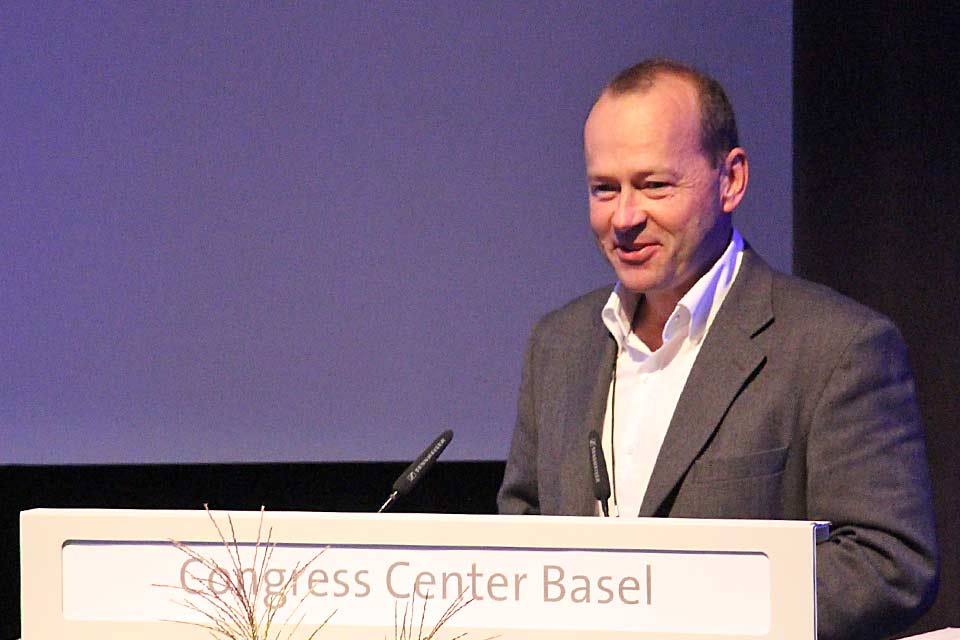
    Lucius Tamm gives one of many excellent presentations at the IBMA Biocontrol conference in Basel

    I have just returned from the 10th annual biocontrol conference in Basel under the auspices of the International Biocontrol Manufacturers Association. It also marked 20 years of the Association, so there was plenty to celebrate. Real progress has been made, but many challenges lie ahead.

    I presented a paper on the progress made by the Association over the last decade. When I was involved in the RELU project on biopesticides, I made a number of criticisms of the lack of sophistication shown by the Association. This offended some people, but my stance was that of a critical friend. Indeed, someone stopped me in the hall and said that I had not been critical enough!

    You can find the power points from my presentation here: IBMA Advocacy. This site also contains full information about our RELU project.

    There were many excellent and informative papers, but I would like to just select a few points.

    It is still taking far long to register new biocontrol products and make them available to farmers. The new legislative framework introduced by the European Union which is designed to facilitate their use as part of an Integrated Pest Management strategy is only slowly and imperfectly coming into effect.

    In the past the typical company in the industry has been a small, often family owned company operating on a university science park. Some of these have grown into somewhat bigger but still small companies or have been taken over by medium-sized companies with an environmental portfolio. It can take so long to develop a product and get it registered and cash flow problems occur.

    BASF and Bayer have now moved into the industry because they can see its growth potential with acquisitions of companies such as AgraQuest, known for its product Serenade. This has evidently caused some resentment in the industry and although the two companies are clearly on a charm offensive, I am not sure that it worked. It was also unclear to me if they really understood the specific character of the industry or had worked out their strategy in relation to it. I also think it may not generate the quick returns they might expect.

    In an incisive presentation, consultant Roma Gwynn pointed out that the industry was still not reaching the vast majority of growers. Biocontrol is, as she pointed out, knowledge intensive. It does require more technical skill on the part of growers and this may not always be easy to find, as our research showed. I also think that the absence of a publicly funded agricultural advisory service is a real loss in countries such as the UK as it could help in the process of knowledge transfer.

    Roma also made the point that we were living off research work done in the past. Not enough research was being done in universities and this could adversely affect innovation in the future.

    An alternative report of the conference can be found here: Biocontrol

    Saturday, October 17, 2015

    NFU report on UK membership of the EU

    The National Farmers' Union has published an evaluation of the arguments for and against UK membership of the EU from a farming perspective. At this stage they are not taking a 'better in' or 'better out' position ahead of the outcome of David Cameron's negotiations. However, this is really a holding position so that they can maximise their influence and it is difficult to believe that they would eventually recommend withdrawal.

    You can read the report here: NFU Report

    Agra Europe has produced an analysis of the NFU report, emphasising that it shows the way in which the CAP has become less common: An internal market?

    The 'Brexit' committee I am chairing for the Farmer-Scientist Network of the Yorkshire Agricultural Society has now produced a draft first report which will be considered at a meeting in York next Friday.

    How much money are dairy farmers losing?

    Dairy farmers in the UK are to receive an average one off payment of about £2,000 to ease cash flow problems. A dairy farmer in England will receive an average payment of £1,820, but the figures are higher for the devolved regions apart from Wales with farmers in Scotland being paid an average £2,620. However, NFU dairy board member Rob Harrison said that farmers were, on average, £10,000 worse off in July this year than a year ago, so the average payment would not make much difference. However, there are limits to how far taxpayers can be asked to bail out businesses in trouble, even when issues of food security are involved.

    Figures of losses at dairy farms often appear dramatic and one might wonder how they continue in business at all. However, they do not take account of non-dairy income and they typically are arrived after deducting a wage for every family member involved in the enterprise.

    Figures from The Dairy Group cover about 150 English and Welsh herds with an average 230 cows. Milk prices ranged widely from 19p to 32p a litre with an average price of 24.7p a litre. This range is quite odd when one recalls that one is dealing with an essentially undifferentiated product, but it is a question of who the farmer's processor is. Farmers in more geographically peripheral areas often don't have a choice.

    Feed costs have fallen by about 0.8p a litre, and are likely to fall further. Many milk producers will make a loss of 3p a litre this year, but this is before one takes account of non-milk income such as that from calf and cull cow sales. Non-milk income brings in about 3.6p a litre, producing a profit of about 0.8p a litre. There is also a labour charge of £20,000 per family member.

    The figures do not take into account rent, tax and capital expenditure. Nor, apparently, do they include subsidies which for many farmers make the difference between a loss and a profit.

    There is no doubt that dairy farmers are having a hard time. Just as in steel, a global surplus of product is driving down prices. However, there are considerable variations from farm to farm and calculating the 'profit' figure is by no means easy. Accounts are, after all, a social construction of reality.

    Tuesday, October 13, 2015

    Is Defra for the chop?

    There are rumours that the Department of Environment, Food and Rural Affairs could be disbanded in the latest round of government cuts. It has already been severely weakened in staffing terms.

    Food and farming could go to the Department of Business; environment could go to Energy and Climate Change (DECC); rural development could go to Communities and Local Government. Indeed, one could rebadge DECC as the Department of Environment, Energy and Climate Change. It is not clear who would deal with animal health and welfare.

    Needless to say this hasn't gone down too well with farmers' representatives, even though some of them formed the view that Defra stood for Department for the Elimination of Farming and Rural Activity. They preferred the old clientist MAFF. But they fear that if Defra went, farming and food would not be properly represented at the Cabinet table.

    Objectors say it is not clear who would lead on CAP reform, although the Treasury might like that role.

    Saturday, October 10, 2015

    The importance of agricultural advisory services

    Historically there was a recognition of the importance of agricultural advisory services as a means of enabling farmers to improve their productivity and adopt new techniques. However, as the state has retreated from agriculture, they have suffered in some countries. The picture across Europe is now highly variable: Project on advisory services

    One lesson appears that they need political support to be successful. Innovation is of key importance to farming and, of course, it can be facilitated in a variety of different ways. However, in my view, reductions in state support for applied research have not helped in countries like the UK.

    Wednesday, October 07, 2015

    Is French food culture under threat?

    Market day in Bayonne

    Not if a recent visit to Bayonne is anything to go by. On Friday evening I had an excellent meal at an not particularly pretentious restaurant. On Saturday morning, I wandered round the market where there was a wide variety of high quality goods on display from fish to vegetables. For a Brit, it was a bit of a shock to see a butcher selling horse meat.

    There is an historic tradition of chocolate production in the town and I enjoyed a hot chocolate at a café, opened not so many years ago by entrepreneurs.

    All may then seem to be well, but my French host thought there were a number of threats. Fast food was one, along with the traditional extended lunch going out of fashion. In the past one could go to a relatively cheap restaurant and have a decent meal with authentic ingredients prepared on the premises. There was now an increased reliance on industrialised ingredients.

    Farming in the Pyrénées

    Near Lescun, France

    I am just back from a visit to the Pyrénées, specifically to the village of Lescun which is at a height of around 1,000 metres. Often large flocks of sheep were on the roads as 'transhumance' was taking place from the mountain areas to the valley floors. Read more about 'transhumance' here: Transhumance

    The sheep here are used to produce milk from which cheese is made. This creates good value added, and along with subsidies, allows the peasants to survive. I was advised that 'paysan' is not a derogatory word in French: it is simply one of those words that does not translate well.

    I also tasted yoghurt made from sheep's milk, although I preferred the product using goat milk.Reference was made to a 'progressive' local dairy farmer who had built her herd up to 20 cows. That would not be seen as viable in the UK, but it is a different style of farming.

    The village

    The population of the commune has shrunk as pastoralism has declined and the village has a number of second homes. Village children go to a school in the valley. Efforts have been made to ensure that there is good internet connectivity. There is a bed and breakfast (once a hotel) and some tourist activity related to the excellent opportunities for walking.

    Tuesday, September 08, 2015

    Aid package for farmers

    Dairy farmers in particular have been hit by a global surplus of milk and the Russian embargo on EU produce. Against a background of mass protests in Brussels, the Commission unveiled a package of €500m of aid at an emergency Agriculture Council meeting: Aid package

    It was important to avoid any revival of market distorting intervention measures which would be potentially expensive and could have unintended consequences, as well as exacerbating the underlying problems rather than solving them. These measures are directed primarily at farm incomes and include measures such as advancing direct payments which should ease immediate cash flow problems.

    CAP expert Alan Matthews provides an in depth analysis of the measures here: Help for dairy farmers

    Thursday, August 27, 2015

    Hogan meets with farm ministers

    EU farm commissioner Phil Hogan is holding meetings with farm ministers ahead of an 'emergency' Farm Council meeting next month to discuss the difficult situation facing EU farmers, particularly those in the dairy sector: Phil Hogan

    There are calls for a restoration of full blown intervention purchases, but the active use of this policy instrument would be a step back to the past.

    Monday, July 27, 2015

    Demand growth for food likely to slow

    Reports from the European Commission suggest that the growth in demand for food is likely to slow down due to declining population growth and more stabilisation in consumption per capita: Long-term trends

    Despite slowing economic growth, China is likely to remain the main target for EU agri-food exports.

    All this implies tighter export markets which are likely to restrain prices and make things more difficult for EU farmers.

    Wednesday, July 01, 2015

    Crop diversification measures have limited impact on farm income

    The controversial crop diversification measures introduced in the last CAP reform have had a limited impact on farm income according to a new study: Crop diversification

    However, individual farms may have been more substantially affected with some experiencing an income loss of as much as 10 per cent. However, it should be noted that only 38 per cent are farms are affected by the measure.

    The NFU has complained about it a great deal in the UK and these figures question whether the measures are having much impact on their members. However, it may be that what was resented was what seen as an unnecessary intervention in farm level decision-making rather than any financial impacts.