As the debate goes on in the EU about whether milk quotas can be increased by 2 per cent as part of the soft landing when they are eventually abolished in 2015, it is an opportunity to reflect how milk quotas have affected the UK dairy industry.
They were introduced in 1984 to ease the severe budgetary crisis brought about by the structural surplus of milk in Europe. They worked in terms of limiting production growth and coping with the budgetary crisis, but they brought a lot of unintended (or intended) problems in their wake.
The basic problem is that milk quotas ossify structures. Some member states do permit trading of milk quotas within their boundaries, but despite the existence of an internal market, they cannot be traded across national borders. Hence, it is difficult to transfer production from less efficient producers to the more efficient or from less efficient regions to the more efficient.
Of course, some politicians welcome this as a means of enabling farming to survive in these areas. French politicians proudly proclaim that quotas are the reason that milk is still produced in every corner of France. In many areas of Europe only the quota system can guarantee prices high enough to keep farmers in business.
But all this comes at a price. Europe's share of world dairy markets has been falling. Third country markets for dairy products are being captured by more efficient producers in North and South America.
Dairy farmers like them, of course. Their arrival gave them a windfall capital gain and a retirement pot that can be worth as much as €1m.
There was a bare qualified majority in the Special Committee on Agriculture for the quota increase. Germany with a Bavarian farm minister is against, as are Austria, Finland (where there are quite a lot of dairy farmers) and Malta (where there are very few). France would like to delay, but the change will probably be go through and a small step will have been taken towards a more market oriented system.
Monday, February 25, 2008

Sunday, February 24, 2008
Cameron bangs food security drum
The popularity of the new rhetoric of food security is shown by its adoption by British Conservative Party leader, Dave Cameron, in address to the 100th anniversary conference of the National Farmers' Union. He revealed that he is himself a NFU member, although presumably one of the 'green welly' variety.
The job of the Leader of the Opposition is to question government policy and one can't blame him for jumping on any convenient bandwagon that comes on. Food security gave a coherent theme to a speech that was otherwise trying to push every possible button. Raising the spectre of a return to food rationing is a good way of dramatising some of the current changes in global food supply.
It's a bit harder to tease out from the speech what his remedies are. What he does make clear is that he is against a return to protectionism and trade barriers and to production linked subsdidies.
He seems to think that British farmers could produce more food for the domestic consumer if the burden of regulation was reduced. Standards in Britain are claimed to be more onerous than elsewhere in the EU. So, it is argued, one needs regulation that is based on outcomes, not processes, and on trust. What this seems to mean is more self-regulation and reliance on peer pressures with penalties only for the tiny minority of farmers who abuse trust.
All fine in principle, but how does this square with his emphasis on failings in animal health regulation at the beginning of his speech? Of course, the NFU is now blaming 'hobby farmers' for the second wave of the foot-and-mouth outbreak in Surrey last September. Smallholders have hit back by claiming that they often spend more on proper prevention practices than do commercial farmers, while others have argued that hobby farmers should not be demonised.
In time Dave Cameron may come to learn that the politics of farming brings you few votes and a lot of grief.
The job of the Leader of the Opposition is to question government policy and one can't blame him for jumping on any convenient bandwagon that comes on. Food security gave a coherent theme to a speech that was otherwise trying to push every possible button. Raising the spectre of a return to food rationing is a good way of dramatising some of the current changes in global food supply.
It's a bit harder to tease out from the speech what his remedies are. What he does make clear is that he is against a return to protectionism and trade barriers and to production linked subsdidies.
He seems to think that British farmers could produce more food for the domestic consumer if the burden of regulation was reduced. Standards in Britain are claimed to be more onerous than elsewhere in the EU. So, it is argued, one needs regulation that is based on outcomes, not processes, and on trust. What this seems to mean is more self-regulation and reliance on peer pressures with penalties only for the tiny minority of farmers who abuse trust.
All fine in principle, but how does this square with his emphasis on failings in animal health regulation at the beginning of his speech? Of course, the NFU is now blaming 'hobby farmers' for the second wave of the foot-and-mouth outbreak in Surrey last September. Smallholders have hit back by claiming that they often spend more on proper prevention practices than do commercial farmers, while others have argued that hobby farmers should not be demonised.
In time Dave Cameron may come to learn that the politics of farming brings you few votes and a lot of grief.
Friday, February 15, 2008
Fischler speaks out
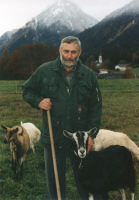
Alpine farmer and CAP reformer Franz Fischler
I have recently been working with others on an edited collection to be brought out from the Centre for Policy Studies in Brussels which re-visits the Fischler reforms of the CAP. The discussions held in relation to the book, which involved some people who knew Fischler's work well, confirmed my view that he was someone who combined strategic vision with a wily use of tactics and an understanding of which political buttons to push when.
Now the former farm supremo has provided a rare interview to Agra Focus. One of the intresting points he makes that two much is made of the difference between the two pillars: 'They are man-made and we should not make an icon of these structures.' What is important is that the money goes to the right recipients.
Fischler clearly thinks that it doesn't and he considers that rural development funding gives 'too much emphasis ... to agriculture, and not enough recognition of the countryside as a whole, including the non-agricultural population.' He also thinks that co-funding of the Single Farm Payment will come back on the agenda, thereby removing one of the main differences between the first and second pillars.
Fischler thinks that there will be 'start-up problems' with the co-decision process in the European Parliament, for example in terms of potential conflicts between the Agriculture and Budget committees. If these problems cannot be overcome, there is a high risk of delay to all reforms. He thinks that in the longer run the driving force behind EU reform packages will be the budget.
With the disapperance of the traditional intervention mechanisms, Fischelr revives the argument about the need for new forms and mechanisms to cover price volatility such as private-public partnerships in insurance systems or even concepts linked to futures markets.
He raises the issue of concentration in the retail sector, suggesting that an international competion regulator is needed, perhaps the WTO. However, this would seem to lie outside its remit. Moreover, competition authorities have not had much success in tackling this issue at the domestic level.
Sunday, February 03, 2008
Our farmers need handouts insist Scots
Scotland's rural affairs minister Richard Lochhead said he will be pulling out all the stops to ensure the UK government is in no doubt of Scotland's desire to maintain support for farmers and crofters. Scotland will take a tough line over the issue, even if its policies diverge from those of the UK Government.
Mr Lochhead insisted that there was an ongoing need to support Scottish agriculture, especially livestock. Scotland was not happy to move away from support mechanisms at the same pace as the UK. Scotland has a strong EU representation through its Brussels office and a dissident voice could prove embarrassing for the UK in its efforts to reform the CAP.
There is a genuine issue about how Scotland can deliver environmental benefits without viable farm businesses. There is a substantial issue about remote, small-scale farming in the Highlands and Islands. However, a proper European rural policy could help Scotland more than the current CAP.
Mr Lochhead insisted that there was an ongoing need to support Scottish agriculture, especially livestock. Scotland was not happy to move away from support mechanisms at the same pace as the UK. Scotland has a strong EU representation through its Brussels office and a dissident voice could prove embarrassing for the UK in its efforts to reform the CAP.
There is a genuine issue about how Scotland can deliver environmental benefits without viable farm businesses. There is a substantial issue about remote, small-scale farming in the Highlands and Islands. However, a proper European rural policy could help Scotland more than the current CAP.
Sunday, January 27, 2008
Subsidies 97 per cent of farm profit
Subsidy income now represents 97 per cent of farm profits, according to the annual Farm Profits Survey by the Institute of Chartered Accountants' Farming and Rural Business Group. This is despite a small rise in turnover and profitability during 2006/7.
The survey of agricultiral accountants revealed that average farm turnover for 2006/7 was £312,000, yielding an average net profit of £46,300, up by £8600. This figure coincided with average drawings and was little more than the average receipt from subsidies of £45,000. Figures for 2007/8 should, of course, be better for cereal farmers in particular.
This survey emphasises the resistance that could be encountered if subsidies were ended or severly cut back. It also reinforces the case for a once and for all 'buying out' of subsidies through a bond scheme.
The survey of agricultiral accountants revealed that average farm turnover for 2006/7 was £312,000, yielding an average net profit of £46,300, up by £8600. This figure coincided with average drawings and was little more than the average receipt from subsidies of £45,000. Figures for 2007/8 should, of course, be better for cereal farmers in particular.
This survey emphasises the resistance that could be encountered if subsidies were ended or severly cut back. It also reinforces the case for a once and for all 'buying out' of subsidies through a bond scheme.
Monday, January 21, 2008
Lisbon and the CAP
The debate on the Treaty of Lisbon is about to start in the UK. It will be mainly focused on fears of loss of British 'sovereignty' and doubtless very little will be said about the CAP, other than as an example of what is wrong with the EU.
However, if ratified, the Treaty will have some profound effects on CAP decision-making. The decision-making process is likely to become more complex and longer (as if it wasn't already) which is why there is a rush to get dossiers completed by the end of the year. The Farm Council will no longer be able to ignore what the Parliament says as they effectively can at the moment.
The Parliament has been hardly in the vanguard of progressive thinking about the CAP and has got itself into a real muddle over pesticides policy, taking decisions that work against its own intentions. However, rather than being a spokesperson for farm interests, the Agriculture and Rural Development Committee will have to move into the political mainstream while other committees such as Trade and Budget will have to keep a closer eye on what it is up to.
Admittedly, some progress has been made under the former chairmanship of Joseph Daul and now Neil Parrish (representing South-West England). The recent wine reform agreement reflected what MEPs had advocated on grubbing up.
The new Treaty does make a clearer distinction between 'delegated acts', i.e., real legislation and 'implementing rules'. The Commission is understood to have suggested that there may have to be revisions to the existing comitology rules in order to clarify when decisions can pass to the Management Committee and when they stay in Council.
Perhaps most interesting of all the Treaty will bring about a reduction in the number of Commissioners from 27 to 15 by 2014. Coincident with what is hoped to be a radical reform of the CAP, the Agriculture and Rural Development post could disappear. If it was merged with say, environment, this would embed a new approach to agricultural issues.
However, if ratified, the Treaty will have some profound effects on CAP decision-making. The decision-making process is likely to become more complex and longer (as if it wasn't already) which is why there is a rush to get dossiers completed by the end of the year. The Farm Council will no longer be able to ignore what the Parliament says as they effectively can at the moment.
The Parliament has been hardly in the vanguard of progressive thinking about the CAP and has got itself into a real muddle over pesticides policy, taking decisions that work against its own intentions. However, rather than being a spokesperson for farm interests, the Agriculture and Rural Development Committee will have to move into the political mainstream while other committees such as Trade and Budget will have to keep a closer eye on what it is up to.
Admittedly, some progress has been made under the former chairmanship of Joseph Daul and now Neil Parrish (representing South-West England). The recent wine reform agreement reflected what MEPs had advocated on grubbing up.
The new Treaty does make a clearer distinction between 'delegated acts', i.e., real legislation and 'implementing rules'. The Commission is understood to have suggested that there may have to be revisions to the existing comitology rules in order to clarify when decisions can pass to the Management Committee and when they stay in Council.
Perhaps most interesting of all the Treaty will bring about a reduction in the number of Commissioners from 27 to 15 by 2014. Coincident with what is hoped to be a radical reform of the CAP, the Agriculture and Rural Development post could disappear. If it was merged with say, environment, this would embed a new approach to agricultural issues.
Friday, January 18, 2008
Getting decisions on the Health Check
With 27 member states the whole negotiating process in the Farm Council has become a lot more difficult, not that it was ever easy. Another complication is that fisheries matters are now dealt with in the Farm Council and this means that the December meeting is the scene for an inevitable battle between fisheries ministers over quotas.
The only effective way to proceed is to forge compromises outside the Council chamber through bilaterals between the Presidency/Commission and individual ministers. A lot then depends on the negotiating skill of the Presidency, but the Portuguese Presidency is judged to have been a success. Slovenia is the first transition state to be in the chair, but both its farm minister and its officials enjoy a good reputation.
The Health Check will have to be finalised at the end of this year under the French presidency. France will probably try to get a deal in November as it can then include some direct reference to the Health Check in its final Summit conclusions, presumably providing some form of wording that would support French ambitions in the 2009 review of the EU budget with the objective of maintaining high levels of CAP spending after 2009.
Another reason to get a deal before December is that this would leave little time for lawyers and linguists to check it before the end of the year. This could then open up the prospect of a challenge from MEPs on the grounds that they should have had co-decision powers on the Health Check. Life under co-decision will be interesting once the new Lisbon Treaty enters into force (as anticipated) in January 2009.
The only effective way to proceed is to forge compromises outside the Council chamber through bilaterals between the Presidency/Commission and individual ministers. A lot then depends on the negotiating skill of the Presidency, but the Portuguese Presidency is judged to have been a success. Slovenia is the first transition state to be in the chair, but both its farm minister and its officials enjoy a good reputation.
The Health Check will have to be finalised at the end of this year under the French presidency. France will probably try to get a deal in November as it can then include some direct reference to the Health Check in its final Summit conclusions, presumably providing some form of wording that would support French ambitions in the 2009 review of the EU budget with the objective of maintaining high levels of CAP spending after 2009.
Another reason to get a deal before December is that this would leave little time for lawyers and linguists to check it before the end of the year. This could then open up the prospect of a challenge from MEPs on the grounds that they should have had co-decision powers on the Health Check. Life under co-decision will be interesting once the new Lisbon Treaty enters into force (as anticipated) in January 2009.
Friday, January 04, 2008
The challenges of livestock production
At a recent meeting of its Business Forum, the Food Ethics Council reviewed livestock production in the context of climate change and the following key points emerged:
*Livestock contribute about eight percent of total greenhouse gas emissions from UK consumption. Meat accounts for more than two-thirds of that.
*UK consumption of poultry meat has doubled over the past 20 years, whereas red meat and pork has remained static. UK per capita consumption is well above the world average.
*Changes to production can increase efficiency and reduce emissions, but producers should be alert to potential trade-offs with other sustainability criteria and animal welfare.
*Policy makers are exploring the scope to reduce emissions by reducing meat demand. The economics of this are uncertain and, though potentially costly for UK meat producers, would not necessarily harm them.
*Initiatives to promote sustainable production and consumption must consider: (a) differences between livestock species, business models and production systems; (b) opportunity costs of sustainability strategies; (c) what foods we would eat instead if we ate less meat.
*Businesses should expect a range of public and private sector initiatives intended to improve the sustainability not only of specific products, but also of the diet that we produce, sell and eat.
The last two points should be relevant to the CAP, but there is little evidence that they are being considered in any systematic way.
*Livestock contribute about eight percent of total greenhouse gas emissions from UK consumption. Meat accounts for more than two-thirds of that.
*UK consumption of poultry meat has doubled over the past 20 years, whereas red meat and pork has remained static. UK per capita consumption is well above the world average.
*Changes to production can increase efficiency and reduce emissions, but producers should be alert to potential trade-offs with other sustainability criteria and animal welfare.
*Policy makers are exploring the scope to reduce emissions by reducing meat demand. The economics of this are uncertain and, though potentially costly for UK meat producers, would not necessarily harm them.
*Initiatives to promote sustainable production and consumption must consider: (a) differences between livestock species, business models and production systems; (b) opportunity costs of sustainability strategies; (c) what foods we would eat instead if we ate less meat.
*Businesses should expect a range of public and private sector initiatives intended to improve the sustainability not only of specific products, but also of the diet that we produce, sell and eat.
The last two points should be relevant to the CAP, but there is little evidence that they are being considered in any systematic way.
Sunday, December 23, 2007
Food prices face new surge
Global food prices face a new surge. In Chicago wheat and rice prices for delivery in March 2008 have jumped to an all-time high, soyabean prices are at a 34-year high and corn prices at a 11-year peak. The agricultural commodities price rises are the result of high demand, poor harvests and low stockpiles of food.
Food prices in the UK are more than 5 per cent higher than a year ago. Bread prices have jumped 11.6 per cent over the last year, double the increase for cake or biscuits. Butter and eggs are about a third more expensive than last November, milk prices are 16.6 per cent higher and cheese is up 8.8 per cent.
Eurozone food price inflation was up to 4.3 per cent in November. It was one of the main reasons for the jump in the zone's annual inflation rate from 2.6 per cent in October to 3.1 per cent, the highest level in six years. In the US, annual food price inflation of 4.8 per cent in November combined to a rise in the inflation rate to 4.3 per cent.
Deeper long-term economic influences are likely to have more influence on the future supply and demand of major food commodities and therefore on medium to lomg-term price levels, than the current boom in biofuel production. This is the main conclusion of a new report from the International Food Policy Institute: Food . One might add, however, that biofuel demand is more susceptible to the effects of policy initiatives, in particular over generous subsidies and tax reliefs.
The report points out that while overall world economic growth is likely to remain in the 4 per cent a year average range, growth in the developing countries with expanding food demand is expected to average 6 per cent a year well into the next decade. IFPRI points out that of the world's most food insecure countries, which have the greatest propensity to import food, twenty-two had average annual growth rates ranging from 5 per cent to 16 per cent between 2004 and 2006.
What IFPRI characterises as 'diet globalisation' is also a major long-term demand changing factor. More affluent city-dwelling Asian consumers are increasingly seeking non-traditional foods. This is leading to reduced rice consumption and increased consumption of wheat and wheat-based products, temperate-zone vegetables and dairy products - and increases in demand for animal feeds for the livestock producing many of these foods.
One by-product of rising food prices is that import tariffs for agricultural commodities, in paricular cereals, vegetable oils and rice, are being slashed in an effort by developed and developing countries to cushion their local markets against rising food inflation. On the other hand, export tariffs have been raised by several key exporting countries such as Argentina in an attempt to keep local markets well supplied.
Given that the rise in food prices is not likely to be a short-term phenomenon, one might question why the commercial aspects of farming continue to require subsidy.
Food prices in the UK are more than 5 per cent higher than a year ago. Bread prices have jumped 11.6 per cent over the last year, double the increase for cake or biscuits. Butter and eggs are about a third more expensive than last November, milk prices are 16.6 per cent higher and cheese is up 8.8 per cent.
Eurozone food price inflation was up to 4.3 per cent in November. It was one of the main reasons for the jump in the zone's annual inflation rate from 2.6 per cent in October to 3.1 per cent, the highest level in six years. In the US, annual food price inflation of 4.8 per cent in November combined to a rise in the inflation rate to 4.3 per cent.
Deeper long-term economic influences are likely to have more influence on the future supply and demand of major food commodities and therefore on medium to lomg-term price levels, than the current boom in biofuel production. This is the main conclusion of a new report from the International Food Policy Institute: Food . One might add, however, that biofuel demand is more susceptible to the effects of policy initiatives, in particular over generous subsidies and tax reliefs.
The report points out that while overall world economic growth is likely to remain in the 4 per cent a year average range, growth in the developing countries with expanding food demand is expected to average 6 per cent a year well into the next decade. IFPRI points out that of the world's most food insecure countries, which have the greatest propensity to import food, twenty-two had average annual growth rates ranging from 5 per cent to 16 per cent between 2004 and 2006.
What IFPRI characterises as 'diet globalisation' is also a major long-term demand changing factor. More affluent city-dwelling Asian consumers are increasingly seeking non-traditional foods. This is leading to reduced rice consumption and increased consumption of wheat and wheat-based products, temperate-zone vegetables and dairy products - and increases in demand for animal feeds for the livestock producing many of these foods.
One by-product of rising food prices is that import tariffs for agricultural commodities, in paricular cereals, vegetable oils and rice, are being slashed in an effort by developed and developing countries to cushion their local markets against rising food inflation. On the other hand, export tariffs have been raised by several key exporting countries such as Argentina in an attempt to keep local markets well supplied.
Given that the rise in food prices is not likely to be a short-term phenomenon, one might question why the commercial aspects of farming continue to require subsidy.
Thursday, December 20, 2007
Wine reform watered down
EU farm ministers have agreed a reform package for the wine sector that dilutes the package proposed by Commissioner Fischer Boel. Pressure from France and Italy means that fewer vineyards will be scrapped and the surplus of low quality wine will continue to be distilled for industrial use over a four year period.
The Commission's plan to outlaw chapitalisation (using sugar or must to add sweetness to alcohol) has been scrapped and it will still be allowed in those statements where it is already legal. This proposal was opposed by Austria, Germany and Hungary. One consequence is that subsidies will have to be prolonged to producers in the southern states which use must as the grape juice is more expensive.
Traditionalists will also be pleased that an overall harmonisation of labelling practices throughout the EU as planned by the Commission will not take place. However, winemakers not using geographical indications and designations of origin will in future be allowed to indicate their wines' grape variety and vintage on the label.
In this connection, UK Labour MEP Brian Simpson commented, 'This is the battle for the £6 bottle. There is too much snobbery about wine, which has caused the resistance.'
Much of the annual €1.3bn EU wine budget, about half of which buys up unwated wine, will be put into national envelopes for member state governments to use in promotion and restructuring.
Putting a brave face on the deal, Commissioner Fischer Boel admitted, 'We didn't get everything we wanted, but we have ended up with a well-balanced agreement.' In other words, the wine producing states have exerted effective pressure to defend their interests.
The underlying problem is that traditional growers like France and Italy have been consuming a third less of their own crop. Where consumption is growing in countries like Britain and Sweden, it is often being driven by 'New World' wines which are perceived to offer better value.
Whether the EU wine lake can be drained in five years as is hoped remains to be seen. Much will depend on effective implementation at member state level.
The Commission's plan to outlaw chapitalisation (using sugar or must to add sweetness to alcohol) has been scrapped and it will still be allowed in those statements where it is already legal. This proposal was opposed by Austria, Germany and Hungary. One consequence is that subsidies will have to be prolonged to producers in the southern states which use must as the grape juice is more expensive.
Traditionalists will also be pleased that an overall harmonisation of labelling practices throughout the EU as planned by the Commission will not take place. However, winemakers not using geographical indications and designations of origin will in future be allowed to indicate their wines' grape variety and vintage on the label.
In this connection, UK Labour MEP Brian Simpson commented, 'This is the battle for the £6 bottle. There is too much snobbery about wine, which has caused the resistance.'
Much of the annual €1.3bn EU wine budget, about half of which buys up unwated wine, will be put into national envelopes for member state governments to use in promotion and restructuring.
Putting a brave face on the deal, Commissioner Fischer Boel admitted, 'We didn't get everything we wanted, but we have ended up with a well-balanced agreement.' In other words, the wine producing states have exerted effective pressure to defend their interests.
The underlying problem is that traditional growers like France and Italy have been consuming a third less of their own crop. Where consumption is growing in countries like Britain and Sweden, it is often being driven by 'New World' wines which are perceived to offer better value.
Whether the EU wine lake can be drained in five years as is hoped remains to be seen. Much will depend on effective implementation at member state level.
Monday, December 17, 2007
Join the CAP health check debate
You can do so at: Debate . Jack Thurston of farmsubsidy.org starts off with a critique of the shortcomings of the Health Check, but gets slagged off later for 2nd rate left-wing journalism! Inevitably, those with axes to grind are there whether ideological (GM) or particular (suckler cows in N.Ireland). There is also a plaintive plea for more information in Bulgarian.
I suppose that my view of these exercises is that they give the semblance of participation while the real decisions are taken elsewhere. As a debate, it is very difficult to get people to move from their fixed positions.
Launching the debate, Fischer Boel once again showed her susceptibility to food security discourses. Referring to an 'atmopshere of anxiety' surrounding the markets, she said: 'Renewed awareness of the importance of food is a good thing. We should never be complacent about supplying life's basic necessities.'
Given that farmers (other than livestock farmers) are now getting a better return from the market, one might think that now was a good time to substantially reduce subsidies.
In her presentation to the European Parliament Agriculture Committee, Fischer Boel seemed to go further than the Communication itself, for example by clearly indicating her preference for a longer-term shift towards a flat rate Single Farm Payment or for ending the 45€/ha. energy crop premium.
I suppose that my view of these exercises is that they give the semblance of participation while the real decisions are taken elsewhere. As a debate, it is very difficult to get people to move from their fixed positions.
Launching the debate, Fischer Boel once again showed her susceptibility to food security discourses. Referring to an 'atmopshere of anxiety' surrounding the markets, she said: 'Renewed awareness of the importance of food is a good thing. We should never be complacent about supplying life's basic necessities.'
Given that farmers (other than livestock farmers) are now getting a better return from the market, one might think that now was a good time to substantially reduce subsidies.
In her presentation to the European Parliament Agriculture Committee, Fischer Boel seemed to go further than the Communication itself, for example by clearly indicating her preference for a longer-term shift towards a flat rate Single Farm Payment or for ending the 45€/ha. energy crop premium.
Tuesday, December 04, 2007
Meat: facing the dilemmas
The excellent Food Ethics published by the Food Ethics Council has devoted its latest issue to this theme. You can read excerpts online at: Meat
There are a lot of issues related to increasing meat consumption: climate change; health issues; water scarcity and biodiversity loss from clearing forests to make way for pasture and feed production; and animal welfare, which is certainly not a luxury we can no longer afford. The FAO calculates that livestock account for 18 per cent of total anthropogenic greenhouse gas emissions. Cows and sheep burp a lot releasing methane, which has a global warming potency 21 times greater than CO2.
In his introduction to the edition, Tom MacMillan suggests that 'the challenge is not only to eat less but also to eat better meat - produced in more humane and environmentally sound production systems yielding a better quality product.' Henry Buller reports in the issue from his innovative 'Eating Biodiversity' project on this theme.
I have not yet read all the articles, but what strikes me is that although there are plenty of references to the FAO and some to the OECD and WTO, the EU and the CAP are conspicuous by their absence. Surely the EU should be contributing to this debate and developing proactive policies that bring together a number of related objectives in different spheres of policy? Or is that too much to hope for?
There are a lot of issues related to increasing meat consumption: climate change; health issues; water scarcity and biodiversity loss from clearing forests to make way for pasture and feed production; and animal welfare, which is certainly not a luxury we can no longer afford. The FAO calculates that livestock account for 18 per cent of total anthropogenic greenhouse gas emissions. Cows and sheep burp a lot releasing methane, which has a global warming potency 21 times greater than CO2.
In his introduction to the edition, Tom MacMillan suggests that 'the challenge is not only to eat less but also to eat better meat - produced in more humane and environmentally sound production systems yielding a better quality product.' Henry Buller reports in the issue from his innovative 'Eating Biodiversity' project on this theme.
I have not yet read all the articles, but what strikes me is that although there are plenty of references to the FAO and some to the OECD and WTO, the EU and the CAP are conspicuous by their absence. Surely the EU should be contributing to this debate and developing proactive policies that bring together a number of related objectives in different spheres of policy? Or is that too much to hope for?
Thursday, November 22, 2007
Health Check Attacks Peripheral Ills
It is difficult to say anything new about the CAP Health Check proposals because they have been leaked so extensively. What they amount to is finding a patient who has a number of chronic long-term illnesses which require radical treatment, but then proposing to concentrate attention on the patient's toothache and Athlete's Foot.
The proposed capping of payments to large farms is intended to increase the popularity of the policy by reducing transfers from taxpayers to those who are already propserous. It thus would enable the Commission to portray the policy as one that primarily helps small, marginal or peripheral farmers, albeit in a very inefficient fashion. The issue of why there should be subsidies at all for commercial aspects of farming activity is thereby evaded.
The industry's protectionist subsidy seeking mindset has not actually helped it. It has diverted attention from the needs of the customer and the opportunities presented by higher value added products. A recent example is to be found in efforts to get more Government purchases of food sourced from Britain. Presumably more is not being so sourced because of price/quality problems. Why not identify and tackle those problems?
I never expected much from the Health Check. But there is a need to aim for a more radical reform of policy in the run up to 2013.
The proposed capping of payments to large farms is intended to increase the popularity of the policy by reducing transfers from taxpayers to those who are already propserous. It thus would enable the Commission to portray the policy as one that primarily helps small, marginal or peripheral farmers, albeit in a very inefficient fashion. The issue of why there should be subsidies at all for commercial aspects of farming activity is thereby evaded.
The industry's protectionist subsidy seeking mindset has not actually helped it. It has diverted attention from the needs of the customer and the opportunities presented by higher value added products. A recent example is to be found in efforts to get more Government purchases of food sourced from Britain. Presumably more is not being so sourced because of price/quality problems. Why not identify and tackle those problems?
I never expected much from the Health Check. But there is a need to aim for a more radical reform of policy in the run up to 2013.
Sunday, November 18, 2007
EU warns Romania on farm payments
Romania has been told to tighten controls in its farm payment systems or face a severe cut in it subsdies next year from the EU. The European Commission said that independent auditors Deloitte had found 'major deficiencies in the software module designed to ensure that payments are made correctly.'
The Commission said that Romania could lose about €180m in subsidies next yar if it failed to correct problems in its software systems. It delivered the warning amid persistent complaints from some of the EU's western European members that Romania was not fully prepared for the challenges of EU membership when it became a member last January.
The financial stakes are high because Romania is due to recive €443m in direct payments next year, part of a grand total of €4.3bn between now and the end of 2013. Agriculture accounts for about 40 per cent of employment.
The Commission said that Romania could lose about €180m in subsidies next yar if it failed to correct problems in its software systems. It delivered the warning amid persistent complaints from some of the EU's western European members that Romania was not fully prepared for the challenges of EU membership when it became a member last January.
The financial stakes are high because Romania is due to recive €443m in direct payments next year, part of a grand total of €4.3bn between now and the end of 2013. Agriculture accounts for about 40 per cent of employment.
Sunday, November 11, 2007
New Farm Bill 'offers no reform at all'
At one time in the 1990s it seemed as if the USA might lead the way in reducing farm subsidies. Not any more. A new version of the US Farm Bill, just approved by the Senate's Agriculture Committee, has been attacked by acting US farm secretary, Chuck Conner. The long-awaited Senate version of the Bill, which follows one from the House of Representatives in August, provides plenty of goodies for American farmers for the next five years. For example, there would be a permanent $5bn 'disaster' fund.
Mr Conner said bluntly that the draft Bill offered 'no reform at all'. The lack of a meaningful cap on payments would allow millionaires to continue to participate in farm programmes. Just how widespread this practice is has been illustrated by our friends at CAP Health Check by superimposing the number of beneficiaries on a Google map of New York City. Other wealthy areas in cities like Los Angeles also contain their fair share of sofa farmers.
It's a story all too familiar in Europe: take away money from taxpayers and consumers on average incomes or less and give to wealthy landowners.
Mr Conner said bluntly that the draft Bill offered 'no reform at all'. The lack of a meaningful cap on payments would allow millionaires to continue to participate in farm programmes. Just how widespread this practice is has been illustrated by our friends at CAP Health Check by superimposing the number of beneficiaries on a Google map of New York City. Other wealthy areas in cities like Los Angeles also contain their fair share of sofa farmers.
It's a story all too familiar in Europe: take away money from taxpayers and consumers on average incomes or less and give to wealthy landowners.
Thursday, November 01, 2007
CAP still takes up nearly 47 per cent of budget
The CAP still took 46.7 per cent of overall allocated EU expenditure in 2006, compared to 46.2 per cent in 2005, according to figures released by the European Commission. However, this represents a decrease on the 49 per cent figure in 2003. It also accounted for 0.44 per cent of GNI.
The ten accession states received 9 per cent of overall CAP funding including 27.4 per cent of the Rural Development Budget. France remains the individual member state with the largest share of spending but this was down from 20.7 per cent in 2005 and 21.6 per cent in 2004.
68.4 per cent of the money was spent on direct aids, roughly half of which went on the SPS in the EU-15. Spending on export refunds and intervention dropped to just 5 per cent and 1.5 per cent of the CAP budget respectively.
Five member states (Austria, France, Ireland, Portugal and Spain) are net beneficiaries of the CAP budget, as are virtually all new member states (Malta got only €9.4m in agricultural spending). Their share of spending will increase in the coming years with the phasing in of the SFP.
More details at: Finances
The ten accession states received 9 per cent of overall CAP funding including 27.4 per cent of the Rural Development Budget. France remains the individual member state with the largest share of spending but this was down from 20.7 per cent in 2005 and 21.6 per cent in 2004.
68.4 per cent of the money was spent on direct aids, roughly half of which went on the SPS in the EU-15. Spending on export refunds and intervention dropped to just 5 per cent and 1.5 per cent of the CAP budget respectively.
Five member states (Austria, France, Ireland, Portugal and Spain) are net beneficiaries of the CAP budget, as are virtually all new member states (Malta got only €9.4m in agricultural spending). Their share of spending will increase in the coming years with the phasing in of the SFP.
More details at: Finances
Sunday, October 28, 2007
Productionists bang the food security drum
It has been evident for some time that those who would want to see a switch away from a greater emphasis on environmental issues in relation to agriculture and a restoration of a productionist orientation have seen food security as one of their best cards.
In part this is because food supplies are getting tighter. Supply has been affected by growing demand for biofuels and other non-food crops. Demand is being stimulated by a growing and more prosperous world population.
So could 'the UK run short of food in the future' as is argued by regular Farmers Weekly contributor Hugh Brown (who combines farming with working full time for Capital Radio). This shows a not unsurprising lack of faith in the price mechanism for a farmer.
If the supply-demand balance alters, prices will go up and this will encourage more production. Of course, the land supply is not infinite, but there is plenty of land in the world, not least in the Global South, that is not being farmed as efficiently as it could be (without having an adverse environmental impact). Of course, climate change is a big uncertainty, but this shows why it should be a priority in decisions about farm policy.
Brown concentrates a lot on his fire at Defra, and it is certainly a department that has had its problems. From a farming perspective, of course, it no longer acts as the voice of the farmer in the way that MAFF did, but that was one of the reasons for setting up Defra with a new mission.
Brown argues, 'If we do start to go short of food and need to start planning seriously about how we feed the nation, it would be somewhat of a contradiction to have the same department both try to encourage the growing of food, while the other part of the department is trying to nail down environmental regulation, potentially curtailing food production.'
His solution is to give the food part of Defra its own department, presumably a Ministry of Food Security, so that 'it might be able to work more effectively in planning ahead.' The shadow of Stalinist five year plans dies hard in some areas of farming. That is not to say that we shouldn't continue to fund work that is concerned with diseases and pests that affect plants and livestock and hence undermine production.
However, given the challenge of climate change, not to mention various pollution issues, farming needs to be guided by an effective environmental policy, but also one that provides farmers with incentives for maximising environmental benefits.
In part this is because food supplies are getting tighter. Supply has been affected by growing demand for biofuels and other non-food crops. Demand is being stimulated by a growing and more prosperous world population.
So could 'the UK run short of food in the future' as is argued by regular Farmers Weekly contributor Hugh Brown (who combines farming with working full time for Capital Radio). This shows a not unsurprising lack of faith in the price mechanism for a farmer.
If the supply-demand balance alters, prices will go up and this will encourage more production. Of course, the land supply is not infinite, but there is plenty of land in the world, not least in the Global South, that is not being farmed as efficiently as it could be (without having an adverse environmental impact). Of course, climate change is a big uncertainty, but this shows why it should be a priority in decisions about farm policy.
Brown concentrates a lot on his fire at Defra, and it is certainly a department that has had its problems. From a farming perspective, of course, it no longer acts as the voice of the farmer in the way that MAFF did, but that was one of the reasons for setting up Defra with a new mission.
Brown argues, 'If we do start to go short of food and need to start planning seriously about how we feed the nation, it would be somewhat of a contradiction to have the same department both try to encourage the growing of food, while the other part of the department is trying to nail down environmental regulation, potentially curtailing food production.'
His solution is to give the food part of Defra its own department, presumably a Ministry of Food Security, so that 'it might be able to work more effectively in planning ahead.' The shadow of Stalinist five year plans dies hard in some areas of farming. That is not to say that we shouldn't continue to fund work that is concerned with diseases and pests that affect plants and livestock and hence undermine production.
However, given the challenge of climate change, not to mention various pollution issues, farming needs to be guided by an effective environmental policy, but also one that provides farmers with incentives for maximising environmental benefits.
Wednesday, October 17, 2007
Fischer Boel rebuffs twitchers
EU agriculture commissioner Mariann Fischer Boel has rebuffed claims by the Royal Society for the Protection of Birds (RSPB) that the time has come for a new CAP. The suggestion is made in a report launched by the RSPB and its associated global organisation Birdlife International: New challenges, new CAP
RSPB head of agriculture Gareth Morgan had the temerity to suggest that the CAP needs a far greater environmental element to retain its current budget: 'That means scrapping subsidies and, instead, rewarding farmers for measures to help tackle climate change, reverse widlife declines and improve water quality.'
But Fischer Boel was having none of it. She insisted that much of what the organisations were asking for was already being delivered by the CAP: 'You say you want a new CAP ... today's CAP has a huge number of "new" elements compared with a few years ago.' Of course there are significant new elements, but whether that amounts to a new policy is another matter altogether.
Fischer Boel went on to explain that the forthcoming 'health check' would provide scope for further refinement. But refinement is just what it is. As contributors to the CAP HealthCheck blog have pointed out, an opportunity is being missed to do some fundamental thinking about the objectives of the CAP and how they can be delivered. See: Health Check
RSPB head of agriculture Gareth Morgan had the temerity to suggest that the CAP needs a far greater environmental element to retain its current budget: 'That means scrapping subsidies and, instead, rewarding farmers for measures to help tackle climate change, reverse widlife declines and improve water quality.'
But Fischer Boel was having none of it. She insisted that much of what the organisations were asking for was already being delivered by the CAP: 'You say you want a new CAP ... today's CAP has a huge number of "new" elements compared with a few years ago.' Of course there are significant new elements, but whether that amounts to a new policy is another matter altogether.
Fischer Boel went on to explain that the forthcoming 'health check' would provide scope for further refinement. But refinement is just what it is. As contributors to the CAP HealthCheck blog have pointed out, an opportunity is being missed to do some fundamental thinking about the objectives of the CAP and how they can be delivered. See: Health Check
Sunday, October 14, 2007
Capital gains tax hit on farmers is not good news
Why should anyone who wants to see a more modern agriculture in Britain be concerned about the fact that the measures announced by the Chancellor in the pre-Budget report impose a greater tax burden on farmers?
Because it may discourage farmers from selling up. That is an important mechanism for restructuring farms to permit greater efficiency. It also allows new capital and younger managers with new ideas to come into the industry. Even if average age statistics can be misleading, there are still many farmers who started farming when maximising production with the help of subsidies was the favoured policy.
Farmers have been hit particularly hard by the Chancellor's scrapping of indexation allowances. This reduces taxable gains on assets held long term. It has had the effect of making tax free the first 105 per cent of gains on farmland held since at least 1982, leaving only gains above that amount subject to capital gains tax.
Farm prices have been buoyed by a number of factors. The availability of substantial subsidies has been one factor, but farms within easy reach of London have often been purchased for lifestyle and/or sporting reasons. The recent hike in crop prices also makes arable farms a more attractive investment.
Some farmers who have been thinking of selling up may now try and do so before April, but that may entail some discounting as purchasers will be well aware of the tax penalties attached to a delayed sale.
Because it may discourage farmers from selling up. That is an important mechanism for restructuring farms to permit greater efficiency. It also allows new capital and younger managers with new ideas to come into the industry. Even if average age statistics can be misleading, there are still many farmers who started farming when maximising production with the help of subsidies was the favoured policy.
Farmers have been hit particularly hard by the Chancellor's scrapping of indexation allowances. This reduces taxable gains on assets held long term. It has had the effect of making tax free the first 105 per cent of gains on farmland held since at least 1982, leaving only gains above that amount subject to capital gains tax.
Farm prices have been buoyed by a number of factors. The availability of substantial subsidies has been one factor, but farms within easy reach of London have often been purchased for lifestyle and/or sporting reasons. The recent hike in crop prices also makes arable farms a more attractive investment.
Some farmers who have been thinking of selling up may now try and do so before April, but that may entail some discounting as purchasers will be well aware of the tax penalties attached to a delayed sale.
Wednesday, October 10, 2007
The environmental impact of ending set aside
Idling land resources through set aside never made a lot of economic sense and was largely a way of dealing with over production encouraged by the old style CAP. However, many environmentalists felt that set aside encouraged biodiversity.
This was particularly the case for the Royal Society for the Protection of Birds (RSPB) which with over a million members, largely urban gardeners whose bird identification skills are sketchy, is a very influential conservationist group in the UK. Defra policy is strongly influenced by the RSPB which has framed the agenda in terms of, for example, using farmland bird populations as an indicator of environmental stress, although they may not the best measure.
The RSPB view, as expressed by head of conservation Sue Armstrong Brown, is that 'One of the strengths of set-aside was simply that there was lots of it. It made the whole countryside more varied and wildlife loves variety.' The NFU, in contrast, argues that it is a blunt policy instrument and that only a small part of set aside ever had great environmental value.
Defra secretary Hilary Benn has stepped in to warn farmers to look after habitats and bird numbers after set aside has gone, or face new regulations to compel them to do so. He announced an immediate programme of environmental monitoring of farmland.
In fact, as Don Curry has pointed out, this is an English policy manifestation of a mich wider debate. As commodity prices have risen, global tensions between the use of land for food, fuel and the creation of environmental benefits have increased. There are no easy answers, but a debate is needed.
This was particularly the case for the Royal Society for the Protection of Birds (RSPB) which with over a million members, largely urban gardeners whose bird identification skills are sketchy, is a very influential conservationist group in the UK. Defra policy is strongly influenced by the RSPB which has framed the agenda in terms of, for example, using farmland bird populations as an indicator of environmental stress, although they may not the best measure.
The RSPB view, as expressed by head of conservation Sue Armstrong Brown, is that 'One of the strengths of set-aside was simply that there was lots of it. It made the whole countryside more varied and wildlife loves variety.' The NFU, in contrast, argues that it is a blunt policy instrument and that only a small part of set aside ever had great environmental value.
Defra secretary Hilary Benn has stepped in to warn farmers to look after habitats and bird numbers after set aside has gone, or face new regulations to compel them to do so. He announced an immediate programme of environmental monitoring of farmland.
In fact, as Don Curry has pointed out, this is an English policy manifestation of a mich wider debate. As commodity prices have risen, global tensions between the use of land for food, fuel and the creation of environmental benefits have increased. There are no easy answers, but a debate is needed.
Subscribe to:
Posts (Atom)