The European Parliament's Agriculture Committee is preparing to flex its muscles with the new powers given to it in the Lisbon Trety, which will give the committee co-decision in many areas. MEPs on the committee have served notice on the Commission that they would battle to get their full powers under the new Treaty, fighting issue in the European Court of Justice if necessary.
The Committee also decided to have a turf fight with the Environment, Public Health and Food Safety Committee to get the lead on related dossiers.
UK MEP Neil Parish, who chairs the Agriculture Committee, said that after the Parliament elections next year, he expected there to be stronger demand for membership of the Committee because of its new powers. The key question is: will these new members represent rural constituencies, or have links to the farming and food industries, like many existing members. Or will they be interested in pushing forward the reform debate forward?
Wednesday, April 23, 2008

Sunday, April 20, 2008
Colbert lives!
France has launched a political campaign to restore protectionism to the CAP. French farm minister Michel Barnier has called on Europe to establish a food security plan and to resist further cuts in the EU agriculture budget. The EU should resist WTO pressure to cut farm subsidies. In contrast, Gordon Brown has called for a world trade deal that cuts subsidies to richer countries.
One might think that tighter supply and demand, producing higher food prices would mean that farmers would need fewer subsidies to carry out the commercial aspect of their work as they would be better placed to obtain a return from the market. Admittedly, the buying power of supermarkets that allows them to be price makers and often makes farmers price takers is an issue, especially in the UK, but what that requires is a more effective application of competition policy. Input costs are also rising, but smarter farmers are working out what they can do to use fertilisers more sparingly and more intelligently.
As the Financial Times commented last week, 'The bias towards home production in richer countries betrays ... a historic affection for farming that is often bound up with emotional attachments to culture, cuisine and landscape.' Interventionist measures that boost farmers' incomes may create shortages in global markets, accentuating the problems of those who have to depend on imports: what has been called a 'starve your neighbour' policy.
France says that the EU should increase aid to farmers in developing countries, but that often does not really help the farmers themselves and is really a political fig leaf for continuing the European subsidies game. Just as it seemed as if the skids were under subsidies, a new set of justifications has appeared.
One might think that tighter supply and demand, producing higher food prices would mean that farmers would need fewer subsidies to carry out the commercial aspect of their work as they would be better placed to obtain a return from the market. Admittedly, the buying power of supermarkets that allows them to be price makers and often makes farmers price takers is an issue, especially in the UK, but what that requires is a more effective application of competition policy. Input costs are also rising, but smarter farmers are working out what they can do to use fertilisers more sparingly and more intelligently.
As the Financial Times commented last week, 'The bias towards home production in richer countries betrays ... a historic affection for farming that is often bound up with emotional attachments to culture, cuisine and landscape.' Interventionist measures that boost farmers' incomes may create shortages in global markets, accentuating the problems of those who have to depend on imports: what has been called a 'starve your neighbour' policy.
France says that the EU should increase aid to farmers in developing countries, but that often does not really help the farmers themselves and is really a political fig leaf for continuing the European subsidies game. Just as it seemed as if the skids were under subsidies, a new set of justifications has appeared.
Stefan speaks out

Professor Stefan Tangermann, Head of the OECD Department for Trade and Agriculture
Before he joined OECD, I would run into agricultural economist Stefan Tangermann from time to time at conferences. I was always impressed by his contributions so it is interesting to read his interview with Agra Focus, one of the latest in an excellent series. In a long interview, he had many interesting points to make and the publication itself is essential reading for those with a serious interest in agriculture and food policy. Below a few of his key themes are picked out.
Helping remote regions
This is a big item with the French presidency on the horizon. The French want to retain 'coupled' payments to areas like the Massif Central. Tangermann points out that coupling makes it harder for people to quit production if they want to. If one wants to maintain agricultural activity, a more efficient way of doing that would be to pay people to keep the land 'open' which means not allowing anything to grow above a given height. If this led to the disappearance of cows (or sheep in the UK case) tourists should be prepared to pay for them - it already happens in Austria, Tangermann points out.
Targeting
Payments need to be targeted, argues Tangermann (and the OECD). Payments need to be targeted towards specific objectives that have been well defined, and according to how much the farmer contributes to attaining these specific objectives. 'So it's a three-step process that our paradigm uses - old-fashioned directly coupled policies move to decoupling, and from decoupling to targeting. And in terms of the structure of EU policies, you find targeted policies much more in the 2nd pillar than the 1st pillar.'
Food security and biofuels
Biofuels add a further element of demand for agriculture products (and implicitly one that is under the control of policy-makers, unlike increasing demand in India and China). 'Moreover, it is extra demand which is very price-inelastic. In other words, demand is there irrespective of what the price is of these products.'
Tangermann states that according to OECD estimates the achievement of the EU's binding target of replacing 10 per cent of road fuel by biofuels would require something like 50 per cent of the area that is under the 'grand cultures' in the EU, i.e., cereals, oilseeds and sugar. [It should be noted that the EU estimate is much lower at 20 per cent]. 'So, all in all, the benefits of the current biofuels policy are relatively small, but the costs are obvious.'
New technology
Tangermann argues, 'It is high time that we put more resources into agricultural research and technology development. We must also make a better and more successful effort to explain to consumers and the general public what the benefit-risk ratio is in modern biotechnology and their products. People in Europe need to be aware that is a big luxury to say we don't want this modern food on our plates. And it is a luxury that will become more and more expensive.'
Wednesday, April 16, 2008
Who gets the money?
We are used to statistics that tell us that France is the biggest beneficiary of the CAP, but a novel way of looking at beneficiaries is to count subsidies per hectare. The EU-15 average is nearly €300 per hectare, but even extrapolating forward to full payments, it is less than €200 per ha for the twelve new member states, Latvia receiving less than €100 per ha.
This is less than 20 per cent of the rate in Greece and Malta, the top beneficiaries per hectare. Of course, Malta has a small agricultural area and the Greek figure reflects the high rate of aid formerly available for tobacco. It is interesting that the liberal (on the CAP) states of Denmark and the Netherlands receive nore than €400 per ha, along with Belgium. The UK is below the median.
In the EU-25, the average SFP payment is equivalent to €6000 a holding, but in Slovakia it is nearly €32 000 a farm and in the Czech Republic €50 000 a farm. The UK average is less than €25 000 a farm. Malta and Cyprus receive the smallest payments and there are eight countries in all, including Italy, which average less than €3000 a farm.
This is less than 20 per cent of the rate in Greece and Malta, the top beneficiaries per hectare. Of course, Malta has a small agricultural area and the Greek figure reflects the high rate of aid formerly available for tobacco. It is interesting that the liberal (on the CAP) states of Denmark and the Netherlands receive nore than €400 per ha, along with Belgium. The UK is below the median.
In the EU-25, the average SFP payment is equivalent to €6000 a holding, but in Slovakia it is nearly €32 000 a farm and in the Czech Republic €50 000 a farm. The UK average is less than €25 000 a farm. Malta and Cyprus receive the smallest payments and there are eight countries in all, including Italy, which average less than €3000 a farm.
If you had an empty sheet of paper ...
It is often observed that if you had an empty sheet of paper, you wouldn't design the Common Agricultural Policy as it is today. Of course, you probably wouldn't create it at all.
Agra Focus has been having a little bit of springtime fun thinking up a new name for the CAP on the lines of 'a rose by any other name.' The two most plausible suggestions to come forward were FARMER (Food, Agriculture and Rural Measures in the European Union) and SAFE (Sustainable Agriculture, Food and Environment). The latter suggestion certainly encompasses the direction in which the CAP should be going.
The agri-humourists were out in force and the old chestnut of Common Rural and Agricultural Policy came up, as did the newer suggestion of Agricultural, Rural and Sustainable Environment policy. Someone obviously worked hard on 'Special Agricultural and Rural Key Offensive for Zestful Yields.'
Perhaps the corny and somewhat flakey character of the CAP was embodied in COmmon Rural Network for Food, a Living Agriculture and Keeping the Environment Sustainable = CORNFLAKES to save you the bother of working it out.
Agra Focus has been having a little bit of springtime fun thinking up a new name for the CAP on the lines of 'a rose by any other name.' The two most plausible suggestions to come forward were FARMER (Food, Agriculture and Rural Measures in the European Union) and SAFE (Sustainable Agriculture, Food and Environment). The latter suggestion certainly encompasses the direction in which the CAP should be going.
The agri-humourists were out in force and the old chestnut of Common Rural and Agricultural Policy came up, as did the newer suggestion of Agricultural, Rural and Sustainable Environment policy. Someone obviously worked hard on 'Special Agricultural and Rural Key Offensive for Zestful Yields.'
Perhaps the corny and somewhat flakey character of the CAP was embodied in COmmon Rural Network for Food, a Living Agriculture and Keeping the Environment Sustainable = CORNFLAKES to save you the bother of working it out.
Tuesday, April 08, 2008
Food security fears mount
Fears of unrest are increasing in developing countries as shortages develop of staple foods or prices increase substantially. Governments have cut import tariffs to cope with the problem, but hoarding to take advantage of future price rises has exacerbated the difficulties being encountered.
Some of the most serious problems have arisen in relation to rice where prices have risen by 50 per cent in two weeks. Leading exporting countries including Vietnm, India, China and Egypt have banned foreign sales.
Another policy response is to resort to export taxes, a strategy being followed in Argentina, although raising revenue appears to be as much of a motive of ensuring domestic supply. Indeed, the strategy has backfired as farmers have gone on strike and mounted road blocks, emptying cattle markets so that Argentinians cannot get their steaks. President Cristina Fernandez has resorted to the classic Peronist trick of trying to rouse the 'masses' against an alleged privileged group, in this case the farmers.
Given the importance of Argentina as an agricultural exporter, increasing soyabean taxes from 35 per cent to 40 per cent affects world supplies. Grain exports have also been disrupted.
All this is grist to the mill of those who have been calling for self-sufficiency targets in Europe, backed up by the continuation of blanket subsidies. As we have suggested in earlier postings, this rhetoric has had a substantial influence on decision makers. There is a danger of a reversion to a simple minded productionist paradigm, already being celebrated with an element of triumphalism by some farming spokespersons.
A leading exponent of this position is Norfolk farmer and Farmers Weekly columnist David Richardson who has played his cards on this issue well. His paper on the issue suggests that 'it would not be much of an exaggeration to suggest that within the forseeable future it will be necessary to deal with the production of food as during the war.' In the UK it was, of course, the experience of wartime production which led to the 1947 Agriculture Act, creating privileged access to government for the National Farmers' Union and substantial subsidies for its members. Could these halcyon days return?
You can read David Richardson's full paper on line at Richardson . It's a concise statement of an increasingly influential viewpoint.
However, we must avoid a retreat into neo-Malthusian gloom. The gains available from new technology and better agronomic techniques must not be overlooked. Where there has been a policy error is in running down research on improving food production. The privatisation of the state extension service, something that was not done in the United States or, for example, Denmark, was also a mistake which means that there is no neutral body disseminating knowledge to farmers.
Some of the most serious problems have arisen in relation to rice where prices have risen by 50 per cent in two weeks. Leading exporting countries including Vietnm, India, China and Egypt have banned foreign sales.
Another policy response is to resort to export taxes, a strategy being followed in Argentina, although raising revenue appears to be as much of a motive of ensuring domestic supply. Indeed, the strategy has backfired as farmers have gone on strike and mounted road blocks, emptying cattle markets so that Argentinians cannot get their steaks. President Cristina Fernandez has resorted to the classic Peronist trick of trying to rouse the 'masses' against an alleged privileged group, in this case the farmers.
Given the importance of Argentina as an agricultural exporter, increasing soyabean taxes from 35 per cent to 40 per cent affects world supplies. Grain exports have also been disrupted.
All this is grist to the mill of those who have been calling for self-sufficiency targets in Europe, backed up by the continuation of blanket subsidies. As we have suggested in earlier postings, this rhetoric has had a substantial influence on decision makers. There is a danger of a reversion to a simple minded productionist paradigm, already being celebrated with an element of triumphalism by some farming spokespersons.
A leading exponent of this position is Norfolk farmer and Farmers Weekly columnist David Richardson who has played his cards on this issue well. His paper on the issue suggests that 'it would not be much of an exaggeration to suggest that within the forseeable future it will be necessary to deal with the production of food as during the war.' In the UK it was, of course, the experience of wartime production which led to the 1947 Agriculture Act, creating privileged access to government for the National Farmers' Union and substantial subsidies for its members. Could these halcyon days return?
You can read David Richardson's full paper on line at Richardson . It's a concise statement of an increasingly influential viewpoint.
However, we must avoid a retreat into neo-Malthusian gloom. The gains available from new technology and better agronomic techniques must not be overlooked. Where there has been a policy error is in running down research on improving food production. The privatisation of the state extension service, something that was not done in the United States or, for example, Denmark, was also a mistake which means that there is no neutral body disseminating knowledge to farmers.
Sunday, April 06, 2008
Farm subsidy disclosure angers farmers
The Farmers Union of Wales has attacked the decision of the EU to make all farm subsidy receipts public from next year. While farmers in Wales, Scotland and Northern Ireland already have their single farm payment details displayed on the devolved administrations' websites, it is intended to add full names, addresses and postcodes to the published details.
One objection is that this information could be used for criminal purposes such as identity fraud. It is also argued that such information is commercially sensitive. For her part, farm commissioner Mariann Fischer Boel argues that 'This is taxpayers' money, so it is very important that people know where it is being spent.'
The NFU's SPS adviser said that one key concern was whether the data was accurate. In the NFU's experience there were many inaccuracies. For example, a shortfall in the 2005 payment might be added to 2007 to give an inflated figure. (Strictly speaking, this is not an inaccuracy as it reflects the amount paid, but it could still be misleading).
He also complained that such information could raise the 'unwarranted' interest of the taxman, although I would have thought that if farmers have made an accurate declaration of their income there should not in principle be a problem. It has been argued, however, that the Revenue sometimes misuse their power to investigate the affairs of individual taxpayers.
The issue here is to balance conflict considerations such as transparency and privacy. Transparency is highly valued by economists and public policy analysts, while privacy is a value deeply embedded in British culture. For the information currently made available by some member states, visit Subsidies
Of course, the fundamental concern of some farmers is that more information could lead to more public demands for the abolition of subsidies. However, the relatively diffuse interests of consumers and taxpayers have always been overcome by the more concentrated interests of farmers. For all the criticism they sometimes receive from some farmers, the main farming organisations have done a very effective job of looking after their members' interests.
I was interested to read a letter by a farmer in Farmers' Weekly criticising the recent House of Lords report that called for farm subsidies to be ended. The writer makes the complaint that we are governed by 'intellectuals' which is news to me. I think what he really means is the political class.
He does make the valid point that farmers have become price takers because of the growth of retailer power. The remedy here would be effective competition policy rather than perpetuating subsidies, although politically this is not that easy to achieve.
One objection is that this information could be used for criminal purposes such as identity fraud. It is also argued that such information is commercially sensitive. For her part, farm commissioner Mariann Fischer Boel argues that 'This is taxpayers' money, so it is very important that people know where it is being spent.'
The NFU's SPS adviser said that one key concern was whether the data was accurate. In the NFU's experience there were many inaccuracies. For example, a shortfall in the 2005 payment might be added to 2007 to give an inflated figure. (Strictly speaking, this is not an inaccuracy as it reflects the amount paid, but it could still be misleading).
He also complained that such information could raise the 'unwarranted' interest of the taxman, although I would have thought that if farmers have made an accurate declaration of their income there should not in principle be a problem. It has been argued, however, that the Revenue sometimes misuse their power to investigate the affairs of individual taxpayers.
The issue here is to balance conflict considerations such as transparency and privacy. Transparency is highly valued by economists and public policy analysts, while privacy is a value deeply embedded in British culture. For the information currently made available by some member states, visit Subsidies
Of course, the fundamental concern of some farmers is that more information could lead to more public demands for the abolition of subsidies. However, the relatively diffuse interests of consumers and taxpayers have always been overcome by the more concentrated interests of farmers. For all the criticism they sometimes receive from some farmers, the main farming organisations have done a very effective job of looking after their members' interests.
I was interested to read a letter by a farmer in Farmers' Weekly criticising the recent House of Lords report that called for farm subsidies to be ended. The writer makes the complaint that we are governed by 'intellectuals' which is news to me. I think what he really means is the political class.
He does make the valid point that farmers have become price takers because of the growth of retailer power. The remedy here would be effective competition policy rather than perpetuating subsidies, although politically this is not that easy to achieve.
Sunday, March 23, 2008
The dilemma of Sunk Island
Sunk Island is neither an island nor is it sunken. See Sunk Island . It is a 600 acre area of land south-east of Hull reclaimed from the River Humber more than 200 years ago. A row about its future exemplifies current tensions between food security and environmental concerns.
Farmers there are angry that the prime agricultural land there could be surrendered to the Humber as part of the Department for the Environment's policy of managed realignment. Tenant farmer Geoff Buckie said, 'It is madness that they want to do away with such high-quality land apparently to create more wildlife habitat. They seem to care more about wildlife - at a time when English farming desperately needs to grow more food.'
I don't know enough about the specific case to comment about it, although I can see where the local farmers are coming from. However, in the rush to jump on the food security bandwagon, we must be careful not to start treating the environment as a luxury good again. Climate change deniers are looking increasingly intellectually isolated and a relatively small rise in sea levels could make low lying areas prohibitively expensive to defend.
Farmers there are angry that the prime agricultural land there could be surrendered to the Humber as part of the Department for the Environment's policy of managed realignment. Tenant farmer Geoff Buckie said, 'It is madness that they want to do away with such high-quality land apparently to create more wildlife habitat. They seem to care more about wildlife - at a time when English farming desperately needs to grow more food.'
I don't know enough about the specific case to comment about it, although I can see where the local farmers are coming from. However, in the rush to jump on the food security bandwagon, we must be careful not to start treating the environment as a luxury good again. Climate change deniers are looking increasingly intellectually isolated and a relatively small rise in sea levels could make low lying areas prohibitively expensive to defend.
Friday, March 21, 2008
Co-financing likely, says Parish
Co-financing of the CAP is likely to come in said Neil Parish, British Conservative chair of the European Parliament's Agriculture and Rural Development Committee in an interview with the excellent AgraFocus. This would reduce discrepancies between net contributors and net beneficiaries. However, he admitted that such a move could be difficult for the new member states, especially if they couldn't afford to introduce co-financing. It might therefore be necessary to have lower co-financing rates for them in the early years to make the change politically acceptable.
Parish noted the current turn towards food security commenting, 'The amazing thing is is that one year ago, most taxpayers would have been looking for a much more environmentally-based farm policy - not so much interested in the agriculture, but more in the landscape, which they still are. One year on, food security is back on the agenda. Taxpayers not only want a good environment, but if food supplies are tight, they will also be expecting the farmers to produce food.'
Other key points:
* It's proving difficult to get the CAP to work in the New Member States. Any further enlargement should be delayed until at least 2013 with the possible exception of Croatia.
* Taxpayers are 'questioning how we spend the money and why ... there has to be more transparency on how taxpayers are paid. In reality now with the SFP - in a lot of member states - you could go on to the websites and find out how much individual farmers are being paid.'
* He paid tribute to Mariann Fischer Boel as a very open Commissoner: 'I believe that a Danish Commissioner and a British Chairman is not a bad combination.'
Parish will be standing down after the next election as he is standing for the Westminster Parliament.
Parish noted the current turn towards food security commenting, 'The amazing thing is is that one year ago, most taxpayers would have been looking for a much more environmentally-based farm policy - not so much interested in the agriculture, but more in the landscape, which they still are. One year on, food security is back on the agenda. Taxpayers not only want a good environment, but if food supplies are tight, they will also be expecting the farmers to produce food.'
Other key points:
* It's proving difficult to get the CAP to work in the New Member States. Any further enlargement should be delayed until at least 2013 with the possible exception of Croatia.
* Taxpayers are 'questioning how we spend the money and why ... there has to be more transparency on how taxpayers are paid. In reality now with the SFP - in a lot of member states - you could go on to the websites and find out how much individual farmers are being paid.'
* He paid tribute to Mariann Fischer Boel as a very open Commissoner: 'I believe that a Danish Commissioner and a British Chairman is not a bad combination.'
Parish will be standing down after the next election as he is standing for the Westminster Parliament.
Saturday, March 15, 2008
Capping plan dropped
Capping payments to large farmers - which would have particularly hit the UK, Germany and the Czech Republic - appears to have been dropped from the latest version of the CAP 'health check' circulating in Brussels.
Farm commissioner Mariann Fischer Boel originally intended to make large, progressive cuts to farmer' single farm payments when she launched her health check last November. Her plan was to start with a 10 per cent cut on payments of more than €100,000 (£76,000) increasing to 45 per cent off for payments more than €300,000(£228,000).
The plan would have hit more than 6000 British farmers, including some of the most influential ones such as the Duke of Westminster and others such as Oliver Walston (who is one of the few farmers who opposes subsidies to the ire of the rest of them).
The money was to be retained by each member state and used for so-called 'Article 69' measures - Pillar 1 subsidies targeted at specific sectors. But the lobbyists (including no doubt UK PermRep in Brussels) have been at work and the plan is for additional rates of modulation for larger farmers instead of capping. These would range from 3 per cent modulation for payments in excess of €100,000 to 9 per cent for payments in excess of €300,000.
Of course all this is a sideshow to the need to get rid of subsidies. I was taken to task for this yesterday by someone who argued, quite reasonably, that the battered livestock subsidy could not survive without subsidy. That may be so. It is supposed to be a commercial activity, but the argument then is that we need subsidies for food security reasons.
Even Gordon Brown has bought into this discourse following the recent (good) Cabinet Office Strategy Unit report on food policy. The prime minister is an intelligent man who is justly proud of his academic origins. He should know better.
No one believes that subsidies should disappear overnight. Farmers have to be weaned off them. That is why I think a farmers' bond scheme is a good mechanism for getting rid of them once and for all.
Farm commissioner Mariann Fischer Boel originally intended to make large, progressive cuts to farmer' single farm payments when she launched her health check last November. Her plan was to start with a 10 per cent cut on payments of more than €100,000 (£76,000) increasing to 45 per cent off for payments more than €300,000(£228,000).
The plan would have hit more than 6000 British farmers, including some of the most influential ones such as the Duke of Westminster and others such as Oliver Walston (who is one of the few farmers who opposes subsidies to the ire of the rest of them).
The money was to be retained by each member state and used for so-called 'Article 69' measures - Pillar 1 subsidies targeted at specific sectors. But the lobbyists (including no doubt UK PermRep in Brussels) have been at work and the plan is for additional rates of modulation for larger farmers instead of capping. These would range from 3 per cent modulation for payments in excess of €100,000 to 9 per cent for payments in excess of €300,000.
Of course all this is a sideshow to the need to get rid of subsidies. I was taken to task for this yesterday by someone who argued, quite reasonably, that the battered livestock subsidy could not survive without subsidy. That may be so. It is supposed to be a commercial activity, but the argument then is that we need subsidies for food security reasons.
Even Gordon Brown has bought into this discourse following the recent (good) Cabinet Office Strategy Unit report on food policy. The prime minister is an intelligent man who is justly proud of his academic origins. He should know better.
No one believes that subsidies should disappear overnight. Farmers have to be weaned off them. That is why I think a farmers' bond scheme is a good mechanism for getting rid of them once and for all.
Thursday, March 13, 2008
Lords Slam CAP
Farm subsidies should be phased out for good and a significant proportion of the funds released channelled into rural development says a new report from the House of Lords European Union Committee: Lords
The report points out that farm subsidies in their present form are a poorly focused policy instrument. The committee therefore advocates a phased reduction in farm subsidies from 2014.
The chair of the committee, Lord Sewel (who was a junior agriculture minister in Scotland from 1997 to 1999) commented, 'Agricultural interests can no longer be equated with rural interests. Public money should be targeted directly at environmental benefits and rural development goals, rather than being spent on income support for farmers and landowners in the hope that this will produce the desired knock-on effects. We are not persuaded by the argument that the risk of future food shortages should be hedged against by freezing current production patterns.'
NFU economist Carmen Suarez specified five conditions that would have to be met before Pillar 1 supports were removed, including 'policies to enhance agricultural competitiveness' which could well be a device for subsidies under another name.
The report points out that farm subsidies in their present form are a poorly focused policy instrument. The committee therefore advocates a phased reduction in farm subsidies from 2014.
The chair of the committee, Lord Sewel (who was a junior agriculture minister in Scotland from 1997 to 1999) commented, 'Agricultural interests can no longer be equated with rural interests. Public money should be targeted directly at environmental benefits and rural development goals, rather than being spent on income support for farmers and landowners in the hope that this will produce the desired knock-on effects. We are not persuaded by the argument that the risk of future food shortages should be hedged against by freezing current production patterns.'
NFU economist Carmen Suarez specified five conditions that would have to be met before Pillar 1 supports were removed, including 'policies to enhance agricultural competitiveness' which could well be a device for subsidies under another name.
Sunday, March 09, 2008
The great land use debate
Do try and take part in the great RELU land use debate. I have in an effort to argue against attempts to revive productionist approaches to agriculture which threaten to reverse years of effort towards a more rational approach to farm policy. To find out about the debate, go here: RELU
Monday, February 25, 2008
The milk quotas mess
As the debate goes on in the EU about whether milk quotas can be increased by 2 per cent as part of the soft landing when they are eventually abolished in 2015, it is an opportunity to reflect how milk quotas have affected the UK dairy industry.
They were introduced in 1984 to ease the severe budgetary crisis brought about by the structural surplus of milk in Europe. They worked in terms of limiting production growth and coping with the budgetary crisis, but they brought a lot of unintended (or intended) problems in their wake.
The basic problem is that milk quotas ossify structures. Some member states do permit trading of milk quotas within their boundaries, but despite the existence of an internal market, they cannot be traded across national borders. Hence, it is difficult to transfer production from less efficient producers to the more efficient or from less efficient regions to the more efficient.
Of course, some politicians welcome this as a means of enabling farming to survive in these areas. French politicians proudly proclaim that quotas are the reason that milk is still produced in every corner of France. In many areas of Europe only the quota system can guarantee prices high enough to keep farmers in business.
But all this comes at a price. Europe's share of world dairy markets has been falling. Third country markets for dairy products are being captured by more efficient producers in North and South America.
Dairy farmers like them, of course. Their arrival gave them a windfall capital gain and a retirement pot that can be worth as much as €1m.
There was a bare qualified majority in the Special Committee on Agriculture for the quota increase. Germany with a Bavarian farm minister is against, as are Austria, Finland (where there are quite a lot of dairy farmers) and Malta (where there are very few). France would like to delay, but the change will probably be go through and a small step will have been taken towards a more market oriented system.
They were introduced in 1984 to ease the severe budgetary crisis brought about by the structural surplus of milk in Europe. They worked in terms of limiting production growth and coping with the budgetary crisis, but they brought a lot of unintended (or intended) problems in their wake.
The basic problem is that milk quotas ossify structures. Some member states do permit trading of milk quotas within their boundaries, but despite the existence of an internal market, they cannot be traded across national borders. Hence, it is difficult to transfer production from less efficient producers to the more efficient or from less efficient regions to the more efficient.
Of course, some politicians welcome this as a means of enabling farming to survive in these areas. French politicians proudly proclaim that quotas are the reason that milk is still produced in every corner of France. In many areas of Europe only the quota system can guarantee prices high enough to keep farmers in business.
But all this comes at a price. Europe's share of world dairy markets has been falling. Third country markets for dairy products are being captured by more efficient producers in North and South America.
Dairy farmers like them, of course. Their arrival gave them a windfall capital gain and a retirement pot that can be worth as much as €1m.
There was a bare qualified majority in the Special Committee on Agriculture for the quota increase. Germany with a Bavarian farm minister is against, as are Austria, Finland (where there are quite a lot of dairy farmers) and Malta (where there are very few). France would like to delay, but the change will probably be go through and a small step will have been taken towards a more market oriented system.
Sunday, February 24, 2008
Cameron bangs food security drum
The popularity of the new rhetoric of food security is shown by its adoption by British Conservative Party leader, Dave Cameron, in address to the 100th anniversary conference of the National Farmers' Union. He revealed that he is himself a NFU member, although presumably one of the 'green welly' variety.
The job of the Leader of the Opposition is to question government policy and one can't blame him for jumping on any convenient bandwagon that comes on. Food security gave a coherent theme to a speech that was otherwise trying to push every possible button. Raising the spectre of a return to food rationing is a good way of dramatising some of the current changes in global food supply.
It's a bit harder to tease out from the speech what his remedies are. What he does make clear is that he is against a return to protectionism and trade barriers and to production linked subsdidies.
He seems to think that British farmers could produce more food for the domestic consumer if the burden of regulation was reduced. Standards in Britain are claimed to be more onerous than elsewhere in the EU. So, it is argued, one needs regulation that is based on outcomes, not processes, and on trust. What this seems to mean is more self-regulation and reliance on peer pressures with penalties only for the tiny minority of farmers who abuse trust.
All fine in principle, but how does this square with his emphasis on failings in animal health regulation at the beginning of his speech? Of course, the NFU is now blaming 'hobby farmers' for the second wave of the foot-and-mouth outbreak in Surrey last September. Smallholders have hit back by claiming that they often spend more on proper prevention practices than do commercial farmers, while others have argued that hobby farmers should not be demonised.
In time Dave Cameron may come to learn that the politics of farming brings you few votes and a lot of grief.
The job of the Leader of the Opposition is to question government policy and one can't blame him for jumping on any convenient bandwagon that comes on. Food security gave a coherent theme to a speech that was otherwise trying to push every possible button. Raising the spectre of a return to food rationing is a good way of dramatising some of the current changes in global food supply.
It's a bit harder to tease out from the speech what his remedies are. What he does make clear is that he is against a return to protectionism and trade barriers and to production linked subsdidies.
He seems to think that British farmers could produce more food for the domestic consumer if the burden of regulation was reduced. Standards in Britain are claimed to be more onerous than elsewhere in the EU. So, it is argued, one needs regulation that is based on outcomes, not processes, and on trust. What this seems to mean is more self-regulation and reliance on peer pressures with penalties only for the tiny minority of farmers who abuse trust.
All fine in principle, but how does this square with his emphasis on failings in animal health regulation at the beginning of his speech? Of course, the NFU is now blaming 'hobby farmers' for the second wave of the foot-and-mouth outbreak in Surrey last September. Smallholders have hit back by claiming that they often spend more on proper prevention practices than do commercial farmers, while others have argued that hobby farmers should not be demonised.
In time Dave Cameron may come to learn that the politics of farming brings you few votes and a lot of grief.
Friday, February 15, 2008
Fischler speaks out
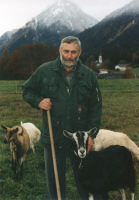
Alpine farmer and CAP reformer Franz Fischler
I have recently been working with others on an edited collection to be brought out from the Centre for Policy Studies in Brussels which re-visits the Fischler reforms of the CAP. The discussions held in relation to the book, which involved some people who knew Fischler's work well, confirmed my view that he was someone who combined strategic vision with a wily use of tactics and an understanding of which political buttons to push when.
Now the former farm supremo has provided a rare interview to Agra Focus. One of the intresting points he makes that two much is made of the difference between the two pillars: 'They are man-made and we should not make an icon of these structures.' What is important is that the money goes to the right recipients.
Fischler clearly thinks that it doesn't and he considers that rural development funding gives 'too much emphasis ... to agriculture, and not enough recognition of the countryside as a whole, including the non-agricultural population.' He also thinks that co-funding of the Single Farm Payment will come back on the agenda, thereby removing one of the main differences between the first and second pillars.
Fischler thinks that there will be 'start-up problems' with the co-decision process in the European Parliament, for example in terms of potential conflicts between the Agriculture and Budget committees. If these problems cannot be overcome, there is a high risk of delay to all reforms. He thinks that in the longer run the driving force behind EU reform packages will be the budget.
With the disapperance of the traditional intervention mechanisms, Fischelr revives the argument about the need for new forms and mechanisms to cover price volatility such as private-public partnerships in insurance systems or even concepts linked to futures markets.
He raises the issue of concentration in the retail sector, suggesting that an international competion regulator is needed, perhaps the WTO. However, this would seem to lie outside its remit. Moreover, competition authorities have not had much success in tackling this issue at the domestic level.
Sunday, February 03, 2008
Our farmers need handouts insist Scots
Scotland's rural affairs minister Richard Lochhead said he will be pulling out all the stops to ensure the UK government is in no doubt of Scotland's desire to maintain support for farmers and crofters. Scotland will take a tough line over the issue, even if its policies diverge from those of the UK Government.
Mr Lochhead insisted that there was an ongoing need to support Scottish agriculture, especially livestock. Scotland was not happy to move away from support mechanisms at the same pace as the UK. Scotland has a strong EU representation through its Brussels office and a dissident voice could prove embarrassing for the UK in its efforts to reform the CAP.
There is a genuine issue about how Scotland can deliver environmental benefits without viable farm businesses. There is a substantial issue about remote, small-scale farming in the Highlands and Islands. However, a proper European rural policy could help Scotland more than the current CAP.
Mr Lochhead insisted that there was an ongoing need to support Scottish agriculture, especially livestock. Scotland was not happy to move away from support mechanisms at the same pace as the UK. Scotland has a strong EU representation through its Brussels office and a dissident voice could prove embarrassing for the UK in its efforts to reform the CAP.
There is a genuine issue about how Scotland can deliver environmental benefits without viable farm businesses. There is a substantial issue about remote, small-scale farming in the Highlands and Islands. However, a proper European rural policy could help Scotland more than the current CAP.
Sunday, January 27, 2008
Subsidies 97 per cent of farm profit
Subsidy income now represents 97 per cent of farm profits, according to the annual Farm Profits Survey by the Institute of Chartered Accountants' Farming and Rural Business Group. This is despite a small rise in turnover and profitability during 2006/7.
The survey of agricultiral accountants revealed that average farm turnover for 2006/7 was £312,000, yielding an average net profit of £46,300, up by £8600. This figure coincided with average drawings and was little more than the average receipt from subsidies of £45,000. Figures for 2007/8 should, of course, be better for cereal farmers in particular.
This survey emphasises the resistance that could be encountered if subsidies were ended or severly cut back. It also reinforces the case for a once and for all 'buying out' of subsidies through a bond scheme.
The survey of agricultiral accountants revealed that average farm turnover for 2006/7 was £312,000, yielding an average net profit of £46,300, up by £8600. This figure coincided with average drawings and was little more than the average receipt from subsidies of £45,000. Figures for 2007/8 should, of course, be better for cereal farmers in particular.
This survey emphasises the resistance that could be encountered if subsidies were ended or severly cut back. It also reinforces the case for a once and for all 'buying out' of subsidies through a bond scheme.
Monday, January 21, 2008
Lisbon and the CAP
The debate on the Treaty of Lisbon is about to start in the UK. It will be mainly focused on fears of loss of British 'sovereignty' and doubtless very little will be said about the CAP, other than as an example of what is wrong with the EU.
However, if ratified, the Treaty will have some profound effects on CAP decision-making. The decision-making process is likely to become more complex and longer (as if it wasn't already) which is why there is a rush to get dossiers completed by the end of the year. The Farm Council will no longer be able to ignore what the Parliament says as they effectively can at the moment.
The Parliament has been hardly in the vanguard of progressive thinking about the CAP and has got itself into a real muddle over pesticides policy, taking decisions that work against its own intentions. However, rather than being a spokesperson for farm interests, the Agriculture and Rural Development Committee will have to move into the political mainstream while other committees such as Trade and Budget will have to keep a closer eye on what it is up to.
Admittedly, some progress has been made under the former chairmanship of Joseph Daul and now Neil Parrish (representing South-West England). The recent wine reform agreement reflected what MEPs had advocated on grubbing up.
The new Treaty does make a clearer distinction between 'delegated acts', i.e., real legislation and 'implementing rules'. The Commission is understood to have suggested that there may have to be revisions to the existing comitology rules in order to clarify when decisions can pass to the Management Committee and when they stay in Council.
Perhaps most interesting of all the Treaty will bring about a reduction in the number of Commissioners from 27 to 15 by 2014. Coincident with what is hoped to be a radical reform of the CAP, the Agriculture and Rural Development post could disappear. If it was merged with say, environment, this would embed a new approach to agricultural issues.
However, if ratified, the Treaty will have some profound effects on CAP decision-making. The decision-making process is likely to become more complex and longer (as if it wasn't already) which is why there is a rush to get dossiers completed by the end of the year. The Farm Council will no longer be able to ignore what the Parliament says as they effectively can at the moment.
The Parliament has been hardly in the vanguard of progressive thinking about the CAP and has got itself into a real muddle over pesticides policy, taking decisions that work against its own intentions. However, rather than being a spokesperson for farm interests, the Agriculture and Rural Development Committee will have to move into the political mainstream while other committees such as Trade and Budget will have to keep a closer eye on what it is up to.
Admittedly, some progress has been made under the former chairmanship of Joseph Daul and now Neil Parrish (representing South-West England). The recent wine reform agreement reflected what MEPs had advocated on grubbing up.
The new Treaty does make a clearer distinction between 'delegated acts', i.e., real legislation and 'implementing rules'. The Commission is understood to have suggested that there may have to be revisions to the existing comitology rules in order to clarify when decisions can pass to the Management Committee and when they stay in Council.
Perhaps most interesting of all the Treaty will bring about a reduction in the number of Commissioners from 27 to 15 by 2014. Coincident with what is hoped to be a radical reform of the CAP, the Agriculture and Rural Development post could disappear. If it was merged with say, environment, this would embed a new approach to agricultural issues.
Friday, January 18, 2008
Getting decisions on the Health Check
With 27 member states the whole negotiating process in the Farm Council has become a lot more difficult, not that it was ever easy. Another complication is that fisheries matters are now dealt with in the Farm Council and this means that the December meeting is the scene for an inevitable battle between fisheries ministers over quotas.
The only effective way to proceed is to forge compromises outside the Council chamber through bilaterals between the Presidency/Commission and individual ministers. A lot then depends on the negotiating skill of the Presidency, but the Portuguese Presidency is judged to have been a success. Slovenia is the first transition state to be in the chair, but both its farm minister and its officials enjoy a good reputation.
The Health Check will have to be finalised at the end of this year under the French presidency. France will probably try to get a deal in November as it can then include some direct reference to the Health Check in its final Summit conclusions, presumably providing some form of wording that would support French ambitions in the 2009 review of the EU budget with the objective of maintaining high levels of CAP spending after 2009.
Another reason to get a deal before December is that this would leave little time for lawyers and linguists to check it before the end of the year. This could then open up the prospect of a challenge from MEPs on the grounds that they should have had co-decision powers on the Health Check. Life under co-decision will be interesting once the new Lisbon Treaty enters into force (as anticipated) in January 2009.
The only effective way to proceed is to forge compromises outside the Council chamber through bilaterals between the Presidency/Commission and individual ministers. A lot then depends on the negotiating skill of the Presidency, but the Portuguese Presidency is judged to have been a success. Slovenia is the first transition state to be in the chair, but both its farm minister and its officials enjoy a good reputation.
The Health Check will have to be finalised at the end of this year under the French presidency. France will probably try to get a deal in November as it can then include some direct reference to the Health Check in its final Summit conclusions, presumably providing some form of wording that would support French ambitions in the 2009 review of the EU budget with the objective of maintaining high levels of CAP spending after 2009.
Another reason to get a deal before December is that this would leave little time for lawyers and linguists to check it before the end of the year. This could then open up the prospect of a challenge from MEPs on the grounds that they should have had co-decision powers on the Health Check. Life under co-decision will be interesting once the new Lisbon Treaty enters into force (as anticipated) in January 2009.
Friday, January 04, 2008
The challenges of livestock production
At a recent meeting of its Business Forum, the Food Ethics Council reviewed livestock production in the context of climate change and the following key points emerged:
*Livestock contribute about eight percent of total greenhouse gas emissions from UK consumption. Meat accounts for more than two-thirds of that.
*UK consumption of poultry meat has doubled over the past 20 years, whereas red meat and pork has remained static. UK per capita consumption is well above the world average.
*Changes to production can increase efficiency and reduce emissions, but producers should be alert to potential trade-offs with other sustainability criteria and animal welfare.
*Policy makers are exploring the scope to reduce emissions by reducing meat demand. The economics of this are uncertain and, though potentially costly for UK meat producers, would not necessarily harm them.
*Initiatives to promote sustainable production and consumption must consider: (a) differences between livestock species, business models and production systems; (b) opportunity costs of sustainability strategies; (c) what foods we would eat instead if we ate less meat.
*Businesses should expect a range of public and private sector initiatives intended to improve the sustainability not only of specific products, but also of the diet that we produce, sell and eat.
The last two points should be relevant to the CAP, but there is little evidence that they are being considered in any systematic way.
*Livestock contribute about eight percent of total greenhouse gas emissions from UK consumption. Meat accounts for more than two-thirds of that.
*UK consumption of poultry meat has doubled over the past 20 years, whereas red meat and pork has remained static. UK per capita consumption is well above the world average.
*Changes to production can increase efficiency and reduce emissions, but producers should be alert to potential trade-offs with other sustainability criteria and animal welfare.
*Policy makers are exploring the scope to reduce emissions by reducing meat demand. The economics of this are uncertain and, though potentially costly for UK meat producers, would not necessarily harm them.
*Initiatives to promote sustainable production and consumption must consider: (a) differences between livestock species, business models and production systems; (b) opportunity costs of sustainability strategies; (c) what foods we would eat instead if we ate less meat.
*Businesses should expect a range of public and private sector initiatives intended to improve the sustainability not only of specific products, but also of the diet that we produce, sell and eat.
The last two points should be relevant to the CAP, but there is little evidence that they are being considered in any systematic way.
Subscribe to:
Posts (Atom)