An interesting new blog on this theme here (and a good debate going on in the comments section):
Subsidies
Monday, March 19, 2007

Saturday, March 17, 2007
New market develops in farm subsidies
Given that milk quota has been actively traded in the UK, producing so-called 'sofa milkers', it should come as no surprise that Single Farm Payments are now being bought and sold. Agricultural brokers WebbPaton did fifteen deals in one day recently. The market has been described as 'ferocious' with rights to subsidies 'flying off the shelf'. There's an element of risk, but an investor could receive one-third of the original investment back each year.
When the single farm payment was set up, farmers were given the right to trade subsidy entitlements between themselves which makes sense as it allows individual farmers to adjust their own businesses in the light of their assessment of market conditions. Farmers started trading among themselves, but the profitability brought in a wider range of investors. Open auctions are being held, while other investors are buying rights to subsidies over the telephone through brokers or on internet sites. You can find out more at WebbPaton's web site: Entitlement
You have to be classified as a farmer to receive subsidies, but you only need hold a lease on a minimum of 1.7 acres for ten months of the year and never have to visit it. Scottish landowners are now renting out tracts of rocky highland for as little as £5 an acre per year.
The market that has developed does enable farmers to raise funds to retire or to invest in their business. But that could have been achieved by converting subsidies into a marketable interest bearing bond which is what many analysts advocated.
When the single farm payment was set up, farmers were given the right to trade subsidy entitlements between themselves which makes sense as it allows individual farmers to adjust their own businesses in the light of their assessment of market conditions. Farmers started trading among themselves, but the profitability brought in a wider range of investors. Open auctions are being held, while other investors are buying rights to subsidies over the telephone through brokers or on internet sites. You can find out more at WebbPaton's web site: Entitlement
You have to be classified as a farmer to receive subsidies, but you only need hold a lease on a minimum of 1.7 acres for ten months of the year and never have to visit it. Scottish landowners are now renting out tracts of rocky highland for as little as £5 an acre per year.
The market that has developed does enable farmers to raise funds to retire or to invest in their business. But that could have been achieved by converting subsidies into a marketable interest bearing bond which is what many analysts advocated.
So, goodbye then, President Chirac
The announcement that he will be stepping down as French President by Jacques Chirac reminds us that for a long time France has had a head of state and government who has also seen himself as Minister of Agriculture. Two of his last public appearances were at the Paris agricultural show and a European summit in Brussels, the site of his many battles in defence of French farming subsidies. Chirac owns a cheteau in the Massif Central which is one of the poorest and most sparsely populated rural areas of France.
The Financial Times commented, 'His near-umbilical attachment to the country's farmers throughout his career, which included a spell as agriculture minister, means he can at least count on them to be saddened that the Chirac era is coming to an end.'
Whether any of his possible replacements will take a different view of the French national interest remains to be seen.
The Financial Times commented, 'His near-umbilical attachment to the country's farmers throughout his career, which included a spell as agriculture minister, means he can at least count on them to be saddened that the Chirac era is coming to an end.'
Whether any of his possible replacements will take a different view of the French national interest remains to be seen.
Thursday, March 15, 2007
Three options for the future of the CAP
The chief economist of the CLA, Allan Buckwell, has been an academic and has worked for the Commission as well as for the landowners' organisation, so what he has to say on the future of the CAP is worth listening to.
He recently outlined three scenarios for the future of the CAP. The first was to defend the status quo and argue for the biggest possible ongoing payments to farmers based on their contribution towards enhancing the environment. He expected this to be the strategy adopted by COPA, the European farmers' organisation. But (and these are my words) it is well known that COPA is something of a political dinosaur that has lost the CAP plot. Environmental groups are not going to be taken in by a continuation of existing subsidies by other means.
A second option was to advocate a more integrated rural policy, with a much bigger share of aid devoted to correcting market failures to stimulate a more diversified rural economy. Buckwell was, of course, one of the architects of the EU's shift towards a rural policy, although it suffered a severe setback with the 2006 budget settlement which actually cut back Pillar 2 funding for rural development. Its success would also depend on profitable commodity prices and national governments matching EU contributions towards rural development.
A third option would be to ditch the CAP and create what Buckwell has provisionally entitled a European Food and Environment Security Policy. Its objective would be to enable the production of socially optimal quantities of high quality food, energy, biodiversity, landscape and so on.
The problem would be, who decides what is 'socially optimal'? If it's not the market, it's the government, influenced by the farm lobbies, and that is what got us where we are - which is not a good place to start from.
He recently outlined three scenarios for the future of the CAP. The first was to defend the status quo and argue for the biggest possible ongoing payments to farmers based on their contribution towards enhancing the environment. He expected this to be the strategy adopted by COPA, the European farmers' organisation. But (and these are my words) it is well known that COPA is something of a political dinosaur that has lost the CAP plot. Environmental groups are not going to be taken in by a continuation of existing subsidies by other means.
A second option was to advocate a more integrated rural policy, with a much bigger share of aid devoted to correcting market failures to stimulate a more diversified rural economy. Buckwell was, of course, one of the architects of the EU's shift towards a rural policy, although it suffered a severe setback with the 2006 budget settlement which actually cut back Pillar 2 funding for rural development. Its success would also depend on profitable commodity prices and national governments matching EU contributions towards rural development.
A third option would be to ditch the CAP and create what Buckwell has provisionally entitled a European Food and Environment Security Policy. Its objective would be to enable the production of socially optimal quantities of high quality food, energy, biodiversity, landscape and so on.
The problem would be, who decides what is 'socially optimal'? If it's not the market, it's the government, influenced by the farm lobbies, and that is what got us where we are - which is not a good place to start from.
EU loses patience over Indian wine tariffs
The EU has finally lost its patience over India's import restrictions on wine and has filed a complaint with the Disputes Settlement Mechanism of the WTO which has been joined by the US.
Farm commissioner Marian Fischer Boel raised the issue on her recent visit to India. She said, 'These products are not staples and the European exporters have a legitimate interest in being able to supply the Indian market. Could we not leave it up to Indian consumers to decide when to buy domestically produced wines and spirits, and when to buy something else?'
The Indian wine industry claims that a reduction in tariffs would 'destroy' the emerging wine industry with a wave of cheap imports. Indian wine makers would prefer a staged reduction in duties, favouring higher quality imports.
An Indian red at, say, 950 rupees (£11.10) a bottle, can be a third of the cost of an Australian shiraz. The Indian Government's stance on import duties means that foreign access to the £930m alcoholic drinks market, growing at nearly 30 per cent a year, is severely curtailed. While India's basic import duties on wine and spirits are 100 per cent and 150 per cent respectively, federal and state taxes can push tariffs as high as 264 per cent and 550 per cent.
The EU has a fair chance of success at the WTO disputes settlement panel which has ruled against Japan, South Kore and Chile over discriminatory spirits taxation regimes. Getting into the Indian market could help drain the European wine lake and taking on a foreign country is a welcome distraction from attempts to reform the EU wine regime which are meeting substantial resistance, most recently from the European Parliament.
Farm commissioner Marian Fischer Boel raised the issue on her recent visit to India. She said, 'These products are not staples and the European exporters have a legitimate interest in being able to supply the Indian market. Could we not leave it up to Indian consumers to decide when to buy domestically produced wines and spirits, and when to buy something else?'
The Indian wine industry claims that a reduction in tariffs would 'destroy' the emerging wine industry with a wave of cheap imports. Indian wine makers would prefer a staged reduction in duties, favouring higher quality imports.
An Indian red at, say, 950 rupees (£11.10) a bottle, can be a third of the cost of an Australian shiraz. The Indian Government's stance on import duties means that foreign access to the £930m alcoholic drinks market, growing at nearly 30 per cent a year, is severely curtailed. While India's basic import duties on wine and spirits are 100 per cent and 150 per cent respectively, federal and state taxes can push tariffs as high as 264 per cent and 550 per cent.
The EU has a fair chance of success at the WTO disputes settlement panel which has ruled against Japan, South Kore and Chile over discriminatory spirits taxation regimes. Getting into the Indian market could help drain the European wine lake and taking on a foreign country is a welcome distraction from attempts to reform the EU wine regime which are meeting substantial resistance, most recently from the European Parliament.
Sunday, March 04, 2007
'Suspended pessimism' remains Doha mood
Bilateral discussions have continued between the key participants in the Doha Round farm trade talks, most recently in London, but although clarification of the issues and what might be possible continues, there has been little real progress. Key participants in Geneva have described the overall mood as one of 'suspended pessimism'.
One change is that India has now got more involved in the series of conversations that have hitherto primarily involved the EU, US and Brazil. They had stood aside from the intense meetings between the key players that led to the resumption of negotiations agreed at the World Economic Forum in Davos.
However, India's role so far is not seen as particularly helpful. Susan Schwab, the US trade representative, said that progress with the Europeans and Brazilians was not matched by a willingness by Delhi to make concessions.
India has been taking a hard line on the 'sensitive products' exemption. This is also an area of concern for the EU as a means of protecting its most marginal farmers. But if too many concessions are allowed, a coach and horses would be driven through the agreement.
India is also being insistent about the 'special safeguard mechanism' which would permit developing countries to block sudden surges of imports from particular agricultural products. NGO critics have long argued that 'no agreement is better than a bad agreement', but there is a point beyond which the same argument could be made from a free trade perspective.
No one really knows what the outcome will be, but I would put the chances of a successful agreement at less than fifty per cent. But then there were many times in the Uruguay Round when the position looked hopeless.
One change is that India has now got more involved in the series of conversations that have hitherto primarily involved the EU, US and Brazil. They had stood aside from the intense meetings between the key players that led to the resumption of negotiations agreed at the World Economic Forum in Davos.
However, India's role so far is not seen as particularly helpful. Susan Schwab, the US trade representative, said that progress with the Europeans and Brazilians was not matched by a willingness by Delhi to make concessions.
India has been taking a hard line on the 'sensitive products' exemption. This is also an area of concern for the EU as a means of protecting its most marginal farmers. But if too many concessions are allowed, a coach and horses would be driven through the agreement.
India is also being insistent about the 'special safeguard mechanism' which would permit developing countries to block sudden surges of imports from particular agricultural products. NGO critics have long argued that 'no agreement is better than a bad agreement', but there is a point beyond which the same argument could be made from a free trade perspective.
No one really knows what the outcome will be, but I would put the chances of a successful agreement at less than fifty per cent. But then there were many times in the Uruguay Round when the position looked hopeless.
Biofuels may push up beer prices
I was giving a presentation on the CAP during this week and I was asked if ending it would threaten food security in Europe. My reply was that no one was advocating dismantling the CAP overnight, so any adjustments would be phased in, but that the real challenge to food security came from the rapid expansion of growing crops as biofuels. A structural shift is going on in farm markets.
An illustration of this is what is happening to the price of barley which is used for beer, whisky and animal feed. Strong demand for biofuel feedstocks is encouraging farmers to plant these crops instead of grains such as barley. The price of barley has soared in the past week. Futures prices for European malting barley have risen more than €230 a tonne since last May and by a third on the Winnipeg Commodity Exchange over the same period. Admittedly, other factors such as the Australian drought and heavy rains in Europe have affected barley prices.
The US Departent of Agriculture estimates that global barley production will reach 138m tonnes this year, level with 2006, but 10 per cent down on 2005. Global demand has risen two per cent, the fourth year in the last five in which demand has exceeded supply. Global stockpiles have shrunk by a third in two years. The US, which in the 1980s was a leading exporter of barley, is now a net importer.
One consequence could be a long-term rise in the price of beer. Barley and hops account for 7-8 per cent of brewing costs.
An illustration of this is what is happening to the price of barley which is used for beer, whisky and animal feed. Strong demand for biofuel feedstocks is encouraging farmers to plant these crops instead of grains such as barley. The price of barley has soared in the past week. Futures prices for European malting barley have risen more than €230 a tonne since last May and by a third on the Winnipeg Commodity Exchange over the same period. Admittedly, other factors such as the Australian drought and heavy rains in Europe have affected barley prices.
The US Departent of Agriculture estimates that global barley production will reach 138m tonnes this year, level with 2006, but 10 per cent down on 2005. Global demand has risen two per cent, the fourth year in the last five in which demand has exceeded supply. Global stockpiles have shrunk by a third in two years. The US, which in the 1980s was a leading exporter of barley, is now a net importer.
One consequence could be a long-term rise in the price of beer. Barley and hops account for 7-8 per cent of brewing costs.
Wednesday, February 28, 2007
Check this out!
Do check out the new CAP Health Check blog at: Health Check
It will be gathering items from a number of CAP blogs, including this one, and there is also a very useful News Harvester service on relevant topics.
It will be gathering items from a number of CAP blogs, including this one, and there is also a very useful News Harvester service on relevant topics.
EU's share of global milk production falling
The EU's share of global milk production is falling as a result of the quota system according to Rabobank dairy specialist Mark Voorbegen. Addressing a seminar addressed by Dairy UK, he said that the EU had a 27 per cent share of the global market in 2005, down from the 1995 level of 31 per cent. By 2015 it is forecast to fall to 25 per cent (although by then quotas may have been abolished).
Termination of the EU quota system would become crucial for the long-term global supply/demand balance. Milk volumes in the EU-15 would remain stable in aggregate terms but with some relocation to more favourable areas. There would be a moderate growth in supplies in the accession states.
The UK had a good scale of farming and a good structure but Voorbegen had doubts about its export capabilities and whether it could bring a higher volume of milk into the EU. Just like farmers in Australia and New Zealand, farmers would have to adjust to more milk price volatility in the future.
Rudolf Schmidt, dairy farmer adviser for the German Farmers Union, said that the main challenge in Germany to a competitive dairy industry was from the biofuel industry. An overdependency on subsidies for biofuel 'could drive milk production away.'
Around ten per cent of the German agricultural area, some 1.6 million hectares, are already accounted for by biofuel crops. Moreover, bioenergy was making feed for dairy farmers more expensive.
Just as well they haven't heard the half jocular suggestion that cows should pay a climate change levy for the amount of methane they produce (which has far bigger impacts on global warming per capita than carbon dioxide).
Termination of the EU quota system would become crucial for the long-term global supply/demand balance. Milk volumes in the EU-15 would remain stable in aggregate terms but with some relocation to more favourable areas. There would be a moderate growth in supplies in the accession states.
The UK had a good scale of farming and a good structure but Voorbegen had doubts about its export capabilities and whether it could bring a higher volume of milk into the EU. Just like farmers in Australia and New Zealand, farmers would have to adjust to more milk price volatility in the future.
Rudolf Schmidt, dairy farmer adviser for the German Farmers Union, said that the main challenge in Germany to a competitive dairy industry was from the biofuel industry. An overdependency on subsidies for biofuel 'could drive milk production away.'
Around ten per cent of the German agricultural area, some 1.6 million hectares, are already accounted for by biofuel crops. Moreover, bioenergy was making feed for dairy farmers more expensive.
Just as well they haven't heard the half jocular suggestion that cows should pay a climate change levy for the amount of methane they produce (which has far bigger impacts on global warming per capita than carbon dioxide).
Friday, February 16, 2007
Experts look at the past and the future
Commission officials and leading experts on the CAP met under the auspices of the European Network of Agriciultural and Rural Policy Research Institutes (ENARPRI), The Centre for European Policy Studies (CEPS) and the University of Leuven (KUL) in Brussels on Thursday to discuss the past and the future of the CAP. The interesting discussion was conducted on Chatham House terms, but some flavour of it can be given here.
Biofuels
There was concern about an unthinking rush to replace foods crops by biofuels. One view expressed was that they were a disaster with an incredible increase in the surface area covered in the United States. The missing US exports were equivalent to those of Australia and Canada combined. They used a lot of water which was a more precious resource than oil.
Another speaker drew attention to the number of bills before the US Congress on the ethanol issue. It was seen as nothing to do with farm output but with energy independence, although a cynic might also see a link with the early primary in Iowa.
The mandates (obligations) were a recipe for rent seeking and represented bad policy.
The future balance of the CAP
There was some interest in the development of a policy that emphasised food and environmental security policy. Whilst this was not endorsed by all participants, there was a recognition that a spatially diffuse, multi-dimensional environmental challenge was being managed by fragmented private managers. The key market failure was environmental: climate change.
There was concern about the delay to rural policy implied by the effective halt in transfers from Pillar 1 to Pillar 2. Less was now being spent on Pillar 2 than before the budget discussions. The view was expressed that Eastern Europe had little interest in rural policy because it didn't have co-funding money. More generally, member states wanted to re-nationalise the CAP.
The health check was taking shape. It was a tidying up, a simplification. There was a long check list involving a move away from partial decoupling and getting rid of set aside, but none of it was fundamental. The budget review was much more important, coupled with the renewed discussion on the constitution. Quite a few people wanted to cut the CAP budget.
The easiest way of saving money in agriculture would be to cap big farmers which would also make it easier to defend the CAP. It was somewhat alarming to hear one respected presenter claim that the CAP had been steered towards acceptability and respectability by reform.
The Commission view
Invariably on these occasions I lock horns when the Commission and this happened when I suggested that there were limits to the radicalism of the reform which left 46 per cent of the EU budget spent on the CAP. The response was that this was a strange way of addressing this, given that the EU had a tiny budget. CAP spending accounted for one per cent of public expenditure in the whole of Europe. Farmers made up five per cent of employment, ten per cent of the population lived in rural areas and 47 per cent of the European land surface was farmed.
On that logic if, say, small shopkeepers are three per cent of the EU population, they should get three per cent of the budget in handouts. Farming is meant to be a commercial activity. If it is producing positive externalities, it should be rewarded for that, but the delivery of those outputs needs to be clear and demonstrable.
The producer perspective
The producer perspective on this is interesting. They fear paying twice for the Doha Round (although no one would forecast whether there would be a successful conclusion or not). They also see the single payment as 'nominal' and eroded by inflation (which is a strange way of looking at some of the sums paid out). It is also seen by farmers as a transitional payment which will eventually disappear. However, most of those in the meeting thought that market payments would persist after 2013 and even after 2020. The CAP is a resilient beast.
Biofuels
There was concern about an unthinking rush to replace foods crops by biofuels. One view expressed was that they were a disaster with an incredible increase in the surface area covered in the United States. The missing US exports were equivalent to those of Australia and Canada combined. They used a lot of water which was a more precious resource than oil.
Another speaker drew attention to the number of bills before the US Congress on the ethanol issue. It was seen as nothing to do with farm output but with energy independence, although a cynic might also see a link with the early primary in Iowa.
The mandates (obligations) were a recipe for rent seeking and represented bad policy.
The future balance of the CAP
There was some interest in the development of a policy that emphasised food and environmental security policy. Whilst this was not endorsed by all participants, there was a recognition that a spatially diffuse, multi-dimensional environmental challenge was being managed by fragmented private managers. The key market failure was environmental: climate change.
There was concern about the delay to rural policy implied by the effective halt in transfers from Pillar 1 to Pillar 2. Less was now being spent on Pillar 2 than before the budget discussions. The view was expressed that Eastern Europe had little interest in rural policy because it didn't have co-funding money. More generally, member states wanted to re-nationalise the CAP.
The health check was taking shape. It was a tidying up, a simplification. There was a long check list involving a move away from partial decoupling and getting rid of set aside, but none of it was fundamental. The budget review was much more important, coupled with the renewed discussion on the constitution. Quite a few people wanted to cut the CAP budget.
The easiest way of saving money in agriculture would be to cap big farmers which would also make it easier to defend the CAP. It was somewhat alarming to hear one respected presenter claim that the CAP had been steered towards acceptability and respectability by reform.
The Commission view
Invariably on these occasions I lock horns when the Commission and this happened when I suggested that there were limits to the radicalism of the reform which left 46 per cent of the EU budget spent on the CAP. The response was that this was a strange way of addressing this, given that the EU had a tiny budget. CAP spending accounted for one per cent of public expenditure in the whole of Europe. Farmers made up five per cent of employment, ten per cent of the population lived in rural areas and 47 per cent of the European land surface was farmed.
On that logic if, say, small shopkeepers are three per cent of the EU population, they should get three per cent of the budget in handouts. Farming is meant to be a commercial activity. If it is producing positive externalities, it should be rewarded for that, but the delivery of those outputs needs to be clear and demonstrable.
The producer perspective
The producer perspective on this is interesting. They fear paying twice for the Doha Round (although no one would forecast whether there would be a successful conclusion or not). They also see the single payment as 'nominal' and eroded by inflation (which is a strange way of looking at some of the sums paid out). It is also seen by farmers as a transitional payment which will eventually disappear. However, most of those in the meeting thought that market payments would persist after 2013 and even after 2020. The CAP is a resilient beast.
Saturday, February 10, 2007
Farm Bill may not do the trick
The US Farm Bill published last week may not offer enough to revitalise the Doha Round trade talks where the scale of US domestic support for agriculture is one of the outstanding issues. Indeed, given that the bill is likely to be watered down by the Congress and the Senate, prospects are even less good than they might at first appear.
Ag Secretary Mike Johanns stopped short of an EU-style decoupling of domestic support from production. The bill is likely to cost around $10bn less than over the next five years than was spent under the 2002 farm bill. However, USDA admitted that the proposals would cost approximately $5bn more than the projected spending if the 2002 farm bill had been extended over the 2007-12 period. The administration heralded the proposed bill as one that directed subsidies away from the traditional commodity group recipients including rice, corn, cottn and wheat and towards conservation and rural development programmes. Johanns admitted that the proposals represented an evolution of the 2002 bill rather than a radical break from it.
The headline totals do not go beyond the cut in annual allowable trade-distorting farm subsidies that the Bush administration has already informally offered in the Doha round. The controversial counter cyclical payments scheme which compensates farmers when prices are low is to be adjusted but the changes are incremental.
There will be strict limits on subsidy payments to the biggest and richest farmers. The existing subsidy payment limit per individual of $360,000 is retained, but new rules will seek to clamp down on the practice of artificially dividing up large holdings in order to get around the rule. There is also a $7.6bn increase in conservation funding with the focus on improving enviromental quality.
Ag Secretary Mike Johanns stopped short of an EU-style decoupling of domestic support from production. The bill is likely to cost around $10bn less than over the next five years than was spent under the 2002 farm bill. However, USDA admitted that the proposals would cost approximately $5bn more than the projected spending if the 2002 farm bill had been extended over the 2007-12 period. The administration heralded the proposed bill as one that directed subsidies away from the traditional commodity group recipients including rice, corn, cottn and wheat and towards conservation and rural development programmes. Johanns admitted that the proposals represented an evolution of the 2002 bill rather than a radical break from it.
The headline totals do not go beyond the cut in annual allowable trade-distorting farm subsidies that the Bush administration has already informally offered in the Doha round. The controversial counter cyclical payments scheme which compensates farmers when prices are low is to be adjusted but the changes are incremental.
There will be strict limits on subsidy payments to the biggest and richest farmers. The existing subsidy payment limit per individual of $360,000 is retained, but new rules will seek to clamp down on the practice of artificially dividing up large holdings in order to get around the rule. There is also a $7.6bn increase in conservation funding with the focus on improving enviromental quality.
Sunday, January 28, 2007
Farm trade deal faces many hurdles
Talks on the resumption of the stalled Doha Round took place in the margins of the World Economic Forum at Davos, Switzerland during the past week, but many hurdles remain to be overcome before an acceptable farm trade deal can be sketched out. Such negotiations are necessarily complex, even arcane, but the essential elements are as follows:
1. Can the EU and US reach an accommodation of their mutual differences? Probably yes, with the EU willing to give some ground on market access and the US willing to concede on domestic subsidies. The notion of 'sensitive' products also gives room for fudges and compromise.
2. Can they sell such a deal to their own constituencies? Much more difficult. In the US, there is a Democratic, more protectionist Congress. Attempts have been made by the White House to square the Colin Peterson, the influential chairman of the House Agriculture Committee, but they may not work, particularly in terms of the renewal of trade protection authority. In Europe, France has presidential and parliamentary elections coming up and already thinks the EU has gone too far in its concessions. The poor state of Franco-German relations leaves Angela Merkel little scope to broker a deal.
3. Can the leading developing countries be brought along? This remains a major difficulty, although Brazil and India have been trying to broker a common position. The real problem is between the US and the emerging countries. The Americans want substantial access to their consumer markets. They are looking for any agreement on farm trade to be offset by reciprocal concessions by Brazil and India on lowering barriers to trade in industrial goods and services. This remains politically difficult.
The recent talks have sought to grapple with the core issues, but the political difficulties remain considerable and there is not much time.
1. Can the EU and US reach an accommodation of their mutual differences? Probably yes, with the EU willing to give some ground on market access and the US willing to concede on domestic subsidies. The notion of 'sensitive' products also gives room for fudges and compromise.
2. Can they sell such a deal to their own constituencies? Much more difficult. In the US, there is a Democratic, more protectionist Congress. Attempts have been made by the White House to square the Colin Peterson, the influential chairman of the House Agriculture Committee, but they may not work, particularly in terms of the renewal of trade protection authority. In Europe, France has presidential and parliamentary elections coming up and already thinks the EU has gone too far in its concessions. The poor state of Franco-German relations leaves Angela Merkel little scope to broker a deal.
3. Can the leading developing countries be brought along? This remains a major difficulty, although Brazil and India have been trying to broker a common position. The real problem is between the US and the emerging countries. The Americans want substantial access to their consumer markets. They are looking for any agreement on farm trade to be offset by reciprocal concessions by Brazil and India on lowering barriers to trade in industrial goods and services. This remains politically difficult.
The recent talks have sought to grapple with the core issues, but the political difficulties remain considerable and there is not much time.
Sunday, January 14, 2007
Top level push on Doha Round may not work
An attempt by President Bush and Commission President Barosso to re-start the stalled Doha Round trade talks may not succeed in the face of rising protectionist sentiment in the new Congress and intransigence over subsidies in the EU. Meeting in Washington last week the two leaders instructed their chief trade negotiators to come forward with a deal 'as soon as possible'. Talks involving the EU, US, Brazil and India are likely to take place in the margins of the World Economic Forum in Davos, Switzerland at the end of January.
However, a top level steer may not be enough to overcome the gap between the two sides. The EU does not appear to be willing to offer any flexibility on market access beyond the average 51 per cent on farm tariffs already suggested and the US is not willing to give ground either on its demands on tariffs or on domestic subsidies. The subject of sensitive products which would be exempted from cuts also remains a difficult one, although potentially amenable to compromise.
France has meanwhile declared itself shocked by an interview that farm commissioner Fischer Boel gave to the Financial Times making the not unreasinable point that the CAP faced substantial cuts after 2013. Although this is hardly a relevation, French farm minister Dominique Busserau, no doubt without an eye on electoral manoeuvrings in France, called her suggestion 'an insult to the social model to which European citizens are profoundly and legitimately attached.' Whether they are so profoundly attached to subsidies to prosperous farmers is open to question.
Nevertheless, he defended the CAP as the 'cornerstone' of the EU and said that 0.5 per cent of the bloc's GDP was a small price to pay for food security. He got short shrift from Fischer Boel who sent a robust reply declaring 'It is no insult to the future of ariculture to say right now that the anount of funding dedicated to it will probably not remain at the current level. It would be irresponsible not to make preparations for this.'
However, a top level steer may not be enough to overcome the gap between the two sides. The EU does not appear to be willing to offer any flexibility on market access beyond the average 51 per cent on farm tariffs already suggested and the US is not willing to give ground either on its demands on tariffs or on domestic subsidies. The subject of sensitive products which would be exempted from cuts also remains a difficult one, although potentially amenable to compromise.
France has meanwhile declared itself shocked by an interview that farm commissioner Fischer Boel gave to the Financial Times making the not unreasinable point that the CAP faced substantial cuts after 2013. Although this is hardly a relevation, French farm minister Dominique Busserau, no doubt without an eye on electoral manoeuvrings in France, called her suggestion 'an insult to the social model to which European citizens are profoundly and legitimately attached.' Whether they are so profoundly attached to subsidies to prosperous farmers is open to question.
Nevertheless, he defended the CAP as the 'cornerstone' of the EU and said that 0.5 per cent of the bloc's GDP was a small price to pay for food security. He got short shrift from Fischer Boel who sent a robust reply declaring 'It is no insult to the future of ariculture to say right now that the anount of funding dedicated to it will probably not remain at the current level. It would be irresponsible not to make preparations for this.'
Sunday, January 07, 2007
Phase out subsidies by 2020 says Miliband
Britain's Defra secretary told the Oxford Farming Conference is committed to a system by 2020 where 'public funds are only used for public goods, in particular environmental benefits.' This would mean the effective end of Pillar 1 and of restraints on trade. 'I see an inevitable process of trade liberalisation, with huge pressure on subsidies and restraints on trade.' Contrary to the views of the farm commissioner, the 2008 CAP health check should be used to pursue a 'further fundamental reform'.
Conservative leader Dave Cameron also called for further reform of the CAP. Exporst subidies should be phased out. 'We also need to start to shift the costs of the CAP onto the countries that spend the most by phasing in compulsory co-financing.'

Mary Coughlan
Irish farm minister Mary Coughlan made the case for providing a reasonable degree of policy stability, arguing that one could not introduce major policy reforms every three or four years. She declared her support for the 'continuation of market supports and direct payments. EU production should be protected from cheap imports', the corollary of which is that EU consumers cannot benefit from them.
She declared, 'The average farm size in the EU could not provide a living for a family at present world prices.' But this is the key question: should public funds be used to sustain commercial enterprises that are not viable, unless they are providing public goods.
Conservative leader Dave Cameron also called for further reform of the CAP. Exporst subidies should be phased out. 'We also need to start to shift the costs of the CAP onto the countries that spend the most by phasing in compulsory co-financing.'
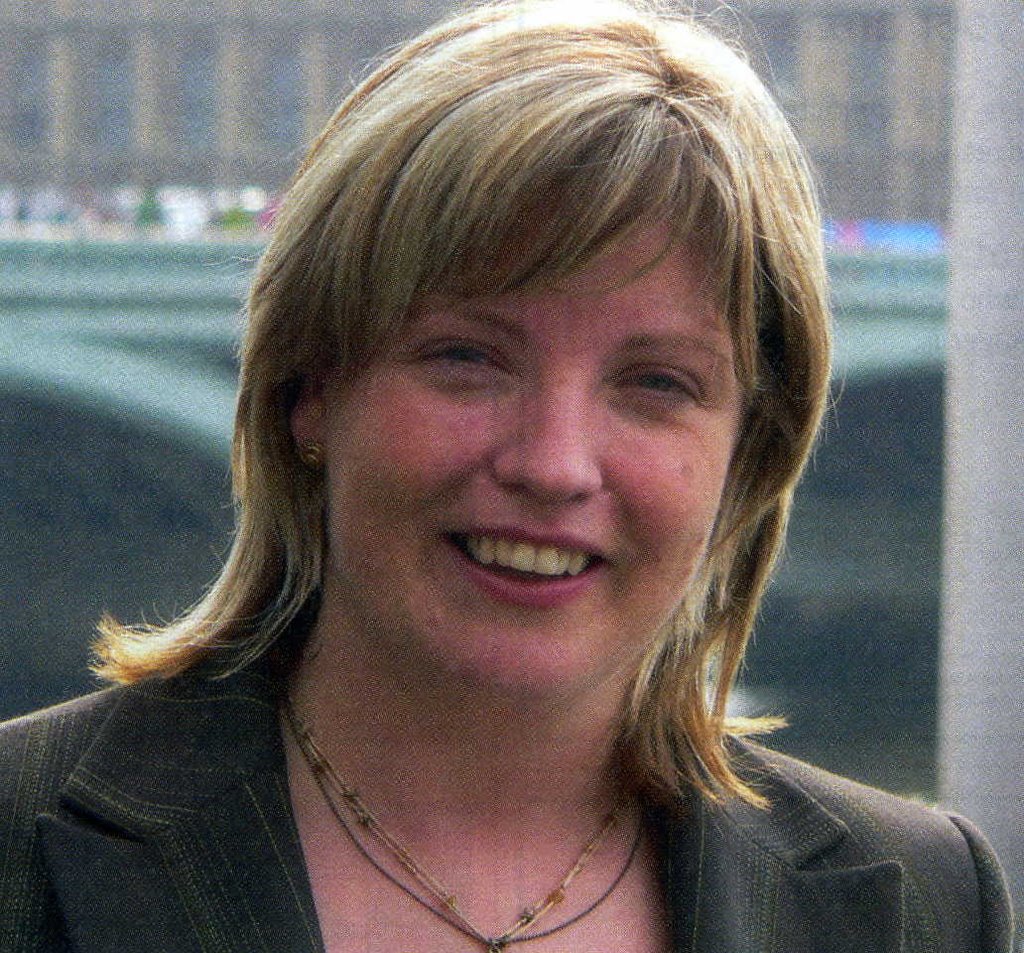
Mary Coughlan
Irish farm minister Mary Coughlan made the case for providing a reasonable degree of policy stability, arguing that one could not introduce major policy reforms every three or four years. She declared her support for the 'continuation of market supports and direct payments. EU production should be protected from cheap imports', the corollary of which is that EU consumers cannot benefit from them.
She declared, 'The average farm size in the EU could not provide a living for a family at present world prices.' But this is the key question: should public funds be used to sustain commercial enterprises that are not viable, unless they are providing public goods.
Saturday, December 23, 2006
Seasonal greetings to our readers

This picture of a somewhat post modernist Christmas tree that I took in Vilnius, Lithuania recently is suitably bleak for a CAP blog
It's been a pretty mixed year for those of us who would like to see a reformed Common Rural Policy delivering real economic benefits to deprived areas in the countryside and promoting environmental goals. The Pillar 2 budget is much smaller than we would have hoped for.
The Doha Round is suspended and it is uncertain whether an agreement can be reached. The EU may then pull back from its commitment to phase out export subsidies which would deliver real benefits to farmers in the Global South. It would also remove what has been the most powerful pressure for CAP reform. In the States, it looks as if we are going to get another Farm Bill that will ensure that most of the benefits go to corporate farmers growing particular commodities.
Some hope that the new transparency about who gets what from the CAP will exert pressure for reform as the public becomes aware that most of the money goes to large-scale commercial farmers. However, Britain and Germany are likely to resist any cap on subsidies. Public pressure on these matters tend to not to be maintained and is confused by the complexity of the CAP and misleading public messages.
In this respect it was alarming to see the BBC's respected environmental correspondent, Sarah Mukherjee, for whom I have a great deal of time, making a broadcast on Radio 5 recently which contained a number of basic errors about the dairy sector and appeared to be an unquestioning acceptance of a NFU press release. The dairy sector in the UK does have real problems, but the broadcast gave a soft treatment to the retailers and their market power.
Our friends at the farmsubsidy.org network are organising a conference on transparency in the CAP in Budapest at the end of January which unfortunately conflicts with other commitments that I have. However, it looks very interesting and further information can be found here:
Budapest
Sunday, December 17, 2006
Sustainable farming and food
The highly regarded Food Ethics Council has published an interesting and well informed paper on 'Sustainable Farming and Food'. You can download it at: Sustainable . There is also an oppprtunity to participate in an online discussion on the paper.
I'm not sure that I agree with all the paper, as I think that at one point it does fall into a protectionist trap set by the industry. When time allows I will publish a summary and some comments here. In the meantime, readers of this blog may wish to take a look at the publication themselves.
I'm not sure that I agree with all the paper, as I think that at one point it does fall into a protectionist trap set by the industry. When time allows I will publish a summary and some comments here. In the meantime, readers of this blog may wish to take a look at the publication themselves.
Tuesday, November 28, 2006
Parliament throws out modulation plan
The European Parliament has thrown out a plan agreed at the 2005 summit of EU heads of government to allow the transfer of funds from Pillar 1 expenditure on farm subidies to Pillar 2 rural development to be increased up to a maximum of 20 per cent. Only the UK was planning to use the full amount, given that it receives low levels of rural development funding and wants to find money for its ambitious agri-environmental schemes. The Parliament can only delay the eventual decision, as it is not part of the co-decision procedure.
The motion was carried by 599 votes to 64. The Parliament believes that such a high rate of voluntary modulation would jeopardise subsidies to farmers and would also repersent a further step towards renationalisation of the CAP with farmers in different member states receiving differing amounts of cash. The Commission itself would prefer a higher rate of compulsory modulation to a range of voluntary rates.
Because of the summit deal the EU will receive on average 30 per cent less funding for rural development between 2007-13 compared with the current funding period. The Commission asked for €88.75m but this was cut by more than 20 per cent to €69.76m. This will be partly offeset by compulsory modulation, but this was intended to provide additional funds for rural development, not offset cuts made in a budget deal.
Spending more money on rural development compared with traditional farm subsidies is seen as a way of building a more diversified, dynamic and yet environmentally friendly rural economy in Europe.
The motion was carried by 599 votes to 64. The Parliament believes that such a high rate of voluntary modulation would jeopardise subsidies to farmers and would also repersent a further step towards renationalisation of the CAP with farmers in different member states receiving differing amounts of cash. The Commission itself would prefer a higher rate of compulsory modulation to a range of voluntary rates.
Because of the summit deal the EU will receive on average 30 per cent less funding for rural development between 2007-13 compared with the current funding period. The Commission asked for €88.75m but this was cut by more than 20 per cent to €69.76m. This will be partly offeset by compulsory modulation, but this was intended to provide additional funds for rural development, not offset cuts made in a budget deal.
Spending more money on rural development compared with traditional farm subsidies is seen as a way of building a more diversified, dynamic and yet environmentally friendly rural economy in Europe.
Monday, November 27, 2006
UK to become net milk importer?
Two separate respected sources, Sir Stuart Hampson and Kite Consulting, have claimed that the UK could become a net milk importer within a few years. Such a story is manna to the supporters of farm subsidies on food security grounds. It also has a good populist feel, allowing papers to run stories about British tea being drunk with French milk if they so wish. But what is the substance behind these claims?
Sir Stuart Hampson, having just finished his year long stint as chair of the respected Royal Agricultural Society of England, argued that the UK could become a net importer of milk within five years if small dairy farmers continued to be forced out of business.
Sir Stuart made his remarks as Defra released figures showing that England lost on average one dairy farm a day in 2005. He argued that supermarkets had a responsibility to pay a 'fair' price for milk, pointing out that up market Waitrose (part of the John Lewis Partnership of which Sir Stuart is chairman) paid a 3p premium to all farmers.
He commented, 'The price paid to the farner is too low, it is not meeting the cost of he farming. I am trying to draw attention that this is a market that has a fair price. [I am not quite sure what such a price is other than a market clearing price]. The decline in incomes of dairy farmers does give me cause for concern.'
Kite Consulting's Milk Forecasts report warned that the UK is heading for its largest ever under quota position. The report's co-author John Allen said, 'The exodus from the dairy industry is running at 7% and accelerating. In the next three years one in five dairy farmers will quit.' With annual demand at 12.6bn litres if the decline continues supply will be as low as 12.68bn by 2011. That meant that by November of that year, when supply is seasonally at its lowest, the UK could see a real milk shortage.
The government and the processing industry hit back
The government was quick to point out that of the 13bn litres produced annually, only 7bn litres went into fresh milk. Robert Wiseman Dairies said the problem for the milk industry was not that it was producing too little milk, but that it was producing too much. 'Unfortunately the volume of milk produced by the dairy farming sector in the UK is such that three in every 10 litres is having to be sold in commodity markets.'
Arla chief executive Tim Smith said that importing liquid milk was unlikely. 'Anyone contemplating importing milk is committing financial suicide. The eye-watering costs of transporting milk from abroad make it unviable. The market price will be adjusted as we near the balance of supply and demand. But it is all down to market forces. We are still in a position of over supply.'
An overview
We should remember that this sector still receives substantial CAP subsidies, even if they are reducing. There is also a distinction between the number of farms going out of production and the volume of production. If smaller (and often unavoidably less efficient) farms mainly go out of production, the effect on volume will be muted, indeed other producers may expand if the price is sufficiently attractive. Of course, a decline in the industry in, say, western England could have landscape and social effects, but that is another matter.
The price UK dairy farmers receive is the lowest in Europe and this in part no doubt reflects the market power of retailers, but that same market power has led to falling food prices and hence a positive effect on the overall level of inflation. Dairy farmers sometimes claim that they are making a loss, but this may be after labour costs (mostly those of the family) have been paid out of the business.
There is no doubt that dairy farming is a particularly demanding type of farming and the rewards are not that great for smaller enterprises. But whatever is done we should not increase the level of subsidy. Production would have to fall a long way before fresh milk supplies are threatened.
Sir Stuart Hampson, having just finished his year long stint as chair of the respected Royal Agricultural Society of England, argued that the UK could become a net importer of milk within five years if small dairy farmers continued to be forced out of business.
Sir Stuart made his remarks as Defra released figures showing that England lost on average one dairy farm a day in 2005. He argued that supermarkets had a responsibility to pay a 'fair' price for milk, pointing out that up market Waitrose (part of the John Lewis Partnership of which Sir Stuart is chairman) paid a 3p premium to all farmers.
He commented, 'The price paid to the farner is too low, it is not meeting the cost of he farming. I am trying to draw attention that this is a market that has a fair price. [I am not quite sure what such a price is other than a market clearing price]. The decline in incomes of dairy farmers does give me cause for concern.'
Kite Consulting's Milk Forecasts report warned that the UK is heading for its largest ever under quota position. The report's co-author John Allen said, 'The exodus from the dairy industry is running at 7% and accelerating. In the next three years one in five dairy farmers will quit.' With annual demand at 12.6bn litres if the decline continues supply will be as low as 12.68bn by 2011. That meant that by November of that year, when supply is seasonally at its lowest, the UK could see a real milk shortage.
The government and the processing industry hit back
The government was quick to point out that of the 13bn litres produced annually, only 7bn litres went into fresh milk. Robert Wiseman Dairies said the problem for the milk industry was not that it was producing too little milk, but that it was producing too much. 'Unfortunately the volume of milk produced by the dairy farming sector in the UK is such that three in every 10 litres is having to be sold in commodity markets.'
Arla chief executive Tim Smith said that importing liquid milk was unlikely. 'Anyone contemplating importing milk is committing financial suicide. The eye-watering costs of transporting milk from abroad make it unviable. The market price will be adjusted as we near the balance of supply and demand. But it is all down to market forces. We are still in a position of over supply.'
An overview
We should remember that this sector still receives substantial CAP subsidies, even if they are reducing. There is also a distinction between the number of farms going out of production and the volume of production. If smaller (and often unavoidably less efficient) farms mainly go out of production, the effect on volume will be muted, indeed other producers may expand if the price is sufficiently attractive. Of course, a decline in the industry in, say, western England could have landscape and social effects, but that is another matter.
The price UK dairy farmers receive is the lowest in Europe and this in part no doubt reflects the market power of retailers, but that same market power has led to falling food prices and hence a positive effect on the overall level of inflation. Dairy farmers sometimes claim that they are making a loss, but this may be after labour costs (mostly those of the family) have been paid out of the business.
There is no doubt that dairy farming is a particularly demanding type of farming and the rewards are not that great for smaller enterprises. But whatever is done we should not increase the level of subsidy. Production would have to fall a long way before fresh milk supplies are threatened.
Sunday, November 19, 2006
New world wines continue their challenge
Santiago, Chile. Yestredya I visited a vineyard here in Chile´s central valley not far from Santiago. This vineyard was founded in 1880 and is currently producing 19 million litres a year. I have seen similar operations in Australia, although not on this scale.
A German in the party asked about the concept of terroir which is very much emphasised by European wine producers giving a wine its distinctiveness. However, this was clearly of no importance in Chile. As in Australia (now suffering from a glut of wine), Chilean vineyards produced drinkable and affordable wines for the world market. They then keep the best wines for themselves, as in Australia. At a reception at the presidential palace in Santiago, I had one of the best reds I have ever drunk.
There is no appellation system in Chile, only reserve wines finished in oak barrels and other wines. The New World wine countries have eight years to come up with a system, but this is proving difficult.
Our guide was less emphatic than those in Australia about the merits of screw top bottles or synthetic corks but pointed out that the rising price of natural cork meant that it could cost as much as the wine.
As the discussions about the reform of the European wine regime meander on, there is no sign here in Chile that the marketing challenge they present to European producers is going to diminish.
A German in the party asked about the concept of terroir which is very much emphasised by European wine producers giving a wine its distinctiveness. However, this was clearly of no importance in Chile. As in Australia (now suffering from a glut of wine), Chilean vineyards produced drinkable and affordable wines for the world market. They then keep the best wines for themselves, as in Australia. At a reception at the presidential palace in Santiago, I had one of the best reds I have ever drunk.
There is no appellation system in Chile, only reserve wines finished in oak barrels and other wines. The New World wine countries have eight years to come up with a system, but this is proving difficult.
Our guide was less emphatic than those in Australia about the merits of screw top bottles or synthetic corks but pointed out that the rising price of natural cork meant that it could cost as much as the wine.
As the discussions about the reform of the European wine regime meander on, there is no sign here in Chile that the marketing challenge they present to European producers is going to diminish.
Thursday, November 09, 2006
US election results not good for trade
Whatever other benefits they bring, the US election results are not good news for agricultural trade. Protectionist sentiment in the Congress has undoubtedly been strengthened and Trade Promotion Authority is likely to be renewed. This makes a Doha Round settlement less likely, removing a key pressure for CAP reform.
The next chair of the agriculture committee in the House is likely to be Minnesota congressman Collin Peterson. His constituency has a strong representation of corn and sugar beet farmers, two crops that have the most to lose under changes to the farm bill backed by agriculture secretary Mike Johanns. He is likely to oppose efforts to change American's generous farm subsidies, thereby weakening incentives for the EU to give ground.
The next chair of the agriculture committee in the House is likely to be Minnesota congressman Collin Peterson. His constituency has a strong representation of corn and sugar beet farmers, two crops that have the most to lose under changes to the farm bill backed by agriculture secretary Mike Johanns. He is likely to oppose efforts to change American's generous farm subsidies, thereby weakening incentives for the EU to give ground.
Subscribe to:
Posts (Atom)