Turkish accession to the European Union would pose formidable problems for the CAP. These arise from the very large numbers of people employed on the land in Turkey, often engaged in very low value added forms of agriculture. 30 per cent of the population in Turkey is engaged in agriculture compared with only 5 per cent in the EU-25. If Turkey was to join the EU today it would more than double the agricultural population, adding 7.2 million people to the current 6.9 million.
Agriculture has an 11.5 per cent share of GDP in Turkey, compared with 1.9 per cent in the EU-15. Some 40 per cent of the population live in rural areas. Agricultural exports are 11.2 per cent of total exports compared with 3.9 per cent in the EU-15. Labour productivity in agriculture is low. Gross Value Added per person is agriculture is one-eighth of the average EU-15 level. Average income per employed household member in Turkish agriculture is less than 40 per cent of the level for non-agricultural workers.
Agriculture does, however, have a dual structure with commercial farms and export-oriented chains for individual products co-existing with subsistence or semi-subsistence farming. The average farm size is six hectares compared to the EU average of 13 hectares. In terms of value, fruit, vegetables and cereals are the most important farm products. Fruit and vegetable production alone accounts for 43 per cent of total output, compared with only 15 per cent in the EU. They also represent over half of Turkey’s agricultural exports. The livestock sector is much less competitive and badly in need of structural modernisation. The country already ranks as Europe’s largest fruit grower, behind Italy and Spain. Turkey occupies a strong position in relation to individual speciality crops. It is the second largest producer of hazelnuts in the world and is a competitive producer of peas, lentils and olive oil.
There are major animal health problems in Turkey. In the veterinary area, major efforts would have to be made to improve conditions and in particular controls on the eastern border. Some highly infectious animal diseases that have virtually disappeared in western and northern Europe remain endemic in Turkey. For example, outbreaks of foot and mouth disease have occurred in virtually every year since 1996. Turkey is also prone to outbreaks of anthrax and brucellosis. Food hygiene standards are poor.
Turkey lacks an adequate infrastructure of trained staff to implement the various rules and regulations that accompany CAP membership, although it is the case that farm policies are even more interventionist than those of the CAP. Yet levels of support are lower with a PSE in Turkey of 26 per cent compared with 37 per cent in the EU-15.
Rural development policy in Turkey is focused on large-scale investments in areas such as irrigation. Major dam projects are being undertaken in south-east Anatolia and should increase the farmland area benefiting from irrigation facilities by some twenty per cent. Structural policy would be a new concept for Turkey, however.
Agricultural policy has often been driven by vote seeking in rural areas and farmers’ organisations have been weakly developed. Nevertheless, the Agriculture Reform Implementation Project (ARIP) of 2001-5 represents a new direction in agricultural policy and aims to bring Turkey more in line with the EU. Price support has been reduced, subsidies have been removed and a direct income support for farmers similar to that now used in the EU has been introduced. This is not, however, fully decoupled as it is based on flat-rate payments per hectare, capped at 50 hectares. Most products, however, still enjoy high levels of trade protection, reflected in a considerable agricultural trade surplus. Attempts to reform the state-controlled Agricultural Sales Co-operatives have made little progress.
Calculations of the impact on the EU budget of Turkish membership vary according to the basis for the estimates made. Most estimates are based on the assumption of Turkish membership by 2015 which many analysts regard as unrealistically early. Assumptions also have to be made about the progress on further CAP reform by 2015.
The Commission’s own figure estimates the cost to the agriculture budget in 2015 at 2004 prices would be around €11.3bn, a larger sum than that taken up by the ten new entrants to the EU in 2004. Economists at Wageningen Univeristy have come up with a lower estimate of €5.2bn, made up of €3.6bn for market measures and direct aid and €1.6bn for rural development expenditure. However, this depends on a number of assumptions that include reform of the EU sugar regime, abolition of EU export refunds and a 20 per cent appreciation of the Turkish lira. There would also need to be 2 per cent annual decreases in EU income transfers from 2006 and further WTO tariff cuts after the completion of the Doha Round. Agra Europe estimates that the accession of Turkey and Croatia would add around €60 billion at the end of the next budgetary perspectives period or an estimated 19 per cent addition to an estimated 2013 expenditure level of €51.2bn for the EU-27, pushing the CAP spending total to around €60 bilion. In broad terms it seems realistic to expect an increase of over 20 per cent in the current CAP budget following Turkish membership.
Turkish membership would lock the EU into a long-term commitment to transferring resources to a largely backward agrarian economy. Indeed, in the short run, the shock of competition with the EU would exacerbate pre-existing problems of poverty.
Modernisation through skill transfer would be limited by the fact that 18 per cent of the agricultural workforce is illiterate. If employment in farming was to be reduced to a level nearer to its share of national output, a working paper by the Centre for European Reform estimates that it would be necessary to take eight million families out of agriculture.
There is a real danger that Turkish membership would embed a CAP dominated by redistributive policies that maintain inefficient forms of agricultural production. Admittedly, the prospect of Turkish membership could provide a new reform stimulus, but such pressures tend to have uneven effects.
Turkish accession is largely driven by 'big picture' political considerations, particularly for the UK, with the question of the CAP being left to negotiations with the hope that it will be all right on accession night. However, failure to arrive at a satisfactory deal would certainly delay entry and might halt it altogether given the lack of enthusiasm among many European states.
Monday, October 10, 2005

Sunday, October 09, 2005
Sugar row could hit WTO talks
The decision by the EU to dump nearly two million tonnes of sugar on the world market (technically 'declassification' of quota sugar) despite a WTO ruling that such sales were illegal could have an impact on the Doha Round trade talks.
A statement by Brazil said (in rather convoluted syntax): 'It is unavoidable to note the negative signal the EC sends to WTO negotiators less than three months before the ministerial conference in Hong Kong by taking this decision on declassification. Hardly any of us could find a more deleterious way to express the gap between words and deeds.' The declassification is up to ten times as big as in previous years and the Brazilians claim that it could push the world price down by six per cent. The problem the Commission faces is that there are already nearly a million tonnes of surplus sugar stored across Europe at the Commission's expense.
The EU claims that since no deadline has yet been set to bring its sugar regime in compliance with the WTO ruling, it can get rid of its surplus in the meantime. An abitrator has been appointed to determine a reasonable length of time for the EU to comply and is due to report by late October. The delay between ruling and implementation means that complainats Brazil, Thailand and Australia are unlikely to be able to obtain legal redress against the EU for its decision to offload surplus sugar.
If the arbitrator does side with the complainants, this will be the first time that a major WTO member has failed to respect its commitments (in terms of export subsidies). Will the WTO be able to effectively discipline one of its most powerful members?
One lump or two? The state of the reform debate
There are signs of an emerging consensus. Member states that are hard hit such as Hungary, Ireland and Italy continue to complain about their fate, but really they are following the traditional EU tactic of getting some side payments in return for their agreement.
As Agra Europe recently commented, the Commission faces the unenviable task of negotiating 'the downsizing of a hugely bloated EU sugar market while somehow keeping on the right side of WTO law and avoiding causing too many bankruptcies among sugar producers and refiners in Europe and around the world ... Having created a monstrous regime which flew in the face of all principles of economic rationality, its creators knew all too well that the monster would bite back if anyone tried to interfere with it.'
The Commission suggested at a recent meeting of the Special Committee on Agriculture that new member states could receive a Separate Sugar Payment (SSP) as compensation for price cuts. The argument made for this payment is that farmers there have no track record of entitlements before accession in 2004. Latvia and Lithuania have been particularly concerned that the compensation for beet growers in the sugar proposal could go to landowners rather than the beet farmers.
Parliament's draft report unhelpful
The rapporteur on the sugar reform dossier in the European Parliament (Jean-Claude Fruteau) has come up with an unhelpful set of proposals in his draft report. They would both undermine the reform and penalise developing countries as well as hitting the EU budget.
The report suggests that the reduction in the reference price for sugar should be 25 per cent over three years not 39 per cent over two years as the Commission has proposed. It is difficult to see how such a scaled down reduction could permit the EU to meet its WTO commitments.
The report also suggests that the Commission should offer 80 per cent compensation for income losses incurred by EU sugar beet growers, a one third increase in the 60 per cent currently on the table. The idea that farmers in the new member states could receive their compensation on a per hectare basis is, however, compatible with the Commission's recent proposal discussed above and one wonders if a version of it might be used in the EU-15.
The report also proposes delaying the full implementation of the Everything But Arms agreement for six years until 2015. Imports of sugar from these developing countries could be controlled through a transitional period. Quotas would remain in place until 2015 but import duties would be gradually decreased. A so-called 'safeguard' clause would limit net exports by EBA countries to the difference between the sugar produced and the consumption level of each country.
The sugar lobby was earlier successful in delaying EBA implementation until 2009. Any further delay would be opposed by Global South groups like Oxfam.
A statement by Brazil said (in rather convoluted syntax): 'It is unavoidable to note the negative signal the EC sends to WTO negotiators less than three months before the ministerial conference in Hong Kong by taking this decision on declassification. Hardly any of us could find a more deleterious way to express the gap between words and deeds.' The declassification is up to ten times as big as in previous years and the Brazilians claim that it could push the world price down by six per cent. The problem the Commission faces is that there are already nearly a million tonnes of surplus sugar stored across Europe at the Commission's expense.
The EU claims that since no deadline has yet been set to bring its sugar regime in compliance with the WTO ruling, it can get rid of its surplus in the meantime. An abitrator has been appointed to determine a reasonable length of time for the EU to comply and is due to report by late October. The delay between ruling and implementation means that complainats Brazil, Thailand and Australia are unlikely to be able to obtain legal redress against the EU for its decision to offload surplus sugar.
If the arbitrator does side with the complainants, this will be the first time that a major WTO member has failed to respect its commitments (in terms of export subsidies). Will the WTO be able to effectively discipline one of its most powerful members?
One lump or two? The state of the reform debate
There are signs of an emerging consensus. Member states that are hard hit such as Hungary, Ireland and Italy continue to complain about their fate, but really they are following the traditional EU tactic of getting some side payments in return for their agreement.
As Agra Europe recently commented, the Commission faces the unenviable task of negotiating 'the downsizing of a hugely bloated EU sugar market while somehow keeping on the right side of WTO law and avoiding causing too many bankruptcies among sugar producers and refiners in Europe and around the world ... Having created a monstrous regime which flew in the face of all principles of economic rationality, its creators knew all too well that the monster would bite back if anyone tried to interfere with it.'
The Commission suggested at a recent meeting of the Special Committee on Agriculture that new member states could receive a Separate Sugar Payment (SSP) as compensation for price cuts. The argument made for this payment is that farmers there have no track record of entitlements before accession in 2004. Latvia and Lithuania have been particularly concerned that the compensation for beet growers in the sugar proposal could go to landowners rather than the beet farmers.
Parliament's draft report unhelpful
The rapporteur on the sugar reform dossier in the European Parliament (Jean-Claude Fruteau) has come up with an unhelpful set of proposals in his draft report. They would both undermine the reform and penalise developing countries as well as hitting the EU budget.
The report suggests that the reduction in the reference price for sugar should be 25 per cent over three years not 39 per cent over two years as the Commission has proposed. It is difficult to see how such a scaled down reduction could permit the EU to meet its WTO commitments.
The report also suggests that the Commission should offer 80 per cent compensation for income losses incurred by EU sugar beet growers, a one third increase in the 60 per cent currently on the table. The idea that farmers in the new member states could receive their compensation on a per hectare basis is, however, compatible with the Commission's recent proposal discussed above and one wonders if a version of it might be used in the EU-15.
The report also proposes delaying the full implementation of the Everything But Arms agreement for six years until 2015. Imports of sugar from these developing countries could be controlled through a transitional period. Quotas would remain in place until 2015 but import duties would be gradually decreased. A so-called 'safeguard' clause would limit net exports by EBA countries to the difference between the sugar produced and the consumption level of each country.
The sugar lobby was earlier successful in delaying EBA implementation until 2009. Any further delay would be opposed by Global South groups like Oxfam.
Thursday, October 06, 2005
Grain mountain fears grow
The grain sector is the EU commodity regime where reform is supposed to have been effective, bringing EU prices close to world levels. Why, then, are the amounts of grain in intervention stores growing? This trend reminds us of the susceptibility of the CAP to euro-dollar exchange rates and the potential for increasing output in the new member states of Eastern Europe.
Although some parts of the EU were badly hit by severe midsummer droughts, seen by some as both a symptom of and a contributor to global warming, this year's harvest is well above the average level for the past five years, even if it is 10 per cent down on last year's record. Internationally, harvests have been good and prices have suffered as a result.
Against the background of the Doha Round trade talks, and already under criticism for releasing sugar on to the world market, the EU is likely to be careful about subsidised exports. This means that the grain mountain will start to grow again. If the dollar appreciates, of course, some of the pressure could be eased as this would automatically move the world price of grain closer to the EU level, but this doesn't seem too likely. But there are longer term factors at work.
The Commission sets a lot of store by the reimposition of compulsory ten per cent set aside in 2004, but farmers simply farm the remaining area more intensively, often setting aside the least desirable land (as happens on the farm nearest to me).
However, the larger problem is the prospect of increases in yield in Eastern Europe as productivity improves. Severe weather conditions in the main sowing and growing periods hit production by around ten per cent in the new member states this year.
The scope for gains in productivity is shown by the fact that wheat yields in the Czech Republic, Hungary, Poland and Slovakia are currently around 3.8 tonnes/hectare, only just over half the EU-15 figure of 7.3 tonnes a hectare. In the worst case scenario, intervention stocks could be 20 million tonnes in 2010 rather than the 3 million tonnes anticipated by the Commission. Reform of the grain regime could come back on the agenda.
Although some parts of the EU were badly hit by severe midsummer droughts, seen by some as both a symptom of and a contributor to global warming, this year's harvest is well above the average level for the past five years, even if it is 10 per cent down on last year's record. Internationally, harvests have been good and prices have suffered as a result.
Against the background of the Doha Round trade talks, and already under criticism for releasing sugar on to the world market, the EU is likely to be careful about subsidised exports. This means that the grain mountain will start to grow again. If the dollar appreciates, of course, some of the pressure could be eased as this would automatically move the world price of grain closer to the EU level, but this doesn't seem too likely. But there are longer term factors at work.
The Commission sets a lot of store by the reimposition of compulsory ten per cent set aside in 2004, but farmers simply farm the remaining area more intensively, often setting aside the least desirable land (as happens on the farm nearest to me).
However, the larger problem is the prospect of increases in yield in Eastern Europe as productivity improves. Severe weather conditions in the main sowing and growing periods hit production by around ten per cent in the new member states this year.
The scope for gains in productivity is shown by the fact that wheat yields in the Czech Republic, Hungary, Poland and Slovakia are currently around 3.8 tonnes/hectare, only just over half the EU-15 figure of 7.3 tonnes a hectare. In the worst case scenario, intervention stocks could be 20 million tonnes in 2010 rather than the 3 million tonnes anticipated by the Commission. Reform of the grain regime could come back on the agenda.
Swiss to reform farm support
Switzerland is one of just five countries in the world with Producer Subsidy Equivalents calculated by the OECD at over the 60 per cent level. But now the Swiss Government has set out measures to make sharp cuts in support and liberalise markets. The government is planning to make significant expenditure cuts in a number of product sectors, abolish export subsidies, reduce tariffs on feed grain and switch from market support to direct aid payments, thus following the model of the EU.
The leader of the Swiss Farmers' Union, Jacques Bourgeois [sic] complained, 'Farms will face average income reductions of 20 per cent. This is totally unreasonable as farm incomes are already more than 40 per cent below those in other branches of industry.' However, the government is determined to promote the trend towards fewer, larger farms. One wonders about the future of those high alpine farms that so delight tourists to Switzerland.
The leader of the Swiss Farmers' Union, Jacques Bourgeois [sic] complained, 'Farms will face average income reductions of 20 per cent. This is totally unreasonable as farm incomes are already more than 40 per cent below those in other branches of industry.' However, the government is determined to promote the trend towards fewer, larger farms. One wonders about the future of those high alpine farms that so delight tourists to Switzerland.
Monday, October 03, 2005
Ahern draws return fire
Irish prime minister Bertie Ahern set out his stall in the defence of the CAP in the Financial Times last week but drew return fire from two of Europe's leading agricultural economists.
The Irish prime minister claimed that the CAP objectives set out in the Treaty of Rome were 'still valid today', although some think that circumstances in Europe are rather different today.
He then used the oft resorted to argument that we have to give the 'radical' 2003 reforms a chance to work. 'Farmers, like other business people, need a reasonable degree of stability in the policy environment in which they operate.' Well, they have had decades of handouts from European taxpayers and no one has seriously suggested a Kiwi style overnight abolition of the CAP.
He then goes on to argue that we shouldn't display our hand before the Doha Round talks in Hong Kong, which is reasonable enough. He then gets out the food security card, claiming that 'Europe's food supplies could, once again, become vulnerable.' He has the good sense not to mention terrorists, but even if extremists did manage to get to sea and blow up one or two ships carrying food, the impact would be negligible on overall supply.
We come to the crux of his real concerns when he starts to talk about damage to Europe's rural fabric and one hears echoes of de Valera's famous 1940s speech about Irish maidens dancing at crossroads etc. There is a serious point here, but what is needed is a vigorous and well designed rural development policy.
Ahern gets himself into trouble with his claims that there is 'a broad comparability of support' between the EU and the US. The OECD's Stefan Tangermann delivered a magisterial rebuke in a letter to the pink 'un, stating 'some numbers quoted are not exact.' (Put less politely, they are wrong). The former Gottingen professor points out that in the US in 2003 farm support stood at 15 per cent of receipts compared with 36 per cent in the EU.
Tangermann is constrained by the rules of an international organisation, but Reading University's Alan Swinbank was blunter. He notes that Ahern fails to point out that the decoupled subsidies are 'linked to lamd, enriching the land owner, and that they are based on area farmed, chiefly benefiting larger businesses rather than small, marginal farms'.
Swinbank points out that the October 2002 European Council meeting suggested 'that a ceiling would be set on CAP expenditure, not that a spending entitlement would be established.' The nub of his case is that the CAP 'is an imposition on the EU taxpayer crowding out other policy initiatives and creating winners and losers among member states. Mr Ahern overlooks the economic (and political) costs that a failed CAP imposes on the EU. Resources could be better deploted in other activities (providing genuine environmental benefits, and development in rural areas, for example).
The call for further reform will not go away. But the UK does not have sufficient political support to push it forward, despite Tony Blair's recent comment that his big regret about all the reforms he had undertaken was that they had not been radical enough.
The Irish prime minister claimed that the CAP objectives set out in the Treaty of Rome were 'still valid today', although some think that circumstances in Europe are rather different today.
He then used the oft resorted to argument that we have to give the 'radical' 2003 reforms a chance to work. 'Farmers, like other business people, need a reasonable degree of stability in the policy environment in which they operate.' Well, they have had decades of handouts from European taxpayers and no one has seriously suggested a Kiwi style overnight abolition of the CAP.
He then goes on to argue that we shouldn't display our hand before the Doha Round talks in Hong Kong, which is reasonable enough. He then gets out the food security card, claiming that 'Europe's food supplies could, once again, become vulnerable.' He has the good sense not to mention terrorists, but even if extremists did manage to get to sea and blow up one or two ships carrying food, the impact would be negligible on overall supply.
We come to the crux of his real concerns when he starts to talk about damage to Europe's rural fabric and one hears echoes of de Valera's famous 1940s speech about Irish maidens dancing at crossroads etc. There is a serious point here, but what is needed is a vigorous and well designed rural development policy.
Ahern gets himself into trouble with his claims that there is 'a broad comparability of support' between the EU and the US. The OECD's Stefan Tangermann delivered a magisterial rebuke in a letter to the pink 'un, stating 'some numbers quoted are not exact.' (Put less politely, they are wrong). The former Gottingen professor points out that in the US in 2003 farm support stood at 15 per cent of receipts compared with 36 per cent in the EU.
Tangermann is constrained by the rules of an international organisation, but Reading University's Alan Swinbank was blunter. He notes that Ahern fails to point out that the decoupled subsidies are 'linked to lamd, enriching the land owner, and that they are based on area farmed, chiefly benefiting larger businesses rather than small, marginal farms'.
Swinbank points out that the October 2002 European Council meeting suggested 'that a ceiling would be set on CAP expenditure, not that a spending entitlement would be established.' The nub of his case is that the CAP 'is an imposition on the EU taxpayer crowding out other policy initiatives and creating winners and losers among member states. Mr Ahern overlooks the economic (and political) costs that a failed CAP imposes on the EU. Resources could be better deploted in other activities (providing genuine environmental benefits, and development in rural areas, for example).
The call for further reform will not go away. But the UK does not have sufficient political support to push it forward, despite Tony Blair's recent comment that his big regret about all the reforms he had undertaken was that they had not been radical enough.
Sunday, October 02, 2005
Mary Coughlan, Ireland's farm minister
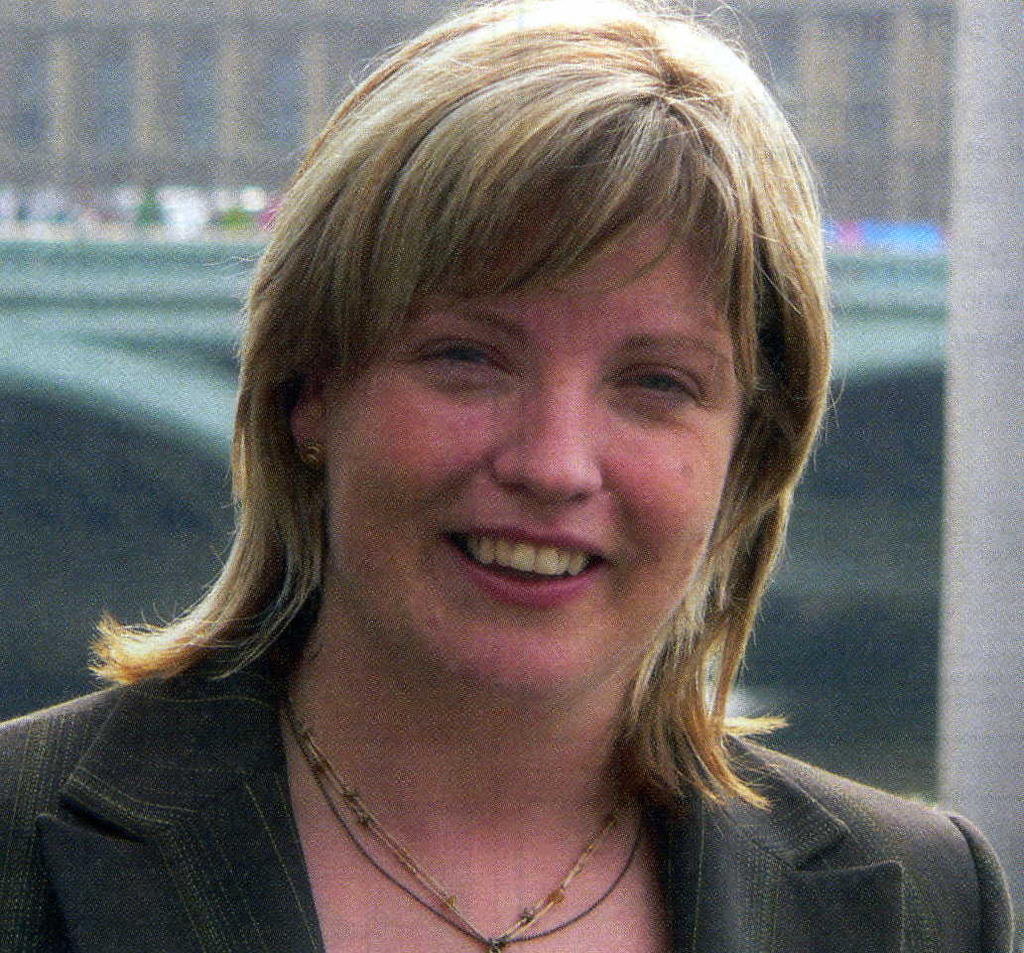
At a time when Irish prime minister Bertie Ahern has been defending the CAP in the Financial Times and getting it large from Professors Swinbank and Tangermann in return, it's a good time to take a look at Ireland's farm minister, Mary Coughlan.
There was a time when you had to have three qualifications to be a farm minister: you had to be a farmer, or at least an employee of a farmers' organisation or agricultural bureaucracy; you had to be a man; and you had to be overweight, to demonstrate that you had played your part in reducing the CAP surplus.
Mary Coughlan does, admittedly, come from a very rural constituency, Donegal South West. She was elected to the Dail for Fianna Fail shortly after graduating in politics and sociology from University College, Dublin in 1987. This rapid rise may have been helped by the fact that her father was a politician. Married with two young children, she became a minister of state in 2001. But the move from minister of social and family affairs to replace the long-serving Joe Walsh as farm minister in 2004 was something of a surprise.
She clearly represents modern, successful Ireland, with a reputation as having a sharp mind and an affable personality. Unfortunately she is a defender of traditional CAP policies. She wants the EU to be cautious in the Doha Round negotiations and she is disappointed by the UK's call for further reform of the CAP. 'I think it's unfair. A commitment was given in 2002 that funding would be fixed for 10 years. Tony Blair must keep his promise.'
Ireland has generally been a staunch ally of France on CAP reform and the matter is of such importance to the Republic that it is the prime minister who has to be wheeled out to explain why further reform is inappropriate.
Tuesday, September 27, 2005
CAP still takes nearly half of the budget
Defenders of the CAP in its present form are always asking why another reform is needed. Last year agriculture and rural development allocations accounted for 47.5% (€43.6 billion) of the EU budget, admittedly down from 54.1% (€44.4 billion) in 2003.
France was once more the largest recipient of agricultural largesse, followed by Spain, Germany and Italy. New member state Poland appeared in fifteenth position.
Could a better use be found or at least some of this €43.6 billion? I and many others think so.
France was once more the largest recipient of agricultural largesse, followed by Spain, Germany and Italy. New member state Poland appeared in fifteenth position.
Could a better use be found or at least some of this €43.6 billion? I and many others think so.
Monday, September 26, 2005
Some progress in Doha Round
Some progress was made in Doha Round talks between the 'group of five' (EU, US, Brazil, India and Australia) in Paris at the end of the last week. The secrecy surrounding the talks suggests that concrete proposals were being discussed, particularly on the vexed question of market access.
The US and the EU have now accepted the five tier proposal put forward by the G-20 and the EU has indicated that it will keep its list of sensitive products demanding special treatment to a minimum. It is understood that the EU and the US have put concrete tariff reduction proposals on the table, but much needs to be done before the Hong Kong ministerial in December.
At the farm council last week, a number of member states, Spain being the most vociferous, accused the Commission of 'selling out' to the US after a visit by Mariann Fischer Boel to Washington. However, the doughty farm commissioner was having none of it, retorting that 'We are not a gift shop.'
My current forecast of likely Doha Round outcomes in agriculture is:
• There will be an agreement, but not at Hong Kong (there isn’t enough time to sort out all the complexities)
• Export subsidies and their equivalents will be phased out by 2017
• There will be sharper reductions for high tariffs and a 100% AVE limit with very limited exceptions (essentially rice tariffs in Korea and Japan). There will be exemptions from the formula adopted for ‘sensitive’ products
• Permitted domestic support levels will be reduced but not in a way that will seriously trouble the EU and the US
• Cairns Group countries will be allowed to keep their single desk exporters, subject to undertakings on transparency
• ‘As one gets closer to the final deals that need to be fashioned, the GI issue will no doubt play a significant role in the balance of advantage that countries will seek from the Round.’ (Tim Josling)
• Provision for future negotiations will include a review of which subsidies should qualify for Green Box treatment
Anyone who wants my full paper on the Doha Round should E mail me at w.p.grant@warwick.ac.uk
The US and the EU have now accepted the five tier proposal put forward by the G-20 and the EU has indicated that it will keep its list of sensitive products demanding special treatment to a minimum. It is understood that the EU and the US have put concrete tariff reduction proposals on the table, but much needs to be done before the Hong Kong ministerial in December.
At the farm council last week, a number of member states, Spain being the most vociferous, accused the Commission of 'selling out' to the US after a visit by Mariann Fischer Boel to Washington. However, the doughty farm commissioner was having none of it, retorting that 'We are not a gift shop.'
My current forecast of likely Doha Round outcomes in agriculture is:
• There will be an agreement, but not at Hong Kong (there isn’t enough time to sort out all the complexities)
• Export subsidies and their equivalents will be phased out by 2017
• There will be sharper reductions for high tariffs and a 100% AVE limit with very limited exceptions (essentially rice tariffs in Korea and Japan). There will be exemptions from the formula adopted for ‘sensitive’ products
• Permitted domestic support levels will be reduced but not in a way that will seriously trouble the EU and the US
• Cairns Group countries will be allowed to keep their single desk exporters, subject to undertakings on transparency
• ‘As one gets closer to the final deals that need to be fashioned, the GI issue will no doubt play a significant role in the balance of advantage that countries will seek from the Round.’ (Tim Josling)
• Provision for future negotiations will include a review of which subsidies should qualify for Green Box treatment
Anyone who wants my full paper on the Doha Round should E mail me at w.p.grant@warwick.ac.uk
EU wine lake is forming again
Despite the provision of substantial funds for restructuring and the distillation of wine into industrial alcohol, the EU wine lake is forming again. As is the case with many commodity sectors in the CAP, the underlying problem is a structural one.
On the one hand, consumption levels are down, particularly in 'traditional' wine drinking countries such as France, Italy and Spain where the total quantity of wine consumed has fallen by over 50 per cent since 1980. Wine is not necessarily a popular drink with young people in these countries, with beer, alcopops and spirits becoming more popular. In Italy, there are reports that British style binge drinking is catching on.
On the demand side, there is fierce competition from so-called 'New World' wines, e.g., from California, Chile, Australia and New Zealand. These wines are particularly popular in the British market where the emphasis is on low to medium priced 'drinkable' wines. I know that the Australians keep their best wines for domestic consumption. Chilean wines have been doing particularly well in recent years.
As a consequence, EU wine stocks are rising. In Spain wine stocks are now larger than annual production. Total expenditure in the sector in 2004 was €1.227 billion and is estimated at €1.329 billion for 2005. €450m goes into a far from successful vineyard restructing programme, €387m into wine distillation, €232m for alcohol storage and €67 million for wine storage.
A big problem has been the ineffective management of vineyard grubbing and replanting schemes by national governments. The Commission has ordered France to pay back €14.5m of funds received to restructure and modernise vineyards after the money was allegedly misspent.
The Commission has stated that 'It is possible that due to the great variations in production which are typical of the sector and modifications in domestic and world demand, it may be necessary to resort to special intervention measures on the market, as prudently allowed for by the Council.'
Translated this means 'We have no accurate idea of what is going on here so we may have to bail the sector out again and the Council knew this would be good politics because some powerful member states are involved.'
On the one hand, consumption levels are down, particularly in 'traditional' wine drinking countries such as France, Italy and Spain where the total quantity of wine consumed has fallen by over 50 per cent since 1980. Wine is not necessarily a popular drink with young people in these countries, with beer, alcopops and spirits becoming more popular. In Italy, there are reports that British style binge drinking is catching on.
On the demand side, there is fierce competition from so-called 'New World' wines, e.g., from California, Chile, Australia and New Zealand. These wines are particularly popular in the British market where the emphasis is on low to medium priced 'drinkable' wines. I know that the Australians keep their best wines for domestic consumption. Chilean wines have been doing particularly well in recent years.
As a consequence, EU wine stocks are rising. In Spain wine stocks are now larger than annual production. Total expenditure in the sector in 2004 was €1.227 billion and is estimated at €1.329 billion for 2005. €450m goes into a far from successful vineyard restructing programme, €387m into wine distillation, €232m for alcohol storage and €67 million for wine storage.
A big problem has been the ineffective management of vineyard grubbing and replanting schemes by national governments. The Commission has ordered France to pay back €14.5m of funds received to restructure and modernise vineyards after the money was allegedly misspent.
The Commission has stated that 'It is possible that due to the great variations in production which are typical of the sector and modifications in domestic and world demand, it may be necessary to resort to special intervention measures on the market, as prudently allowed for by the Council.'
Translated this means 'We have no accurate idea of what is going on here so we may have to bail the sector out again and the Council knew this would be good politics because some powerful member states are involved.'
Tuesday, August 30, 2005
Bird flu? No worries?
With avian influenza reaching Russia, the media has been talking up the inevitability of its reaching the EU. This has been linked with the suggestion that the virus will transmute into a form that will allow it to spread from human to human, creating a pandemic on the scale of the devastating influenz outbreak at the end of the First World War (which killed my grandmother while she was still a relatively young woman).
However, the European Commission has attempted to calm any incipient panic, arguing that the risk of bird 'flu reaching Europe via migratory birds is negligible. On the question of transmission to humans, a spokesman commebted, 'We are very far from a risk to humans from migrating birds.'
Veterinary experts concluded at a meeting in Brussels that the immediate risk of the disease spreading to the EU was probably 'remote' or 'low' depending on the area. There was no call to impose a general veto on keeping poulrtry outdoors, a measure imposed by the Dutch last week which would pose problems for free range egg producers.
However, the EU has suggested that member states step up surveillance of wild birds and their migratory movements as well as keeping a close eye on domestic birds.
However, the European Commission has attempted to calm any incipient panic, arguing that the risk of bird 'flu reaching Europe via migratory birds is negligible. On the question of transmission to humans, a spokesman commebted, 'We are very far from a risk to humans from migrating birds.'
Veterinary experts concluded at a meeting in Brussels that the immediate risk of the disease spreading to the EU was probably 'remote' or 'low' depending on the area. There was no call to impose a general veto on keeping poulrtry outdoors, a measure imposed by the Dutch last week which would pose problems for free range egg producers.
However, the EU has suggested that member states step up surveillance of wild birds and their migratory movements as well as keeping a close eye on domestic birds.
CAP gets even more complex with SFP
The complexity of the CAP has always been one of its distinctive features and, many commentators have argued, has been used in effect as a political entry barrier to exclude outside critics and permit decision-making 'fudges' that protect the interests of farmers.
The way in which the new Single Farm Payment (SFP) system is being implemented has increased this complexity with no two member states applying the SFP in the same way. In particular, the various options for 'partial coupling' have been widely used, especially in the beef sector where there were fears of a big drop in production.
Only five member states have opted for the Commission's original vision of full decoupling: Germany, Ireland, Italy, Luxembourg and the UK. Most of the EU-15 member states have also opted for a historical basis for payments which tends to protect the interests of existing farmers. Only England (not Wales and Scotland) and Finland and Germany intend to make a transition to regional payments.
Five countries have chosen to use the national envelopes option (Finland, Italy, Scotland, Spain and Sweden). These are not stuffed with used euros but are used to make special aid payments to support environmental or product quality objectives.
Only the UK has chosen to supplement the recycling of money into the rural development budget with a modulation top up.
The way in which the new Single Farm Payment (SFP) system is being implemented has increased this complexity with no two member states applying the SFP in the same way. In particular, the various options for 'partial coupling' have been widely used, especially in the beef sector where there were fears of a big drop in production.
Only five member states have opted for the Commission's original vision of full decoupling: Germany, Ireland, Italy, Luxembourg and the UK. Most of the EU-15 member states have also opted for a historical basis for payments which tends to protect the interests of existing farmers. Only England (not Wales and Scotland) and Finland and Germany intend to make a transition to regional payments.
Five countries have chosen to use the national envelopes option (Finland, Italy, Scotland, Spain and Sweden). These are not stuffed with used euros but are used to make special aid payments to support environmental or product quality objectives.
Only the UK has chosen to supplement the recycling of money into the rural development budget with a modulation top up.
Tuesday, August 23, 2005
Subsidies favour rich regions
New research shows that even after the recent CAP reforms, rich regions in Germany, the UK, France and the Netherlands will take a greater slice of the €90bn farming subsidies than poorer regions in south-eastern and eastern Europe. The two-year study, one of the most comprehensive ever undertaken of the CAP by researchers at Newcastle and Aberdeen universities, is reported in a book on 'CAP and the Regions' edited by M Shucksmith, K Thomson and D Roberts.
About 80 per cent of the subsidies go towards supporting grain, beef and dairy products, the staple products of often large scale northern European farmers while less goes to products such as olive oil and wine which are predominantly grown in southern Europe. This in stark contrast to the objectives of EU 'cohesion' policy which seeks to reduce regional inequalities.
The authors see the principal problem as the emphasis placed on market support and direct subsidies in pillar 1 of the CAP compared with pillar 2 (rural development). Funds should be redistributed from pillar 1 to pillar 2.
However, pillar 2 did not escape criticism. Agri-environment schemes were less effective in the less prosperous regions of Europe and richer EU states tended to prioritise agri-environmental objectives more than poorer regions.
Austria was singled out as a country where agri-environment and Less Favoured Area payments had been put to good use and the money used intelligently to benefit those who needed it most. In contrast, Scotland had made a poor use of funds by adding national funding to LFA payments so that there were no losers, an approach often found in agricultural policy.
About 80 per cent of the subsidies go towards supporting grain, beef and dairy products, the staple products of often large scale northern European farmers while less goes to products such as olive oil and wine which are predominantly grown in southern Europe. This in stark contrast to the objectives of EU 'cohesion' policy which seeks to reduce regional inequalities.
The authors see the principal problem as the emphasis placed on market support and direct subsidies in pillar 1 of the CAP compared with pillar 2 (rural development). Funds should be redistributed from pillar 1 to pillar 2.
However, pillar 2 did not escape criticism. Agri-environment schemes were less effective in the less prosperous regions of Europe and richer EU states tended to prioritise agri-environmental objectives more than poorer regions.
Austria was singled out as a country where agri-environment and Less Favoured Area payments had been put to good use and the money used intelligently to benefit those who needed it most. In contrast, Scotland had made a poor use of funds by adding national funding to LFA payments so that there were no losers, an approach often found in agricultural policy.
Tuesday, August 09, 2005
Big EU tariff barriers a big problem in trade talks
With WTO Doha Round talks on agriculture stalled, and fears growing about the Hong Kong ministerial in December, it is increasingly becoming clear how big a problem is posed by the EU's high tariff barriers.
Market access is turning out to be the key problem in the farm trade talks and the US is blaming the EU and the protectionist G-10 group (led by Japan and Switzerland) for failing to make any concessions on the tariff reduction formula. The G-20 has a proposal on the table for a maximum 100% tariff for developed countries.
In fact more that seven per cent of the fixed rate farm tariffs used by the EU are set at an equivalent level of 100% or more. The most protected product in he whole CAP is revealed to be fresh or chilled 'skirt' of beef, used for meat processing, which has an ad valorem equivalent of some 407%.
Almost a quarter of the fixed rate tariffs (38 out of 158) used to protect the European dairy sector are set at an equivalent level of 100% or more. Buttermilk has an ad valorem equivalent of some 264%, while butter has AVEs of between 82% and 135%.
Market access is turning out to be the key problem in the farm trade talks and the US is blaming the EU and the protectionist G-10 group (led by Japan and Switzerland) for failing to make any concessions on the tariff reduction formula. The G-20 has a proposal on the table for a maximum 100% tariff for developed countries.
In fact more that seven per cent of the fixed rate farm tariffs used by the EU are set at an equivalent level of 100% or more. The most protected product in he whole CAP is revealed to be fresh or chilled 'skirt' of beef, used for meat processing, which has an ad valorem equivalent of some 407%.
Almost a quarter of the fixed rate tariffs (38 out of 158) used to protect the European dairy sector are set at an equivalent level of 100% or more. Buttermilk has an ad valorem equivalent of some 264%, while butter has AVEs of between 82% and 135%.
Grain intervention soars
Buying grain into intervention may be intended to be a safety net under the new look CAP, but it is a safety net that has been much needed this summer. This in spite of the fact that much of Europe has been afflicted by a drought that is estimated to hit crop yields by seven per cent. In Spain and Portugal, where the drought is at its worst, the Commission has approved emergency aid to farmers.
As last year, the surplus production is mainly in central and eastern Europe. By the end of June, the EU had almost 12 million tonnes in intervention with another four and a half million tons under offer. Although it was possible to export some of the stockpiled grain, storage space is at a premium.
The total bill for cereals intervention this year could be almost €500m, almost eight times the original budget. Money has to be clawed back from other underspent parts of the CAP budget.
Incidentally, this page has just returned from a trip through five central and east European states, two already EU members, two candidates and one (Serbia-Montenegro) still in ill favour. Impressionistically, I thought that Bulgarian agriculture and infrastructure looked in far better shape than in Romania where the horse (or the mule) is still very much in use as a means of transport.
As last year, the surplus production is mainly in central and eastern Europe. By the end of June, the EU had almost 12 million tonnes in intervention with another four and a half million tons under offer. Although it was possible to export some of the stockpiled grain, storage space is at a premium.
The total bill for cereals intervention this year could be almost €500m, almost eight times the original budget. Money has to be clawed back from other underspent parts of the CAP budget.
Incidentally, this page has just returned from a trip through five central and east European states, two already EU members, two candidates and one (Serbia-Montenegro) still in ill favour. Impressionistically, I thought that Bulgarian agriculture and infrastructure looked in far better shape than in Romania where the horse (or the mule) is still very much in use as a means of transport.
Saturday, July 23, 2005
Sugar reform opponents shrink to five
Outright opponents of the European Commission's sugar reform plans have now shrunk to five countries, not enough to block the proposal. The five outright opponents are all marginal sugar producers: Finland, Greece, Ireland, Portugal and Spain. Ten countries including the UK, France and Germany are broadly happy with the proposals.
In between is a range of countries such as Austria and Cyprus who said that the thrust of the proposals was right, though the price cuts went too far, while the compensation was inadequate. Others, such as Poland and Italy, are more reluctant in their support.
If Italy and Poland joined the no camp, a blocking minority would exist. However, a source close to the Commission commented, 'they may be bought off with bounties.' Side payments to win support are certainly a well established CAP tradition.
In between is a range of countries such as Austria and Cyprus who said that the thrust of the proposals was right, though the price cuts went too far, while the compensation was inadequate. Others, such as Poland and Italy, are more reluctant in their support.
If Italy and Poland joined the no camp, a blocking minority would exist. However, a source close to the Commission commented, 'they may be bought off with bounties.' Side payments to win support are certainly a well established CAP tradition.
Sunday, July 17, 2005
No change to CAP for years - Beckett
British farm minister Margaret Beckett has said that the UK was not expecting an overhaul of agricultural subsidies to come into force before 2014. This is somewhat at odds with what Tony Blair has been saying, but came after Mrs Beckett faced a rough ride in the European Parliament. She was heckled and after she failed to elaborate British plans to reform the CAP, some MEPs walked out in protest.
Farm commissioner Mariann Fischer Boel recently questioned whether Britain's reason for putting the CAP reform issue back on the bargaining table was 'just a gimmick or game plating.' Certainly the UK has failed to explain what kind of farm reform it envisaged, suggesting that little forethought was given to the call for further reform.
The UK is sensitive to accusations that its stance over the budget is damaging to new member states because delay would restrict their access to EU funds. UK officials argue that, with or without the budget rebate, the UK is paying more for the ten newcomers than France.
Asked why they did not oppose the 2002 Franco-German agreement on farm spending at the time, they claim that doing so would have prompted President Chirac to block EU enlargement.
Not all new member states are concerned about the size of the farm budget. With its sizeable agricultural sector, Poland clearly is. But countries like Estonia would be quite happy to see the CAP share of EU spending reduced.
Some observers assume that the debate on the financial perspectives will now be frozen until Austria takes over the presidency in January 2006.
Farm commissioner Mariann Fischer Boel recently questioned whether Britain's reason for putting the CAP reform issue back on the bargaining table was 'just a gimmick or game plating.' Certainly the UK has failed to explain what kind of farm reform it envisaged, suggesting that little forethought was given to the call for further reform.
The UK is sensitive to accusations that its stance over the budget is damaging to new member states because delay would restrict their access to EU funds. UK officials argue that, with or without the budget rebate, the UK is paying more for the ten newcomers than France.
Asked why they did not oppose the 2002 Franco-German agreement on farm spending at the time, they claim that doing so would have prompted President Chirac to block EU enlargement.
Not all new member states are concerned about the size of the farm budget. With its sizeable agricultural sector, Poland clearly is. But countries like Estonia would be quite happy to see the CAP share of EU spending reduced.
Some observers assume that the debate on the financial perspectives will now be frozen until Austria takes over the presidency in January 2006.
Wednesday, July 13, 2005
Hill farming crisis raises broader issues
The UK charity, the National Trust, has warned that the country's hill farmers are on the brink of a national crisis. The charity has stated: 'Hill farming is on the brink of a rapid and unmanaged collapse without help through the major changes it faces. The separation of support payments from agricultural production has exposed the stark reality that livestock farming in the hills simply is not profitable.'
The National Trust bases its conclusions of a survey of sixty of its tenanted farms which suggests that the majority of upland farms are facing severe falls in income. Recently the Trust let out a farmhouse to a non-farming tenant much to the anger of neighbouring farmers in the Lake District.
Some farms will see their support payments halved over the next five years which could force large numbers of farms to go out of business. The UK govermment's stated intention is to scrap the Hill Farm Allowance, which is funded out of the national budget, in 2006. The National Trust, however, would like to see its funding increased from £27m to £50m.
This crisis does raise broader issues. Recently, farm commissioner Mariann Fischer Boel argued that the level of support for agriculture was exaggerated as it constituted less than 0.5% of European GDP. However, that overlooks the fact that farming is a business activity. Should any commercial activity receive a general subsidy?
Where a subsidy is justified is for the non-marketable benefits that farming produces such as an attractive landscape and countering rural depopulation. If hill farming ceased, the landscapes that attract visitors to areas such as the Lake District would disappear. Drystone walls would crumble and the grazed landscape would revert to bracken and scrub, making it less accessible to walkers. Yet, as we know, the majority of CAP subsidies go to large-scale arable farmers.
Marginal farmers do deserve assistance, although it has to be packaged in a way that delivers environmental benefits and assists rural development.
The National Trust bases its conclusions of a survey of sixty of its tenanted farms which suggests that the majority of upland farms are facing severe falls in income. Recently the Trust let out a farmhouse to a non-farming tenant much to the anger of neighbouring farmers in the Lake District.
Some farms will see their support payments halved over the next five years which could force large numbers of farms to go out of business. The UK govermment's stated intention is to scrap the Hill Farm Allowance, which is funded out of the national budget, in 2006. The National Trust, however, would like to see its funding increased from £27m to £50m.
This crisis does raise broader issues. Recently, farm commissioner Mariann Fischer Boel argued that the level of support for agriculture was exaggerated as it constituted less than 0.5% of European GDP. However, that overlooks the fact that farming is a business activity. Should any commercial activity receive a general subsidy?
Where a subsidy is justified is for the non-marketable benefits that farming produces such as an attractive landscape and countering rural depopulation. If hill farming ceased, the landscapes that attract visitors to areas such as the Lake District would disappear. Drystone walls would crumble and the grazed landscape would revert to bracken and scrub, making it less accessible to walkers. Yet, as we know, the majority of CAP subsidies go to large-scale arable farmers.
Marginal farmers do deserve assistance, although it has to be packaged in a way that delivers environmental benefits and assists rural development.
Fight against sugar reform gathers pace
Opposition to the EU's proposed sugar reform is gathering strength with a blocking coalition of member states emerging. The nine main objectors are Poland, Italy, Spain, Ireland, Greece, Portugal, Finland, Latvia and Lithuania. Between them they have 132 votes which would be more than enough to block the plan as only 90 are required under qualified majority boting. Moreover, there are another five states who are waverers: Austria, Cyprus, the Czech Republic, Hungary and Slovenia.
The opposition states argue that the 39% cut in the intervention price over two years was excessive in its size and its timescale while the proposal to offer 60% compensation to farmers within the Single Farm Payment system was seen as insufficient, as was the compensation on offer for permanently ending production.
The drastic nature of the cuts was driven by the WTO dispute settlement mechanism decision that declared that much of the regime constituted in effect an export subsidy, plus the arrival of tariff free sugar from least developed countries under the Everything But Arms agreement in 2009. Practical politics dictates that some concessions on the plan will have to be made but not to the extent that it is unable to ready the EU for these changes.
Poland, which is a leading opposition state, was partially mollified by the removal of cross-border exchanges in quota, although that is exactly what should happen in an internal market. They were also given a relatively generous offer of a 300 000t increase in the isoglucose quota, an issue that they pressed hard on in the accession negotiations.
It is likely that the 60 per cent compensation level will eventually be raised, although that would mean cuts elsewhere in the farm budget. It might also just be possible to phase the price cut in over a longer period even though that would mean difficulties in meeting the WTO deadline.
The opposition states argue that the 39% cut in the intervention price over two years was excessive in its size and its timescale while the proposal to offer 60% compensation to farmers within the Single Farm Payment system was seen as insufficient, as was the compensation on offer for permanently ending production.
The drastic nature of the cuts was driven by the WTO dispute settlement mechanism decision that declared that much of the regime constituted in effect an export subsidy, plus the arrival of tariff free sugar from least developed countries under the Everything But Arms agreement in 2009. Practical politics dictates that some concessions on the plan will have to be made but not to the extent that it is unable to ready the EU for these changes.
Poland, which is a leading opposition state, was partially mollified by the removal of cross-border exchanges in quota, although that is exactly what should happen in an internal market. They were also given a relatively generous offer of a 300 000t increase in the isoglucose quota, an issue that they pressed hard on in the accession negotiations.
It is likely that the 60 per cent compensation level will eventually be raised, although that would mean cuts elsewhere in the farm budget. It might also just be possible to phase the price cut in over a longer period even though that would mean difficulties in meeting the WTO deadline.
Friday, July 08, 2005
How could CAP budget be cut?
Tony Blair has recently suggested for the first time that scrapping the CAP is a British objective. Philippe Douste-Blazy, France's foreign minister, has said that France is happy to discuss the modernisation of Europe but not at the cost of the CAP 'one of our most successful common policies' (which it certainly has been for France).
The Commission would certainly not countenance the dismantling of the CAP and the renationalisation of farm policy. But there is real pressure to cut the CAP share of the EU budget and not at the expense of rural development policy. How could this be done? One possibility would be to introduce degressivity so that the CAP budget would be reduced year on year. One could also cap payments over a certain level. But this would hit large scale farmers and has been opposed in the past by Britain and Germany. Another possibility would be co-financing so that Pillar 1 expenditure would be partly met out of national budgets. However, such a big step towards renationalisation would be opposed by the Commission and also by national farm organisations who fear that national governments might not pay out their share in full.
As NFU policy director Martin Howarth has commented, 'Any way you look, the issue is in which way is the CAP budget to be cut.'
The Commission would certainly not countenance the dismantling of the CAP and the renationalisation of farm policy. But there is real pressure to cut the CAP share of the EU budget and not at the expense of rural development policy. How could this be done? One possibility would be to introduce degressivity so that the CAP budget would be reduced year on year. One could also cap payments over a certain level. But this would hit large scale farmers and has been opposed in the past by Britain and Germany. Another possibility would be co-financing so that Pillar 1 expenditure would be partly met out of national budgets. However, such a big step towards renationalisation would be opposed by the Commission and also by national farm organisations who fear that national governments might not pay out their share in full.
As NFU policy director Martin Howarth has commented, 'Any way you look, the issue is in which way is the CAP budget to be cut.'
Wednesday, June 29, 2005
No change in subsidy level since mid 1990s
There has been little change in the level of producer support to farmers in developed countries since the mid 1990s, according to the OECD. It is below the level of 37 per cent of farm receipts recorded in the mid 1980s, but the current level of 30 per cent had already been reached in the mid 1990s. Farmers across the OECD countries received €226 billion in subsidies in 2004, a massive amount which could surely be better used.
The OECD notes the shift towards new policy measures that are not directly linked with production. Nevertheless, 'While this shift may well continue over the coming years, production-linked measures still dominate producer support in most countries, encouraging output, distorting trade, and contributing to lower world prices of agricultural commodities.' The OECD also notes, 'Despite the move away from production-linked support, there is only a very modest move to policies targeted to clearly defined objectives and beneficiaries.'
At 34 per cent the level of support in the EU was above the OECD average of 30 per cent. This is an improvement on the 41 per cent level recorded in 1986-8.
Rice (75 per cent), sugar (58 per cent) and milk (38 per cent) remain the most highly supported commodities across the OECD. The largest decreases in both absolute and relative terms have occurred in grains apart from rice, sheepmeat and eggs and milk (where support was measured at 61 per cent in 1986-88).
The OECD emphasises the need for further reform. 'Government intervention continues to be significant, creating important spill-over effects on production, trade and the environment. Although some progress has been made since 1986-88, the current level, composition and spread in support levels across commodities in OECD countries still create distortions that demand further attention from policy makers.' The OECD notes that over 60 per cent of support to producers continues to be provided through policies generating higher producer prices.
OECD governments are increasingly focusing on environmental performance, rural development, animal welfare and food safety and quality issues, what is known in the EU as 'multifunctionality'. However, 'very little support is being channelled to these areas compared to the level linked to production.' Much remains to be done.
The OECD notes the shift towards new policy measures that are not directly linked with production. Nevertheless, 'While this shift may well continue over the coming years, production-linked measures still dominate producer support in most countries, encouraging output, distorting trade, and contributing to lower world prices of agricultural commodities.' The OECD also notes, 'Despite the move away from production-linked support, there is only a very modest move to policies targeted to clearly defined objectives and beneficiaries.'
At 34 per cent the level of support in the EU was above the OECD average of 30 per cent. This is an improvement on the 41 per cent level recorded in 1986-8.
Rice (75 per cent), sugar (58 per cent) and milk (38 per cent) remain the most highly supported commodities across the OECD. The largest decreases in both absolute and relative terms have occurred in grains apart from rice, sheepmeat and eggs and milk (where support was measured at 61 per cent in 1986-88).
The OECD emphasises the need for further reform. 'Government intervention continues to be significant, creating important spill-over effects on production, trade and the environment. Although some progress has been made since 1986-88, the current level, composition and spread in support levels across commodities in OECD countries still create distortions that demand further attention from policy makers.' The OECD notes that over 60 per cent of support to producers continues to be provided through policies generating higher producer prices.
OECD governments are increasingly focusing on environmental performance, rural development, animal welfare and food safety and quality issues, what is known in the EU as 'multifunctionality'. However, 'very little support is being channelled to these areas compared to the level linked to production.' Much remains to be done.
Wednesday, June 22, 2005
Sugar reform proposals
The European Commission's proposals on sugar reform announced on 22nd June are no surprise to those who have been following this debate. What is most interesting, given the recent background of debates on the cost of the CAP, is any detailed discussion of the cost implications.
It is admitted that direct aid compensation for farmers will cosr €1,543bn a year and that the restructuring fund is stated to be be €4.225bn over three years. The Commission claims that these costs will be mainly offset by a substantial reduction in export fund expenditure and abolition of the refining aid. Even given that factory closure aids and a top up aid for farmers who no longer have a factory to sell their beet to will be paid for by a levy on quota holders, it seems likely that earlier cost estimates of €1.5bn in the second year of the programme will still broadly apply.
As expected, there will be no trading of quota across national boundaries as the existence of an internal market would imply, although limited 'reallocations' (not trading) will be permitted by national governments. An opportunity to use a market mechanism to achieve an efficient readjustment is thereby lost, but the political cost would probably be too high given that marginal production is going to be eliminated anyway - meaning that production will largely be concentrated in Northern Europe with Poland the only major East European producer.
The main elements of the proposal are:
* A 39 per cent cut in the EU support price over two years from 2006-7
* Compensation for farmers for 60% of the cut price through the Single Farm Payment
* Replacement of intervention buying by a safety net system using private storage
* Payments to encourage factory closures
Farm commissioner Mariann Fischer Boel has said that she is aware of the bitterness of the battle ahead. She is likely to be opposed by an unholy coalition of NGOs like Oxfam worried about the impact on LDCs and member states who stand to lose their sugar industries. They will be backed up by the large scale industrial farmers who grow sugar beet and the oligopolistic sugar companies who refine it.
It would seem that the reform proposals cannot succeed but something has to be done by the start of the 2006-7 marketing year to meet the demands of the WTO's Appellate Body. In a fully liberalised market, the EU would probably not be growing sugar beet at all.
It is admitted that direct aid compensation for farmers will cosr €1,543bn a year and that the restructuring fund is stated to be be €4.225bn over three years. The Commission claims that these costs will be mainly offset by a substantial reduction in export fund expenditure and abolition of the refining aid. Even given that factory closure aids and a top up aid for farmers who no longer have a factory to sell their beet to will be paid for by a levy on quota holders, it seems likely that earlier cost estimates of €1.5bn in the second year of the programme will still broadly apply.
As expected, there will be no trading of quota across national boundaries as the existence of an internal market would imply, although limited 'reallocations' (not trading) will be permitted by national governments. An opportunity to use a market mechanism to achieve an efficient readjustment is thereby lost, but the political cost would probably be too high given that marginal production is going to be eliminated anyway - meaning that production will largely be concentrated in Northern Europe with Poland the only major East European producer.
The main elements of the proposal are:
* A 39 per cent cut in the EU support price over two years from 2006-7
* Compensation for farmers for 60% of the cut price through the Single Farm Payment
* Replacement of intervention buying by a safety net system using private storage
* Payments to encourage factory closures
Farm commissioner Mariann Fischer Boel has said that she is aware of the bitterness of the battle ahead. She is likely to be opposed by an unholy coalition of NGOs like Oxfam worried about the impact on LDCs and member states who stand to lose their sugar industries. They will be backed up by the large scale industrial farmers who grow sugar beet and the oligopolistic sugar companies who refine it.
It would seem that the reform proposals cannot succeed but something has to be done by the start of the 2006-7 marketing year to meet the demands of the WTO's Appellate Body. In a fully liberalised market, the EU would probably not be growing sugar beet at all.
Monday, June 13, 2005
CAP at heart of budget and rebate battle
The CAP is at the heart of the battle over the European budget ('financial perspectives') for 2007-13 and the British rebate. Britain is insisting that its rebate is not negotiable if there are no further changes in the CAP, arguing that the overall structure of the budget is out of line with the needs of Europe in the 21st century.
However, President Chirac and Chancellor Schroeder are adamant that their 2002 deal on CAP pillar 1 subsidies, which would largely protect them until 2013, is not on the table. With France taking not far short of a quarter of CAP subsidies, President Chirac has insisted, 'We cannot accept a reduction of direct aid to French farmers.'
Current presidency country Luxembourg has suggested that spending levels should be set at 1.06 per cent of gross national income, well below the Commission's proposal of 1.24 per cent for commitments but almost halfway between their 1.14 per cent figure for payments and the 1 per cent figure favoured by the UK, Germany and France. What looks vulnerable to any spending cut is not Pillar 1, but the Pillar 2 sums designed to encourage a more vigorous and diverse rural economy. Under the Luxembourg proposals, the sum for rural development would be cut from €88.7bn to €73-75bn over seven years.
While the UK has said that the principle of its rebate is non-negotiable, it has not said the same about capping its level or changing the formula. However, that would almost certainly require some quid pro quo on the CAP. Although Britain is not as totally isolated on CAP reform as it is on the rebate, its support is largely limited to the 'usual suspects', the reform countries of Northern Europe (Denmark, the Netherlands, Sweden) plus Austria.
Expect some fireworks ahead and a largely unchanged CAP.
However, President Chirac and Chancellor Schroeder are adamant that their 2002 deal on CAP pillar 1 subsidies, which would largely protect them until 2013, is not on the table. With France taking not far short of a quarter of CAP subsidies, President Chirac has insisted, 'We cannot accept a reduction of direct aid to French farmers.'
Current presidency country Luxembourg has suggested that spending levels should be set at 1.06 per cent of gross national income, well below the Commission's proposal of 1.24 per cent for commitments but almost halfway between their 1.14 per cent figure for payments and the 1 per cent figure favoured by the UK, Germany and France. What looks vulnerable to any spending cut is not Pillar 1, but the Pillar 2 sums designed to encourage a more vigorous and diverse rural economy. Under the Luxembourg proposals, the sum for rural development would be cut from €88.7bn to €73-75bn over seven years.
While the UK has said that the principle of its rebate is non-negotiable, it has not said the same about capping its level or changing the formula. However, that would almost certainly require some quid pro quo on the CAP. Although Britain is not as totally isolated on CAP reform as it is on the rebate, its support is largely limited to the 'usual suspects', the reform countries of Northern Europe (Denmark, the Netherlands, Sweden) plus Austria.
Expect some fireworks ahead and a largely unchanged CAP.
Sunday, June 05, 2005
Fischer Boel's fears for CAP
Commissioner Mariann Fischer Boel fears that the CAP might start to unravel. The cause of her worries is the current debate over the EU's spending plans for 2007-13. This is going to be more difficult to resolve in the atmosphere of political crisis following the French and Dutch referendums.
Budget Commissioner Dalia Grybauskaité has blamed the CAP for impeding the EU's goal of becoming more competitive. Fischer Boel argues that the CAP share of the budget could be reduced from 45% to 33% by 2018. Cuts of a further 9% could be achieved if Romania and Bulgaria are brought within the limit on farm spending agreed in 2002. Fischer Boel regrets that a proposal by Franz Fischler to place a limit of €300,000 on the amount a single landowner may draw down was rejected by the UK and Germany, but it would be difficult to take on the EU's largest member states.
Fischer Boel has articulated a new vision for the European model of agriculture 'based on a new and younger agriculture focusing on speciality and quality products, linking up with agricultural and commercial schools, using the internet to penetrate the market for direct delivery and welcoming the urban dweller in their thriving rural environment for rest and adventure.' But all this depends on rural development funds and they are the most vulnerable part of the EU farm budget.
Meanwhile traditional conceptions of the CAP die hard. Writing in European Voice Irish MEP Seán Ó Neachtain argues that 'small farm holdings are still an integral part of our culture and our way of life ... I most certainly don't want to see our family farms, the very backbone of our societies, being replaced with industrial holdings that would be more like factories than farms.'
The question is, do such sentimental versions of rurality really help the rural economy in the 21st century? The European Union is a highly urbanised society and farm policy needs to recognise that fact, allowing the rural economy to develop new services that meet the needs of a modern urban population.
Budget Commissioner Dalia Grybauskaité has blamed the CAP for impeding the EU's goal of becoming more competitive. Fischer Boel argues that the CAP share of the budget could be reduced from 45% to 33% by 2018. Cuts of a further 9% could be achieved if Romania and Bulgaria are brought within the limit on farm spending agreed in 2002. Fischer Boel regrets that a proposal by Franz Fischler to place a limit of €300,000 on the amount a single landowner may draw down was rejected by the UK and Germany, but it would be difficult to take on the EU's largest member states.
Fischer Boel has articulated a new vision for the European model of agriculture 'based on a new and younger agriculture focusing on speciality and quality products, linking up with agricultural and commercial schools, using the internet to penetrate the market for direct delivery and welcoming the urban dweller in their thriving rural environment for rest and adventure.' But all this depends on rural development funds and they are the most vulnerable part of the EU farm budget.
Meanwhile traditional conceptions of the CAP die hard. Writing in European Voice Irish MEP Seán Ó Neachtain argues that 'small farm holdings are still an integral part of our culture and our way of life ... I most certainly don't want to see our family farms, the very backbone of our societies, being replaced with industrial holdings that would be more like factories than farms.'
The question is, do such sentimental versions of rurality really help the rural economy in the 21st century? The European Union is a highly urbanised society and farm policy needs to recognise that fact, allowing the rural economy to develop new services that meet the needs of a modern urban population.
Tuesday, May 31, 2005
Down on the farm
This page has been out and about in the past week visiting farmers and growers in various parts of the country. It's always good to touch base with what is happening in the real world of agriculture and to hear of the ingenuity and initiative which is being used to respond to some of the challenges the industry is facing. A few reflections ....
Technology
Advances in farm technology continue. At one location that was visited tractors are driven entirely by global positioning systems to produce more accurate rows, human intervention only occurring at the end of a row. I saw solar driven moisture probes which are then read automatically to produced detailed graphs of moisture levels in the soil to help plan irrigation. And I visited a vast glasshouse producing herbs in which most processes were automated and labour was most evident in the packing section.
Management
Bringing all these complex processes together under considerable cost pressures and a need to pay greater attention to environmental considerations requires highly sophisticated management. Good technical managers are increasingly hard to find. And the weather can still spring nasty surprises. At one farm visited a salad crop had been devastated by a hailstorm.
Labour
Many planting and harvesting operations still require substantial amounts of labour and one important source for many growers is the Concordia scheme which bring in students from Eastern European universities. This scheme, I was told, is to be extended to China. Employers are very pleased with the quality and effort of the labour force and estimate they would require substantially more British employees to achieve the same level of output.
Retail pressure
This is increasing rather than diminishing. One enterprise had received visits from three different customers during one day that week. I saw lettuce in different shades of red being grown in adjacent plots to meet the specifications of different supermarkets. We also heard many stories of prices being forced down with the difficulties of some supermarkets make them even more price sensitive while requiring high quality standards.
Behind the supermarket is the ultimate customer who requires plentiful supplies of cheap food, good flavour, uniform appearance and grown with as few pesticides as possible. Not easy to achieve.
Technology
Advances in farm technology continue. At one location that was visited tractors are driven entirely by global positioning systems to produce more accurate rows, human intervention only occurring at the end of a row. I saw solar driven moisture probes which are then read automatically to produced detailed graphs of moisture levels in the soil to help plan irrigation. And I visited a vast glasshouse producing herbs in which most processes were automated and labour was most evident in the packing section.
Management
Bringing all these complex processes together under considerable cost pressures and a need to pay greater attention to environmental considerations requires highly sophisticated management. Good technical managers are increasingly hard to find. And the weather can still spring nasty surprises. At one farm visited a salad crop had been devastated by a hailstorm.
Labour
Many planting and harvesting operations still require substantial amounts of labour and one important source for many growers is the Concordia scheme which bring in students from Eastern European universities. This scheme, I was told, is to be extended to China. Employers are very pleased with the quality and effort of the labour force and estimate they would require substantially more British employees to achieve the same level of output.
Retail pressure
This is increasing rather than diminishing. One enterprise had received visits from three different customers during one day that week. I saw lettuce in different shades of red being grown in adjacent plots to meet the specifications of different supermarkets. We also heard many stories of prices being forced down with the difficulties of some supermarkets make them even more price sensitive while requiring high quality standards.
Behind the supermarket is the ultimate customer who requires plentiful supplies of cheap food, good flavour, uniform appearance and grown with as few pesticides as possible. Not easy to achieve.
Sunday, May 22, 2005
Big row likely over new sugar reform proposals
The European Commission has come forward with new proposals for reform of the sugar sector which propose further cuts in support for the highly subsidised sector. Despite Commission denials, the proposals are intended to address the recent WTO decision which ruled so-called 'C' sugar exports illegal.
In fact DG Agri officials were secretly pleased when the WTO ruled against the EU sugar regime earlier this year, forcing the anti-reform camp to face up to reality. But the new proposals are likely to provoke a major row, with opposition from countries who would lose their sugar industries such as Finland and Ireland on the one hand and development NGOs on the other.
Under the new proposals the support price for white sugar would be cut by 39 per cent compared with 33 per cent in the original plans. The minimum beet price would be cut by 42 per cent compared with 37 per cent.
Planned automatic cuts in sugar production quotas have been shelved with the Commission favouring a voluntary quota buy up scheme which offer producers a financial incentive (a bribe in plain language) to get out of the sector. In the first year of reform (2006/7), producers will be paid €730/t for any quota surrendered, falling to €370/t over four years.
This quota buy up scheme is to be funded in part by a sugar buyers' levy which will be imposed at a rate of €125/t in year one, falling to €90/t the following year. These plans will upset sugar buyers who will lose most of the benefit of the lower market prices. Despite this subvention, the scheme is going to cost taxpayers with a budget of €896m set aside in year one of the reform programme, rising to €1.5bn in year two. A lot of this money will go to 60 per cent compensation compensation for farmers to offset the minimum price of beet which will be incorporated into the Single Farm Payment.
Controversial plans to allow sugar quotas to be traded across member states have been dropped. One might think that in a single market it would be logical to trade quota across national boundaries, but this idea has never been accepted in the dairy sector. Such an approach would, however, allow a more market based adjustment to change, maximising the chances of an optimal rationalisation of the sector.
Oxfam has criticised the draft plan as 'a harsh, blunt reform package that will hurt the most vulnerable ... some of the poorest countries in the world will be robbed of the sweeeter future that sugar production could give them.'
The reform plan will be the first test of Mariann Fischer Boel's mettle as farm commissioner. She is insisting that she has to go further than Franz Fischler in order to avoid a planned revision of the new regime around 2008. She commented, 'The easiest thing would be to sit on my hands and let the industry die by itself, and that would be a painful death.'
In fact DG Agri officials were secretly pleased when the WTO ruled against the EU sugar regime earlier this year, forcing the anti-reform camp to face up to reality. But the new proposals are likely to provoke a major row, with opposition from countries who would lose their sugar industries such as Finland and Ireland on the one hand and development NGOs on the other.
Under the new proposals the support price for white sugar would be cut by 39 per cent compared with 33 per cent in the original plans. The minimum beet price would be cut by 42 per cent compared with 37 per cent.
Planned automatic cuts in sugar production quotas have been shelved with the Commission favouring a voluntary quota buy up scheme which offer producers a financial incentive (a bribe in plain language) to get out of the sector. In the first year of reform (2006/7), producers will be paid €730/t for any quota surrendered, falling to €370/t over four years.
This quota buy up scheme is to be funded in part by a sugar buyers' levy which will be imposed at a rate of €125/t in year one, falling to €90/t the following year. These plans will upset sugar buyers who will lose most of the benefit of the lower market prices. Despite this subvention, the scheme is going to cost taxpayers with a budget of €896m set aside in year one of the reform programme, rising to €1.5bn in year two. A lot of this money will go to 60 per cent compensation compensation for farmers to offset the minimum price of beet which will be incorporated into the Single Farm Payment.
Controversial plans to allow sugar quotas to be traded across member states have been dropped. One might think that in a single market it would be logical to trade quota across national boundaries, but this idea has never been accepted in the dairy sector. Such an approach would, however, allow a more market based adjustment to change, maximising the chances of an optimal rationalisation of the sector.
Oxfam has criticised the draft plan as 'a harsh, blunt reform package that will hurt the most vulnerable ... some of the poorest countries in the world will be robbed of the sweeeter future that sugar production could give them.'
The reform plan will be the first test of Mariann Fischer Boel's mettle as farm commissioner. She is insisting that she has to go further than Franz Fischler in order to avoid a planned revision of the new regime around 2008. She commented, 'The easiest thing would be to sit on my hands and let the industry die by itself, and that would be a painful death.'
Sunday, May 08, 2005
Poor countries want changes in sugar reform
The LDC Sugar Group which represents the 19 least developed countries with interests in sugar has called for changes in the EU's proposed sugar reforms. They argue that gains under the 'everything but arms' initiative will be outweighed by the planned 37 per cent price cut. They want a twenty per cent cut phased in over ten rather than three years. The LDC Group has tried to appeal to EU agricultural opinion by arguing that under their proposal sugar beet growers would survive in all but two EU countries (Finland and Italy) rather than disappearing in all but nine. However, their plan does not look feasible after the recent WTO appeal panel decision.
The problems faced by LDC sugar exporters are illustrated by the example of Mozambique, a country that is third from bottom on last year's UN human development index. Three out of four people live on less than $2 a day. It has a HIV/AIDS infection rate of 15% and has serious problems with malaria, cholera and tuberculosis. There is virtually no infrastructure with only one decent road running up the edge of the country.
The land is fertile and could develop quickly with more agricultural production and trade. Sugar offers one path out of poverty. The current sugar trade with the EU represents 16% of the country's exports and 34% of its export revenue. The real danger with sugar reform is that the beneficiaries will be emerging countries like Brazil rather than much poorer countries.
The problems faced by LDC sugar exporters are illustrated by the example of Mozambique, a country that is third from bottom on last year's UN human development index. Three out of four people live on less than $2 a day. It has a HIV/AIDS infection rate of 15% and has serious problems with malaria, cholera and tuberculosis. There is virtually no infrastructure with only one decent road running up the edge of the country.
The land is fertile and could develop quickly with more agricultural production and trade. Sugar offers one path out of poverty. The current sugar trade with the EU represents 16% of the country's exports and 34% of its export revenue. The real danger with sugar reform is that the beneficiaries will be emerging countries like Brazil rather than much poorer countries.
The answer lies in the soil
European agriculture is under threat as the quality of soil worsens, especially in eastern states. More than 16 per cent of the EU's land is affected by soil degradation, but in the accession countries more than a third is affected, according to the first Soil Atlas of Europe which was published recently.
The chief threats to soil identified by the atlas are erosion, degradation from the overuse of fertilisers and pesticides, the loss of organic content, contamination from industry, the loss of biodiversity, salinity, the compacting of soil by agricultural vehicles, landslides and flooding. In southern Europe nearly 75 per cent of the soil has an organic matter content (a measure of fertility) so low that is a cause for concern. But even in England and Wales the percentage of soils classed as low in organic matter rose from 35 per cent to 42 per cent between 1980 and 1995 because of changes in farming practice.
The atlas is the first report to analyse all of Europe's soil. The study will form the basis of the Soil Framewirk Directive, expected by the end of the year which is intended to protect Europe's soil from further damage. But the real answer does not lie in the publication of a directive in the Official Journal, but changes in farming practice. Farmers need to be encouraged to use more composted organic material, but their willingness to do so will be affected by considerations of availability and price.
The chief threats to soil identified by the atlas are erosion, degradation from the overuse of fertilisers and pesticides, the loss of organic content, contamination from industry, the loss of biodiversity, salinity, the compacting of soil by agricultural vehicles, landslides and flooding. In southern Europe nearly 75 per cent of the soil has an organic matter content (a measure of fertility) so low that is a cause for concern. But even in England and Wales the percentage of soils classed as low in organic matter rose from 35 per cent to 42 per cent between 1980 and 1995 because of changes in farming practice.
The atlas is the first report to analyse all of Europe's soil. The study will form the basis of the Soil Framewirk Directive, expected by the end of the year which is intended to protect Europe's soil from further damage. But the real answer does not lie in the publication of a directive in the Official Journal, but changes in farming practice. Farmers need to be encouraged to use more composted organic material, but their willingness to do so will be affected by considerations of availability and price.
Friday, May 06, 2005
Magyar farm minister gets the sack
Hungarian farm minister Imre Nemeth has been sacked for failing to provide adequate storage for the country's mountain of surplus grain and pay EU subsidies to farmers on time. The dismissal is of more than Hungarian interest as it illustrates some more general issues that arise out of enlargement.
Much of Hungary's grain storage is oudated and leaky and there is not enough of it. As a result it has been forced to rent grain storage facilities in other countries. The storage space problem and other infrastructure issues mean that Hungarian farmers have seen little benefit from the record grain harvest last summer. In addition, raspberries and sour cherries were left to rot as state buying prices were too low to make harvesting worthwhile. Since Hungary joined the EU the country has increasingly been flooded with cheap fruit and vegetables from Poland and dairy products from Slovakia.
Semi-subsistence farming
It is estimated that between 700,0000 and 1.2 million people (seven to ten per cent of the population) depend on farming. Some 80 per cent of these are small-scale farmers. Government estimates suggest that between a third and a half of all agricultural concerns are unviable.
The story of the early years of the CAP was effectively the elimination of the European peasant, always seen as a politically dangerous reservoir of support for reactionary and populist movements (or occasionally for the far left). Now with acession peasants (or subsistence and semi-subsistence farmers) are back in droves. And there will be even more of them when Bulgaria and Romania join the EU. These problems would be exacerbated even further should Croatia and Turkey join.
When the European economy was expanding rapidly in the years of the long post-war boom, it was possible to transfer peasants (or rather their children) into urban areas and manufacturing employment. There are large areas of eastern Europe with a very low density of services, with high unemployment, but where subsistence level agriculture makes it possible to eke out some kind of living. For example, Poland has 1.8 million people classified as farmers, many of them cultivating holdings of an average of little more than one hectare in size.
What all this points to is the importance of a rural development policy that promotes economic restructuring. But it won't be easy to find the money or to remedy deeply rooted structural problems reinforced by a lack of appropriate skills and the absence of an entrepreneurial mindset.
Much of Hungary's grain storage is oudated and leaky and there is not enough of it. As a result it has been forced to rent grain storage facilities in other countries. The storage space problem and other infrastructure issues mean that Hungarian farmers have seen little benefit from the record grain harvest last summer. In addition, raspberries and sour cherries were left to rot as state buying prices were too low to make harvesting worthwhile. Since Hungary joined the EU the country has increasingly been flooded with cheap fruit and vegetables from Poland and dairy products from Slovakia.
Semi-subsistence farming
It is estimated that between 700,0000 and 1.2 million people (seven to ten per cent of the population) depend on farming. Some 80 per cent of these are small-scale farmers. Government estimates suggest that between a third and a half of all agricultural concerns are unviable.
The story of the early years of the CAP was effectively the elimination of the European peasant, always seen as a politically dangerous reservoir of support for reactionary and populist movements (or occasionally for the far left). Now with acession peasants (or subsistence and semi-subsistence farmers) are back in droves. And there will be even more of them when Bulgaria and Romania join the EU. These problems would be exacerbated even further should Croatia and Turkey join.
When the European economy was expanding rapidly in the years of the long post-war boom, it was possible to transfer peasants (or rather their children) into urban areas and manufacturing employment. There are large areas of eastern Europe with a very low density of services, with high unemployment, but where subsistence level agriculture makes it possible to eke out some kind of living. For example, Poland has 1.8 million people classified as farmers, many of them cultivating holdings of an average of little more than one hectare in size.
What all this points to is the importance of a rural development policy that promotes economic restructuring. But it won't be easy to find the money or to remedy deeply rooted structural problems reinforced by a lack of appropriate skills and the absence of an entrepreneurial mindset.
Thursday, May 05, 2005
Breakthrough in Doha Round talks
A breakthrough has been reached in a highly technical yet nevertheless important dispute about EU import tariffs that was holding up progress on the Doha Round. The deal was struck at a 'mini-minsterial' of thirty countries in Paris. It represented a compromise between the EU's views and those of agricultural exporting countries such as Brazil and Australia. Full details are not yet available.
EU trade commissioner Peter Mandelson gave ground on the issue of converting specific tariffs into ad valorem equivalents (expressed as a percentage of a product's value) so as to make it possible to pursue discussions on tariff reductions. The deal involved Mandelson taking risks as it is likely that tariffs will be reduced by a greater amount than the Commission had envisaged. However, market access is proving the most difficult agricultural issue in the Doha Round and something had to be done to break the log jam.
New USTR Robert Portman was seen as having played a key role in brokering the deal. He commented, 'It was a technical calculation, but had so many real-world impacts.'
The issue at stake was how to determine the import price to use for products such as meats and dairy products where the values may be distorted by tariff rate quotas, tariff preferences etc. The EU has the most specific tariffs of any WTO country, followed by Switzerland, the United States and Bulgaria.
EU trade commissioner Peter Mandelson gave ground on the issue of converting specific tariffs into ad valorem equivalents (expressed as a percentage of a product's value) so as to make it possible to pursue discussions on tariff reductions. The deal involved Mandelson taking risks as it is likely that tariffs will be reduced by a greater amount than the Commission had envisaged. However, market access is proving the most difficult agricultural issue in the Doha Round and something had to be done to break the log jam.
New USTR Robert Portman was seen as having played a key role in brokering the deal. He commented, 'It was a technical calculation, but had so many real-world impacts.'
The issue at stake was how to determine the import price to use for products such as meats and dairy products where the values may be distorted by tariff rate quotas, tariff preferences etc. The EU has the most specific tariffs of any WTO country, followed by Switzerland, the United States and Bulgaria.
Sunday, May 01, 2005
Radical reform of sugar regime more likely
A radical reform of the EU sugar regime is now more likely after the WTO's Appellate Body upheld a ruling against the elaborate subisdy scheme. The complainants,Australia and Brazil, welcomed the decision, their only disappointment being that the EU has been given fifteen months to implement the necessary changes.
The appeal body upheld the original ruling that so-called 'C' sugar exports benefit from an element of cross-subsidy through production quotas and tariff barriers. These work in such a way that EU sugar producers can sell their sugar abroad at below the cost of production, in other words dumping on the world market to the disadvantage of other producers.
The appeal body also confirmed that the EU could not deduct a quantity equivalent to the sugar imported at the full EU price from ACP countries and India under preferential arrangements from the subsidised exports notified to the WTO.
The consequences
The affected exports amount to almost 4 million tonnes a year and would push the EU's volume of subsidised exports well over the 1.273 million tonnes agreed in the Uruguay Round. The EU's notifiable spending on export subsidies would jump to €1.3bn a year as a result of the verdict, compared with the official (and misleading) ceiling of €499m.
The Commission will now have to revise its reform proposals for the sugar regime. A revised reform package is now promised for 22 June. The EU is going to have to find a formula for reform that effectively eliminates the production of C sugar. It is not economic to produce beet sugar in Europe at typical world prices for sugar which are about one third of the current EU support price.
The EU cannot hope to be rescued by a higher world sugar price. There is a structural surplus of production over consumption leading to a declining trend in prices. Given the continuing obesity debate, sugar consumption (especially in processed foods) is likely to fall rather than rise.
In order to conform with the WTO ruling the EU has to cut its support price to the level where it is no longer profitable to produce sugar outside the quota. Account must be taken of the increase in sugar imports that will result from the implementation of the 'Everything But Arms' agreement intended to help least developed countries.
The current draft plans would eventually achieve what is required, but they would not do so within the timetable laid down. To do so, the whole of the 37 per cent cut in price would have to be introduced at once, not in three stages.
The politics
The Comission's plans have already been under attack in the Farm Council as too radical. The European Commission's own calculations suggest that at world prices almost all of the EU sugar beet industry would be wiped out.
It is difficult to see the Council accepting measures that would cut the EU's production by more than a quarter with the biggest hit taken by the most marginal beet sugar producing areas which include politically sensitive parts of France and Germany.
Both beet farmers and the sugar processing industry have always been very effective lobbyists, hence the delay in the implementation of the EBA agreement. Beet refining is an important employer in rural areas. Most beet farmers in the UK are large scale farmers in Eastern England who have considerable political clout and will argue that including beet in their rotation brings agronomic benefits.
Companies take hit
Beet processing companies are already taking a hit. British Sugar was set up by the government as part of its moves to counter the depressionin the 1930s, but is now owned by Associated British Foods. It is reducing its dependence on the sugar beet refining business, but its shares dropped after it admitted that the looming EU reform was likely to have an impact eventually.
The first serious impact on profits is expected in 2007. At present analysts are forecasting a halving of British Sugar's profits over the next five years.
The appeal body upheld the original ruling that so-called 'C' sugar exports benefit from an element of cross-subsidy through production quotas and tariff barriers. These work in such a way that EU sugar producers can sell their sugar abroad at below the cost of production, in other words dumping on the world market to the disadvantage of other producers.
The appeal body also confirmed that the EU could not deduct a quantity equivalent to the sugar imported at the full EU price from ACP countries and India under preferential arrangements from the subsidised exports notified to the WTO.
The consequences
The affected exports amount to almost 4 million tonnes a year and would push the EU's volume of subsidised exports well over the 1.273 million tonnes agreed in the Uruguay Round. The EU's notifiable spending on export subsidies would jump to €1.3bn a year as a result of the verdict, compared with the official (and misleading) ceiling of €499m.
The Commission will now have to revise its reform proposals for the sugar regime. A revised reform package is now promised for 22 June. The EU is going to have to find a formula for reform that effectively eliminates the production of C sugar. It is not economic to produce beet sugar in Europe at typical world prices for sugar which are about one third of the current EU support price.
The EU cannot hope to be rescued by a higher world sugar price. There is a structural surplus of production over consumption leading to a declining trend in prices. Given the continuing obesity debate, sugar consumption (especially in processed foods) is likely to fall rather than rise.
In order to conform with the WTO ruling the EU has to cut its support price to the level where it is no longer profitable to produce sugar outside the quota. Account must be taken of the increase in sugar imports that will result from the implementation of the 'Everything But Arms' agreement intended to help least developed countries.
The current draft plans would eventually achieve what is required, but they would not do so within the timetable laid down. To do so, the whole of the 37 per cent cut in price would have to be introduced at once, not in three stages.
The politics
The Comission's plans have already been under attack in the Farm Council as too radical. The European Commission's own calculations suggest that at world prices almost all of the EU sugar beet industry would be wiped out.
It is difficult to see the Council accepting measures that would cut the EU's production by more than a quarter with the biggest hit taken by the most marginal beet sugar producing areas which include politically sensitive parts of France and Germany.
Both beet farmers and the sugar processing industry have always been very effective lobbyists, hence the delay in the implementation of the EBA agreement. Beet refining is an important employer in rural areas. Most beet farmers in the UK are large scale farmers in Eastern England who have considerable political clout and will argue that including beet in their rotation brings agronomic benefits.
Companies take hit
Beet processing companies are already taking a hit. British Sugar was set up by the government as part of its moves to counter the depressionin the 1930s, but is now owned by Associated British Foods. It is reducing its dependence on the sugar beet refining business, but its shares dropped after it admitted that the looming EU reform was likely to have an impact eventually.
The first serious impact on profits is expected in 2007. At present analysts are forecasting a halving of British Sugar's profits over the next five years.
Estonia stuck over sugar for jam row
Estonia is facing a fine of up to 2 per cent of its gross national income over its sugar stockpile. There was a huge surge in sugar buying in the run up to accession as both traders and private households engaged in what the Commission suspects were speculative mass purchases. There was justified anticipation that sugar prices would rise substantially in new member states after accession a year ago as most of them had not had their own sugar subsidy regimes - or certainly not on the lavish scale of that provided by the EU.
Estonia claims that of the 91,466t of extra sugar that suddenly appeared on the Estonian market last year, two-thirds was bought up by private households so that they could indulge their traditional pasttime of making jam and preserves to provide high energy food the year round. Given that Estonia's population is a little over 1.4m, all one can say is that they must be the most enthusiastic jam makers in the world.
A short-term fix
The European Commission decided in mid-April to give Estonia and four other new member states an extra seven months to get rid of their surplus sugar stocks. This can be done by processing it into animal feed or biofuel or by exporting it as C sugar, i.e., without EU export subsidies.
Estonia claims that of the 91,466t of extra sugar that suddenly appeared on the Estonian market last year, two-thirds was bought up by private households so that they could indulge their traditional pasttime of making jam and preserves to provide high energy food the year round. Given that Estonia's population is a little over 1.4m, all one can say is that they must be the most enthusiastic jam makers in the world.
A short-term fix
The European Commission decided in mid-April to give Estonia and four other new member states an extra seven months to get rid of their surplus sugar stocks. This can be done by processing it into animal feed or biofuel or by exporting it as C sugar, i.e., without EU export subsidies.
Thursday, April 14, 2005
It all goes bananas
The WTO is going to have to step in to arbitrate between the EU and Latin American countries on how its import control system, based on a blend of tariffs and quotas, should be replaced by a tariff only system.
The EU seems relatively relaxed about the challenge from Ecuador, claiming that there was a 'gentleman's agreement' to resolve matters in this way. Less relaxed are the small Caribbean with a heavy reliance on banana exports.
Relatively few bananas are grown within the EU (mainly in the Canary Islands and Greece). The tropical fruit is popular as a snack, especially in Germany which has the highest per capita consumption in the EU. When the wall came down, many East Germans came in search of bananas. There were great celebrations in Britain when supplies of the energy boosting fruit became available for the first time after the Second World War.
It's cheaper to produce bananas on large plantations owned by American multinationals in Central America, countries such as Ecuador and in Hawaii. And these companies have a lot of political clout in the US through donations to both political parties. Hence, the 2001 agreement.
The Windward Islands and Jamaica have already taken a hit. Before the creation of the common market organisation for bananas in 1993, there were 24,000 banana farmers in the Windward Islands, a figure that had fallen to 7,000 in 2001. Production in 1999-2002 was 50 per cent of the 1989-92 figure. The fall in Jamaica has been smaller, but is still substantial.
However, there have been some gainers among ACP countries. Belize, Cameroon, the Dominican Republic and Cote d'Ivorie have all expanded production and exports. In particular, Cameroon and Cote d'Ivorie benefit from low production costs comparable with those of dollar banana producers.
The EU has proposed a common tariff of €230 per tonne which leaves no one pleased. The ACP producers want a higher tariff of €275/t, while the dollar area exporters want a zero tariff or at most the €75/t level applied at present to quota imports.
The likely outcome us that the EU will have to make further concessions on the tariff and compensate disadvantaged least developed countries through the Special Framework of Assistance that is to be used in relation to the sugar regime, as well as through other EU development policies.
That way EU consumers will have a reliable supply of reasonably priced quality fruit and it will not be necessary to revive the song 'Yes, I have no bananas.' But some LDCs could go the way of Suriname whose EU exports ended in 2002 with the bankruptcy of its banana export company.
The EU seems relatively relaxed about the challenge from Ecuador, claiming that there was a 'gentleman's agreement' to resolve matters in this way. Less relaxed are the small Caribbean with a heavy reliance on banana exports.
Relatively few bananas are grown within the EU (mainly in the Canary Islands and Greece). The tropical fruit is popular as a snack, especially in Germany which has the highest per capita consumption in the EU. When the wall came down, many East Germans came in search of bananas. There were great celebrations in Britain when supplies of the energy boosting fruit became available for the first time after the Second World War.
It's cheaper to produce bananas on large plantations owned by American multinationals in Central America, countries such as Ecuador and in Hawaii. And these companies have a lot of political clout in the US through donations to both political parties. Hence, the 2001 agreement.
The Windward Islands and Jamaica have already taken a hit. Before the creation of the common market organisation for bananas in 1993, there were 24,000 banana farmers in the Windward Islands, a figure that had fallen to 7,000 in 2001. Production in 1999-2002 was 50 per cent of the 1989-92 figure. The fall in Jamaica has been smaller, but is still substantial.
However, there have been some gainers among ACP countries. Belize, Cameroon, the Dominican Republic and Cote d'Ivorie have all expanded production and exports. In particular, Cameroon and Cote d'Ivorie benefit from low production costs comparable with those of dollar banana producers.
The EU has proposed a common tariff of €230 per tonne which leaves no one pleased. The ACP producers want a higher tariff of €275/t, while the dollar area exporters want a zero tariff or at most the €75/t level applied at present to quota imports.
The likely outcome us that the EU will have to make further concessions on the tariff and compensate disadvantaged least developed countries through the Special Framework of Assistance that is to be used in relation to the sugar regime, as well as through other EU development policies.
That way EU consumers will have a reliable supply of reasonably priced quality fruit and it will not be necessary to revive the song 'Yes, I have no bananas.' But some LDCs could go the way of Suriname whose EU exports ended in 2002 with the bankruptcy of its banana export company.
Wednesday, March 23, 2005
Size of cash payments to big farmers revealed
The extent of CAP payments made to farmers in the UK in 2002-3 is revealed in data released under new Freedom of Information legislation.
Among the beneficiaries are the Queen who receives over half a million pounds for her estates at Sandringham and Windsor. Prince Charles received nearly £135,000 for his Duchy of Cornwall estate and just over £90,000 for Home Farm, Highgrove.
The largest sum in direct farm payouts went to Farmcare Ltd., a subsidiary of the Co-operative Group, which banked £2,601,767. Lilburn Estates, farmed by Duncan Davidson, founder of builder Perismmon, received £1.3m and multimillionaire Sir Richard Sutton £1.1m. The Vestey Family Trust received just over £906,000.
Leading dukes are all paid six-figure cheques. The Duke of Westminster, reckoned to be the second richest man in Britain, was paid £448,472 through Grovesnor Farms Ltd.
The Duke of Marlborough, who owns Blenheim Palace, received £511,435 through the Blenheim Farm Partnership. The Duke of Richmond, who is said to be worth £45 million, was paid £456,404 through the Goodwood Estate Company. The Duke of Bedford did rather less well with £365,801, while the Marquess of Cholmondeley received only £306,619 and Sir Richard Fitzherbert had to make do with £245,215.
These sums are dwarfed by the amounts received by large companies in the form of export refunds and other payments. Tate and Lyle led this league with over £127m, but Nestlé UK got just over £11.6m.
Among the beneficiaries are the Queen who receives over half a million pounds for her estates at Sandringham and Windsor. Prince Charles received nearly £135,000 for his Duchy of Cornwall estate and just over £90,000 for Home Farm, Highgrove.
The largest sum in direct farm payouts went to Farmcare Ltd., a subsidiary of the Co-operative Group, which banked £2,601,767. Lilburn Estates, farmed by Duncan Davidson, founder of builder Perismmon, received £1.3m and multimillionaire Sir Richard Sutton £1.1m. The Vestey Family Trust received just over £906,000.
Leading dukes are all paid six-figure cheques. The Duke of Westminster, reckoned to be the second richest man in Britain, was paid £448,472 through Grovesnor Farms Ltd.
The Duke of Marlborough, who owns Blenheim Palace, received £511,435 through the Blenheim Farm Partnership. The Duke of Richmond, who is said to be worth £45 million, was paid £456,404 through the Goodwood Estate Company. The Duke of Bedford did rather less well with £365,801, while the Marquess of Cholmondeley received only £306,619 and Sir Richard Fitzherbert had to make do with £245,215.
These sums are dwarfed by the amounts received by large companies in the form of export refunds and other payments. Tate and Lyle led this league with over £127m, but Nestlé UK got just over £11.6m.
Tuesday, March 08, 2005
EU plans to dump grain surplus on world market
The EU's trading partners are likely to be angered by plans to export a grain surplus that has developed in the last few months on to the world market. Bulging grain intervention stores were thought to be a thing of the past but problems have been caused by a massive harvest in 2004 in the Czech Republic and Hungary. Hungary faces particular problems as a landlocked country and the increased transport costs associated with exporting its grain.
The volume of grain in EU intervention stores has jumped from less than 4mt to more than 10mt since purchasing commenced in November. The Czech Republic and Hungary are facing problems in finding enough storage space for the surplus grain (mainly wheat). Commissioner Fischer Boel has said that the volume of grain has now reached a 'critical mass' and it is planned to open an export tender.
The volume of grain in EU intervention stores has jumped from less than 4mt to more than 10mt since purchasing commenced in November. The Czech Republic and Hungary are facing problems in finding enough storage space for the surplus grain (mainly wheat). Commissioner Fischer Boel has said that the volume of grain has now reached a 'critical mass' and it is planned to open an export tender.
Budget cuts could hit rural development
If the EU budget from 2007 to 2103 is held at one per cent of economic output as some member states insist, it could be the rural development budget that takes the hit. Market support is seen as too politically sensitive to tamper with.
This also applies to the ongoing argument about whether cash for direct aid payments in Romania and Bulgaria should be included under the budgetary ceilings agreed for EU farm payments up to 2013. The option of squeezing the two new members within existing guidelines has been raised as a way of saving several billion euros.
However that would probably mean a reduction of eight to nine per cent in direct aids which would be politically unacceptable to countries such as France. The switch towards a Common Agricultural and Rural Policy, in the spirit of 'multi-functionality', could be placed in jeopardy.
This also applies to the ongoing argument about whether cash for direct aid payments in Romania and Bulgaria should be included under the budgetary ceilings agreed for EU farm payments up to 2013. The option of squeezing the two new members within existing guidelines has been raised as a way of saving several billion euros.
However that would probably mean a reduction of eight to nine per cent in direct aids which would be politically unacceptable to countries such as France. The switch towards a Common Agricultural and Rural Policy, in the spirit of 'multi-functionality', could be placed in jeopardy.
Most of sugar mountain was for making jam
Estonia has claimed that the greater part of a massive sugar mountain in the country is the result of Estonians hoarding enormous amounts of sugar to indulge in the favourite national pastime of jam making.
However, the matter is far from funny as the small Baltic country faces up to €50m in fines (2% of GDP) for failing to get rid of as much as 90000t of surplus sugar prior to accession. Accession rules state that new member states have to bear the cost of getting rid of stocks of any product 'exceeding the quantity which could be regarded as constituting a normal carryover.' Estonia is charged with having failed to prevent traders flooding the low price Estonian market in anticipation of much higher EU prices after enlargement.
The problem in Estonia is seen as a test case on which to base discussions with other new member states. Cyprus and Malta are in the firing line for having high sugar surpluses.
However, the matter is far from funny as the small Baltic country faces up to €50m in fines (2% of GDP) for failing to get rid of as much as 90000t of surplus sugar prior to accession. Accession rules state that new member states have to bear the cost of getting rid of stocks of any product 'exceeding the quantity which could be regarded as constituting a normal carryover.' Estonia is charged with having failed to prevent traders flooding the low price Estonian market in anticipation of much higher EU prices after enlargement.
The problem in Estonia is seen as a test case on which to base discussions with other new member states. Cyprus and Malta are in the firing line for having high sugar surpluses.
Sunday, February 27, 2005
Franco-German farm deal may have to be re-opened
EU Budget Commissioner Dalia Grybauskaite has said that 'a large group of countries' were looking to re-open the Franco-German farm deal that freezes spending until 2013 at current levels in order to take account of the accession of Romania and Bulgaria in 2007. 'A gentle reopening could be to include in the ceiling Romania and Bulgaria, which weren't included in the 2002 Brussels deal', she said. France is, however, opposing the move.
Thursday, February 24, 2005
Skids are under CAP
The threat to the existence of the CAP as we know it is very real, according to Lars Hoelgard, deputy Director-General at DG Agriculture. Any eventual settlement of the current budget dispute under 1.14% of GNI, the current Commission draft figure, would hit agricultural spending and even this figure would lead to cuts. Heolgaard commented, 'Something has to give - Pillar 1, although supposedly set in stone, is under threat.'
Even if the draft on the table was accepted, which is not very likely, farm spending would fall from about 45% of the EU budget now to around 35% on 2013. This reflects the fact that, according to Agra Europe 'Of all the EU's policies, the CAP is fast becoming the least fashionable under Commission president Barroso.'
Dairy farming faces particular problems. If a deal on global trade liberalisation is reached at the WTO talks in Hong King in December, the EU may not be able to sustain the required reductions in tariffs, particularly if the dollar remains weak.
Insurance
One possible response is the debate on farm insurance systems which is attracting increasing attention. It would be an alternative way of safeguarding farmers against income fluctuations. A draft Commission document has been circulating exploring some kind of stabilisation fund. Rural development funds could be used to help farmers to pay insurance premiums up to a maximum of 50% (although this seems to imply using Pillar 2 money to achieve Pillar 1 objectives). Mutual stabilisation funds through producer groups, supplemented by some EU money, are another possibility.
Even if the draft on the table was accepted, which is not very likely, farm spending would fall from about 45% of the EU budget now to around 35% on 2013. This reflects the fact that, according to Agra Europe 'Of all the EU's policies, the CAP is fast becoming the least fashionable under Commission president Barroso.'
Dairy farming faces particular problems. If a deal on global trade liberalisation is reached at the WTO talks in Hong King in December, the EU may not be able to sustain the required reductions in tariffs, particularly if the dollar remains weak.
Insurance
One possible response is the debate on farm insurance systems which is attracting increasing attention. It would be an alternative way of safeguarding farmers against income fluctuations. A draft Commission document has been circulating exploring some kind of stabilisation fund. Rural development funds could be used to help farmers to pay insurance premiums up to a maximum of 50% (although this seems to imply using Pillar 2 money to achieve Pillar 1 objectives). Mutual stabilisation funds through producer groups, supplemented by some EU money, are another possibility.
Wednesday, February 23, 2005
Sugar mountain is back
The EU has had to accept sales of sugar into intervention for the first time in nearly twenty years. Sugar is understood to have been offered in both France and Belgium and the intervention authorities are obliged to accept any product that meets basic quality criteria. The last time this happened was in 1986.
Normally EU sugar surpluses are dumped on the world market with the assistance of what is in effect an export subsidy system. But traders are unhappy about the current EU export refund rate for sugar which they think is not enough to let them sell their surpluses at a profitable price. In particular the weakness of the $ against the € has caused problems in world markets. Hence, the intervention sales are as much a political ploy as anything else.
As far as the Commission was concerned, 'It shows once again the urgent need to reform the system.'
Normally EU sugar surpluses are dumped on the world market with the assistance of what is in effect an export subsidy system. But traders are unhappy about the current EU export refund rate for sugar which they think is not enough to let them sell their surpluses at a profitable price. In particular the weakness of the $ against the € has caused problems in world markets. Hence, the intervention sales are as much a political ploy as anything else.
As far as the Commission was concerned, 'It shows once again the urgent need to reform the system.'
Sunday, February 13, 2005
Thinking the unthinkable
Support for co-financing farm subsidies in the future is growing. Under such an arrangement member states would bear a proportion of the subsidies to their own farmers. The context is the demand by the EU's six leading paymasters that the budget from 2006 to 2013 should be capped at one per cent of gross national income. Any such deal would unstitch the 2002 agreement on farm spending and would also represent a further renationalisation of the CAP.
The plan has received unexpected support from Italy's prime minister Silvio Berlusconoi. This may just be a ploy to split the countries that want to restrain the budget.
However, there is also support in the European Parliament. MEPs argue that if member states are not to pay a share of the subsidies, farmers in the 25 member states will lose out when Romania and Bulgaria join the EU in 2007. Dutch Liberal Democrat Jan Mulder has advocated co-financing since 1999. 'It would put the agricultural budget in line with other parts. We have co-financing in rural development, in structural funds, in foreign policy: we should also have it in agricultural policy.' But he insists that topping up by member states should be made compulsory, not optional, so that farmers get parity of treatment.
The new member states are likely to reject the suggestion giving that their payments are being phased in up to 2013. Mulder argues that the poorer states could get a higher percentage from Brussels, but that proposal would be unlikely to attract support from the richer states. However, a budgetary crunch does look likely after 2006 and some change is going to be necessary.
The plan has received unexpected support from Italy's prime minister Silvio Berlusconoi. This may just be a ploy to split the countries that want to restrain the budget.
However, there is also support in the European Parliament. MEPs argue that if member states are not to pay a share of the subsidies, farmers in the 25 member states will lose out when Romania and Bulgaria join the EU in 2007. Dutch Liberal Democrat Jan Mulder has advocated co-financing since 1999. 'It would put the agricultural budget in line with other parts. We have co-financing in rural development, in structural funds, in foreign policy: we should also have it in agricultural policy.' But he insists that topping up by member states should be made compulsory, not optional, so that farmers get parity of treatment.
The new member states are likely to reject the suggestion giving that their payments are being phased in up to 2013. Mulder argues that the poorer states could get a higher percentage from Brussels, but that proposal would be unlikely to attract support from the richer states. However, a budgetary crunch does look likely after 2006 and some change is going to be necessary.
Monday, January 31, 2005
No more nasty surprises says Fischer Boel
EU farmers need not fear fresh unsettling novelties in agricultural policy once sugar reform is complete, farm commissioner Mariann Fischer Boel told women farmers; representatives during Berlin's Green Week. 'I have no further reform package in my briefcase to shake everything up again,' she said.
She also told farmers that she was having second thoughts about letting sugar quota remove across national borders, one of the key parts of the proposed sugar reform. The move has been opposed by a group of ten less efficient countries led by Spain, but backed by UK growers and processors as one possible way of maintaining scale in the British sugar industry.
One might also think that not allowing quotas to move across borders is incompatible with the idea of an internal market, although dairy quotas cannot be traded from one country to another. However, the prevailing mindset among farmers was illustrated by German farm leader Gerd Sonnleiter who urged Mrs Fischer Boel to 'restrict calls for the destruction of what has been an effective means of regulating the market.'
Mrs Fischer Boel may yet be forced into further reform by tight budgetary constraints. Budget commissioner Dalia Grybauskaité, commenting on proposals to cap the EU budget at one per cent of gross national income, described farm spending as an area 'far from competitiveness, only pretending to be competitive, except maybe for the rural development programmes.'
She also told farmers that she was having second thoughts about letting sugar quota remove across national borders, one of the key parts of the proposed sugar reform. The move has been opposed by a group of ten less efficient countries led by Spain, but backed by UK growers and processors as one possible way of maintaining scale in the British sugar industry.
One might also think that not allowing quotas to move across borders is incompatible with the idea of an internal market, although dairy quotas cannot be traded from one country to another. However, the prevailing mindset among farmers was illustrated by German farm leader Gerd Sonnleiter who urged Mrs Fischer Boel to 'restrict calls for the destruction of what has been an effective means of regulating the market.'
Mrs Fischer Boel may yet be forced into further reform by tight budgetary constraints. Budget commissioner Dalia Grybauskaité, commenting on proposals to cap the EU budget at one per cent of gross national income, described farm spending as an area 'far from competitiveness, only pretending to be competitive, except maybe for the rural development programmes.'
Monday, January 24, 2005
Uncommon Agricultural Policy?
Ever since the 2003 reforms of the CAP, there has been concern about renationalisation of the CAP. Within certain limits, the reforms allowed member states to decide how far they would decouple payments for different commodities. The basis on which the Single Farm Payment was made also varies between (and within) member states. The availability of 'national envelopes' for special payments to particular categories of producer also raises competition issues within a supposedly single market.
Now the issue of co-financing for 'Pillar One' of the CAP has raised its head, particularly in Germany. (The second pillar is subject to co-financing). It has been argued that it should be on a 75-25 basis with member states having to find €25 from their own funds for every €75 they wanted from Brussels. This could be a means of holding down EU spending and allowing net conributor states to keep spending down to one per cent or less of gross national income.
The talk has rung alarm bells in the Commission which has moved swiftly to knock the idea on the head. Commissioner Mariann Fischer Boel has argued that if co-financing was compulsory, it would mean a complete renationalisation of the CAP. If it was made compulsory, then the bottom line would always be the same. Resorting to the old argument that the CAP is the foundation stone of the EU, she declared, 'agricultural policy is the only common policy we do have in the EU and this would be the end of it.'
The renationalisation genie is, however, out of the bottle and we may not have heard the last of this idea.
Now the issue of co-financing for 'Pillar One' of the CAP has raised its head, particularly in Germany. (The second pillar is subject to co-financing). It has been argued that it should be on a 75-25 basis with member states having to find €25 from their own funds for every €75 they wanted from Brussels. This could be a means of holding down EU spending and allowing net conributor states to keep spending down to one per cent or less of gross national income.
The talk has rung alarm bells in the Commission which has moved swiftly to knock the idea on the head. Commissioner Mariann Fischer Boel has argued that if co-financing was compulsory, it would mean a complete renationalisation of the CAP. If it was made compulsory, then the bottom line would always be the same. Resorting to the old argument that the CAP is the foundation stone of the EU, she declared, 'agricultural policy is the only common policy we do have in the EU and this would be the end of it.'
The renationalisation genie is, however, out of the bottle and we may not have heard the last of this idea.
MEPs probe butter fraud
The budgetary control committee of the European Parliament is to probe a fraud scandal involving fake Italian butter that dates back five years. The Italburro affair became public after police discovered that a milk processing plant in Naples had produced large quantities of artificial butter using synthetic ingredients. This led to the payment of hundreds of millions of euros in production and export subsidies in Italy, France, Germany and Belgium
MEPs want the Commission to be more proactive in recovering the money. Legal proceedings were not begun in Belgium until 2003 and action has been confined to administrative fines in Germany. That is, however, more progress than has been made in France where the fraudulently claimed subsidies amount to €100m, but no court case has been brought against anyone involved.
Twelve people are now behind bars in Italy, but not before there had been two members linked to the case.
MEPs want the Commission to be more proactive in recovering the money. Legal proceedings were not begun in Belgium until 2003 and action has been confined to administrative fines in Germany. That is, however, more progress than has been made in France where the fraudulently claimed subsidies amount to €100m, but no court case has been brought against anyone involved.
Twelve people are now behind bars in Italy, but not before there had been two members linked to the case.
Friday, January 14, 2005
Royal family farm subsidies may be made public
Under Britain's new Freedom of Information Act, the subsidies members of the royal family receive from the Common Agricultural Policy are likely to be made public. Farm minister Lord Whitty has said that he can see no reason why single farm payments should not be subject to disclosure. At present the only member state in which this happens is Denmark.
In practice the figures may be less interesting than supposed. The Duchy of Lancaster and the Duchy of Cornwall estates are farmed by individual tenants so the payments go to them rather than the Queen or the Prince of Wales.
However, last year Oxfam estimated that seven of Britain's richest men collectively earn more than £2m a year in payouts from the EU. It was estimated that the Duke of Marlborough receives £369,000 for his arable farm on the Blenheim Estate in Oxfordshire while the Duke of Westminster, one of the richest men in the country, receives £326,000. One of the largest claimants is in fact The Co-operative Society that owns 100 farms covering 85,000 acres.
In practice the figures may be less interesting than supposed. The Duchy of Lancaster and the Duchy of Cornwall estates are farmed by individual tenants so the payments go to them rather than the Queen or the Prince of Wales.
However, last year Oxfam estimated that seven of Britain's richest men collectively earn more than £2m a year in payouts from the EU. It was estimated that the Duke of Marlborough receives £369,000 for his arable farm on the Blenheim Estate in Oxfordshire while the Duke of Westminster, one of the richest men in the country, receives £326,000. One of the largest claimants is in fact The Co-operative Society that owns 100 farms covering 85,000 acres.
Monday, January 10, 2005
Polish farmers gain from EU membership
The impact on Polish farmers of the first eight months of EU membership has been broadly positive, accordance to senior Polish agriculture official Waldemar Guba addressing the Oxford Farming Conference. Before enlargement farmers were concerned about the differences in technologies, the effect on the labour and land markets and what was seen as the unfairness of the accession package.
Farmers had benefited from increased trade, extra investment in food processing, some improvement in land prices, only a moderate loss of jobs but, above all, from a rapid rise in prices. Since accession pig prices had climbed 21%, cattle prices 37% and poultry by 32%. There had only been a two per cent increase in milk prices and wheat prices, affected by drought, actually fell by three per cent.
Total agri-food exports in the first six months after accession rose by 34.7% compared with the same period in 2003. There has also been a significant increase in investment in the Polish agri-food sector. This was helping to prepare the 600 or so food processing plants which are not yet compliant with EU health and hygiene regulations but have to be by 2006.
The biggest problem Poland has faced since accession has been on the currency frint, with the zloty appreciating strongly against the euro. This had hit export competition and lowered the value of subsidies.
Farmers had benefited from increased trade, extra investment in food processing, some improvement in land prices, only a moderate loss of jobs but, above all, from a rapid rise in prices. Since accession pig prices had climbed 21%, cattle prices 37% and poultry by 32%. There had only been a two per cent increase in milk prices and wheat prices, affected by drought, actually fell by three per cent.
Total agri-food exports in the first six months after accession rose by 34.7% compared with the same period in 2003. There has also been a significant increase in investment in the Polish agri-food sector. This was helping to prepare the 600 or so food processing plants which are not yet compliant with EU health and hygiene regulations but have to be by 2006.
The biggest problem Poland has faced since accession has been on the currency frint, with the zloty appreciating strongly against the euro. This had hit export competition and lowered the value of subsidies.
Monday, December 27, 2004
New book

Our new book deals with many of the issues dealt with on this page. For further information and a 10% discount on orders go to Edward Elgar
Sunday, December 19, 2004
New ag secretary likes his pork
George W. Bush's nominee for agriculture secretary, Governor Mike Johanns of Nebraska, is a man who liks his pork. Outgoing ag secretary Anne Veneman was unenthusiastic about the 2002 farm bill that gave generous subsidy increases to US farmers. Mr Johanns was a strong advocate for the legislation, leading the issue for the Western Governors' Association during the debate over the legislation. President Bush praised the bill when announcing the nomunation, which led to a 27 per cent increase in farm subsidies last year to over $16bn, as 'critical to the success of our farmers.'
The stance of Governor Johanns is not surprising when one considers that Nebraska, which is the fourth largest agriculture exporting group, was also the fourth most heavily subsidised farm state between 1995 and 2003. According to the Environmental Working Group, the state's farmers (particularly corn, soyabean and wheat growers) received more than $7.5bn in subsidies between 1995 and 2003.
Mr Johanns' appointment received warm support from farm lobbies. Keith Berry, the president of the National Pork Producers' Council, called him a 'top-notch agricultural leader' and praised his involvement in international trade issues.
The stance of Governor Johanns is not surprising when one considers that Nebraska, which is the fourth largest agriculture exporting group, was also the fourth most heavily subsidised farm state between 1995 and 2003. According to the Environmental Working Group, the state's farmers (particularly corn, soyabean and wheat growers) received more than $7.5bn in subsidies between 1995 and 2003.
Mr Johanns' appointment received warm support from farm lobbies. Keith Berry, the president of the National Pork Producers' Council, called him a 'top-notch agricultural leader' and praised his involvement in international trade issues.
Saturday, December 11, 2004
No Turkish delight
As the controversy over future Turkish membership of the EU grows, it is becoming increasingly evident that the burden that would be placed on the CAP would be considerable. German Christian Democrats and leading politicians in France are advocating a 'privileged partnership' for Turkey as an alternative to full membership.
The Commission has estimated the CAP cost of Turkish membership in 2025 (at 2004 prices) at €11.3bn. A new study by the University of Wageningen, which admittedly makes an unrealistic assumption about membership being possible by 2015, gives a much smaller figure of an extra €5bn on the annual bill for agricultural and rural support. Indeed, the study also makes a number of other assumptions that may not be fulfilled such as reform of the sugar regime, abolition of export subsidies and a 20% appreciation in the Turkish lira. However, the study also argues that Turkish membership would lock the EU into a long-term commitment to continue transferring resources to an underdeveloped agricultural sector.
The report predicts that massive pre-existing problems of poverty and unemployment in rural areas would be made much worse in the short term by the shock of competition with farmers in the rest of the EU. Turkey is seen as being in no position to implement the complex regulatory structure of the CAP. This is not just a problem of a lack of trained staff, but the dual nature of the Turkish economy in which much work is casual and not officially declared. Moreover, diseases endemic to the country would delay the integration of the country into the single market for animal products for many years. Food hygiene standards are also poor.
The issue of further enlargement is becoming an increasingly fraught one for the EU. Ukranian overtures have received short shrift because of geopolitical considerations. But exactly where does Europe stop? New member states may be unwilling to slam down the shutters. However, this page has serious concerns about the admission of Bulgaria and Romania, both in terms of the financial implications and administrative systems in those countries. Yet delaying their admission would be a big blow to their efforts to reinvigorate their economies. There are no easy answers, but further enlargements are going to increase the pressures on the CAP.
The Commission has estimated the CAP cost of Turkish membership in 2025 (at 2004 prices) at €11.3bn. A new study by the University of Wageningen, which admittedly makes an unrealistic assumption about membership being possible by 2015, gives a much smaller figure of an extra €5bn on the annual bill for agricultural and rural support. Indeed, the study also makes a number of other assumptions that may not be fulfilled such as reform of the sugar regime, abolition of export subsidies and a 20% appreciation in the Turkish lira. However, the study also argues that Turkish membership would lock the EU into a long-term commitment to continue transferring resources to an underdeveloped agricultural sector.
The report predicts that massive pre-existing problems of poverty and unemployment in rural areas would be made much worse in the short term by the shock of competition with farmers in the rest of the EU. Turkey is seen as being in no position to implement the complex regulatory structure of the CAP. This is not just a problem of a lack of trained staff, but the dual nature of the Turkish economy in which much work is casual and not officially declared. Moreover, diseases endemic to the country would delay the integration of the country into the single market for animal products for many years. Food hygiene standards are also poor.
The issue of further enlargement is becoming an increasingly fraught one for the EU. Ukranian overtures have received short shrift because of geopolitical considerations. But exactly where does Europe stop? New member states may be unwilling to slam down the shutters. However, this page has serious concerns about the admission of Bulgaria and Romania, both in terms of the financial implications and administrative systems in those countries. Yet delaying their admission would be a big blow to their efforts to reinvigorate their economies. There are no easy answers, but further enlargements are going to increase the pressures on the CAP.
Thursday, December 09, 2004
New member states flex muscles on sugar reform
Although they are to receive full rather than phased in payments under the Commission's proposals to deal with the unreformed sugar regime, a number of new member states have been lining up to try and dilute the reform, perhaps giving a hint of the way in which EU agricultural politics is moving.
Hungary, Latvia, Lithuania and Slovenia have signed up to a letter sent to Commissioner Boel arguing that production must be kept intact across the whole EU. Finland, Greece, Ireland, Italy and Portugal are also signatories to a letter which effectively calls for a policy that would freeze the existing distribution of sugar production. However, the Czech Republic, Poland and Slovakia are also said to be sympathetic to this 'conservative' or effectively anti-reform position.
Ranged against them is a smaller group of reform states: the usual suspects (Denmark, Sweden and the UK) plus one new member state (Malta). The UK's stance is in spite of the fact that research suggests that a 25% cut in the UK's production quota could lead to a 54% fall in the area under sugar beet. Germany and the Netherlands have some sympathy with this position.
Finland could be bought off by special measures for its Less Favoured Areas. France has advocated a more geneous restructuring fund. This could be a way forward, as it would allow restructing to proceed, but with more generous side payments to those who lose out.
Commissioner Fischer Boel has warned that it is unrealistic to expect sugar production to continue in all member states. Meanwhile, the Commission's proposals are under fire on from Oxfam.
Proposals not so sweet for Global South
Oxfam has argued that the Commission's proposals take too little account of the needs of traditional sugar suppliers. Oxfam emphasises the rather flimsy nature of the Commission's proposals for ACP countries and India. They current benefit from access to the EU market at high guaranteed prices which would be cut under the Commission's proposals.
Oxfam argues that prices should be kept high for a time to permit restructuring in poorer countries such as Mozambique and Zambia to allow them to compete on the world market. Such countries suffer from dilapidated transport systems and other infrastructure problems. Quite how long it would take to rectify these problems is unclear, but Oxfam recommends shallower price cuts over a long period.
This proposal has drawn the fire of the European chocolate, biscuit and confectionery industry (CAOBISCO) who effectively argue that Oxfam want to have their cake and eat it. They argue that the Oxfam proposals would artificially stimulate investments directed at an already oversupplied European market.
Beet and biodiversity don't mix
Support for cutting beet production in Europe comes from the Worldwide Fund for Nature who argue that it may be responsible for more loss of biodiversity than any other crop. They argue that it leads to loss of natural habitats, intensive use of water, heavy use of agro-chemicals and discharge and run-off of polluted effluent.
Hungary, Latvia, Lithuania and Slovenia have signed up to a letter sent to Commissioner Boel arguing that production must be kept intact across the whole EU. Finland, Greece, Ireland, Italy and Portugal are also signatories to a letter which effectively calls for a policy that would freeze the existing distribution of sugar production. However, the Czech Republic, Poland and Slovakia are also said to be sympathetic to this 'conservative' or effectively anti-reform position.
Ranged against them is a smaller group of reform states: the usual suspects (Denmark, Sweden and the UK) plus one new member state (Malta). The UK's stance is in spite of the fact that research suggests that a 25% cut in the UK's production quota could lead to a 54% fall in the area under sugar beet. Germany and the Netherlands have some sympathy with this position.
Finland could be bought off by special measures for its Less Favoured Areas. France has advocated a more geneous restructuring fund. This could be a way forward, as it would allow restructing to proceed, but with more generous side payments to those who lose out.
Commissioner Fischer Boel has warned that it is unrealistic to expect sugar production to continue in all member states. Meanwhile, the Commission's proposals are under fire on from Oxfam.
Proposals not so sweet for Global South
Oxfam has argued that the Commission's proposals take too little account of the needs of traditional sugar suppliers. Oxfam emphasises the rather flimsy nature of the Commission's proposals for ACP countries and India. They current benefit from access to the EU market at high guaranteed prices which would be cut under the Commission's proposals.
Oxfam argues that prices should be kept high for a time to permit restructuring in poorer countries such as Mozambique and Zambia to allow them to compete on the world market. Such countries suffer from dilapidated transport systems and other infrastructure problems. Quite how long it would take to rectify these problems is unclear, but Oxfam recommends shallower price cuts over a long period.
This proposal has drawn the fire of the European chocolate, biscuit and confectionery industry (CAOBISCO) who effectively argue that Oxfam want to have their cake and eat it. They argue that the Oxfam proposals would artificially stimulate investments directed at an already oversupplied European market.
Beet and biodiversity don't mix
Support for cutting beet production in Europe comes from the Worldwide Fund for Nature who argue that it may be responsible for more loss of biodiversity than any other crop. They argue that it leads to loss of natural habitats, intensive use of water, heavy use of agro-chemicals and discharge and run-off of polluted effluent.
Sunday, November 28, 2004
New spy satellites to keep tabs on farmers
The EU is to use new ultrasensitive spy satellites to ensure that farmers are complying with the new single area payments regime. Near earth satellites have been used for some time to detect false claims for arable aid payments or for olive grove subsidies in Italy. The new satellites will be used to ensure that farmers are keeping their land in good environmental and agricultural condition as required by the rules of the new support regime.
The new generation of satellites will provide 'very high resolution' observations that can distinguish features less than a metre across, ten times better than the previous generation of remote-sensing satellites. It will be possible to tell whether farmers are meeting environmental obligations such as maintaining hedges or leaving enough cultivated land to sustain biodiversity around field boundaries. The EC Joint Research Centre in Ispra, Italy, carried out trials of very high resolution monitoring on 15,000 sq km of land last year and 50,000 sq km this year. Next year it expects to roll out an operational programme covering 150,000 sq km, about ten per cent of the EU's total agricultural area.
Although ways of analysing the images by computer are being worked on, the human eye will still be relied on to scrutinise the images for the foreseeable future. Traditional on-the-spot checks by inspectors visiting farms will continue to supplement the satellite monitoring.
For a polity that sometimes claims that it seeks to counter US hegemony, it is somewhat ironic that the project is particularly reliant on the US Quickbird and Ikonos satellites. The whole operation draws attention to the transaction costs of maintaining even a somewhat simplified support regime. The attractions of paying off farmers with a bond scheme remain strong, but such a scheme would be unlikely to attract political support.
The new generation of satellites will provide 'very high resolution' observations that can distinguish features less than a metre across, ten times better than the previous generation of remote-sensing satellites. It will be possible to tell whether farmers are meeting environmental obligations such as maintaining hedges or leaving enough cultivated land to sustain biodiversity around field boundaries. The EC Joint Research Centre in Ispra, Italy, carried out trials of very high resolution monitoring on 15,000 sq km of land last year and 50,000 sq km this year. Next year it expects to roll out an operational programme covering 150,000 sq km, about ten per cent of the EU's total agricultural area.
Although ways of analysing the images by computer are being worked on, the human eye will still be relied on to scrutinise the images for the foreseeable future. Traditional on-the-spot checks by inspectors visiting farms will continue to supplement the satellite monitoring.
For a polity that sometimes claims that it seeks to counter US hegemony, it is somewhat ironic that the project is particularly reliant on the US Quickbird and Ikonos satellites. The whole operation draws attention to the transaction costs of maintaining even a somewhat simplified support regime. The attractions of paying off farmers with a bond scheme remain strong, but such a scheme would be unlikely to attract political support.
Tuesday, November 23, 2004
Budget problems may affect future of CAP
The main driver of CAP reform from the MacSharry reforms of 1992 onwards has been the need to adjust to adapt to a liberalising international trade regime that has embraced agriculture. In contrast, reforms in the 1980s were driven more by budgetary pressures and were thought to be more susceptible to 'fudged' solutions that fooled those who were not CAP insiders as the political pressures were endogenous rather than exogenous.
However, budgetary pressures may become more important once the 'financial discipline' mechanism comes into operation in 2007. It is difficult to estimate how much the overrun will be because of the assumptions one has to make. However, Agra Europe has suggested that a cut of 7 to 9 per cent every year in subsidies from 2007 could be necessary. This would be a bombshell for farmers and create a political storm in countries such as France.
Pressures on the budget are likely to be increased by the Farm Council not going as far as the Commission would want in terms of a radical reform of the sugar regime, in particular increasing the size of the proposed compensation payments for beet farmers. Moreover, the weakening of the dollar against the euro, which seems likely to persist in the medium term increases the financial pressures on the CAP. Export subsidies are still with us and a weakening of the dollar increases the amount of the export subsidy that has to fill the gap between EU indicative prices for key commodities and world prices that are normally denominated in dollars.
Agra Europe goes so far as to suggest that the cut in direct subsidy could be as much as 30 per cent, but this would be a worst case scenario as far as disruption is concerned. It is the case that some countries are arguing that the EU's budget contribution is too high and should be reduced from 1.14% of Gross National Income to 1%. If this happened it would slash the EU budget by nearly one eighth and reduce the total amount available for agriculture in 2006 from €44.47bn to €39.73bn. However, it is unlikely that the budget would be cut by so much, particularly given the need of the UK to preserve its special budgetary arrangements won by Mrs Thatcher.
What is potentially more of a problem is possible cost overruns as the result of the admission of Bulgaria and Romania with their large and inefficient agricultural sectors. This is an often ignored time bomb that is ticking away with any doubts likely to be swept away by the inexorable momentum of the enlargement process.
One possible consequence of budgetary problems might be an attempt to revive the notion of top slicing the subsidies received by larger scale farmers. Such an idea was advanced by the Commission in the Mid Term Review, but was knocked on the head by political opposition from Britain and Germany. However, reviving a scheme of this kind would at best offset the cost of admitting Bulgaria and Romania.
The next round of budgetary pressures may have a greater impact on a CAP that has substantially changed since the 1980s.
However, budgetary pressures may become more important once the 'financial discipline' mechanism comes into operation in 2007. It is difficult to estimate how much the overrun will be because of the assumptions one has to make. However, Agra Europe has suggested that a cut of 7 to 9 per cent every year in subsidies from 2007 could be necessary. This would be a bombshell for farmers and create a political storm in countries such as France.
Pressures on the budget are likely to be increased by the Farm Council not going as far as the Commission would want in terms of a radical reform of the sugar regime, in particular increasing the size of the proposed compensation payments for beet farmers. Moreover, the weakening of the dollar against the euro, which seems likely to persist in the medium term increases the financial pressures on the CAP. Export subsidies are still with us and a weakening of the dollar increases the amount of the export subsidy that has to fill the gap between EU indicative prices for key commodities and world prices that are normally denominated in dollars.
Agra Europe goes so far as to suggest that the cut in direct subsidy could be as much as 30 per cent, but this would be a worst case scenario as far as disruption is concerned. It is the case that some countries are arguing that the EU's budget contribution is too high and should be reduced from 1.14% of Gross National Income to 1%. If this happened it would slash the EU budget by nearly one eighth and reduce the total amount available for agriculture in 2006 from €44.47bn to €39.73bn. However, it is unlikely that the budget would be cut by so much, particularly given the need of the UK to preserve its special budgetary arrangements won by Mrs Thatcher.
What is potentially more of a problem is possible cost overruns as the result of the admission of Bulgaria and Romania with their large and inefficient agricultural sectors. This is an often ignored time bomb that is ticking away with any doubts likely to be swept away by the inexorable momentum of the enlargement process.
One possible consequence of budgetary problems might be an attempt to revive the notion of top slicing the subsidies received by larger scale farmers. Such an idea was advanced by the Commission in the Mid Term Review, but was knocked on the head by political opposition from Britain and Germany. However, reviving a scheme of this kind would at best offset the cost of admitting Bulgaria and Romania.
The next round of budgetary pressures may have a greater impact on a CAP that has substantially changed since the 1980s.
Monday, November 22, 2004
EU hit by blow on GIs
The EU has been hit by the news that a WTO dispute panel has made a ruling against aspects of its scheme for the protection of geographical indications (GIs). The significance of this decision goes beyond preserving the integrity of terms such as Feta cheese and Parma ham. In our recent book (Coleman, Grant and Josling) on Agriculture in the New Global Economy published by Edward Elgar, GIs were given a central place in what we described as the 'multifunctional' paradigm of the agricultural economy.
The production of quality, specialised products for sale in internal and external niche markets is an increasingly important part of the EU food economy that can help to sustain farm incomes in a more liberal trade environment. Supporters of multifunctionality see scope for the recognition of GIs as signs of quality that deserve to be protected and nurtured in many parts of the world. They see WTO action on GIs as an essential offset for permitting more liberalised trade of agricultural commodities.
However, countries such as Australia and the US see the system of GIs as an attempt to monopolise terms which they see as semi-generic such as 'champagne'. The US argues that the EU system discriminates against well-known US GIs such as Idaho potatoes and Florida orange juice. The EU insists that its system does not prevent the registration of GIs from third countries - although no one has ever bothered trying.
The WTO panel concluded that EU regulation 2081/92, which requires other WTO members to offer the same level of protection for GIs as that set out under EU law in order to receive protection for their marks in Europe, violates the WTO's national treatment rules.
Mine's a Bud
The finding could have implications for the long-standing battle between well-known US-based brewing firm Anheuser Busch and the Czech brewer Budjejovicky Budvar for the rights to the 'Budweiser' and 'Bud' beer brand names. Budweis is the former German name for Ceske Budejovice where Budvar is based. When the Czech Republic joined the EU it secured GI registration for three names and is arguing in the court that it can use these names in translation
Perhaps wisely, the European Court of Justice has refused to get caught up in the row, ruling that it was up to the Finnish courts to resolve a legal fight in that country about whether the Czech firm could use the 'Budweiser' name.
The production of quality, specialised products for sale in internal and external niche markets is an increasingly important part of the EU food economy that can help to sustain farm incomes in a more liberal trade environment. Supporters of multifunctionality see scope for the recognition of GIs as signs of quality that deserve to be protected and nurtured in many parts of the world. They see WTO action on GIs as an essential offset for permitting more liberalised trade of agricultural commodities.
However, countries such as Australia and the US see the system of GIs as an attempt to monopolise terms which they see as semi-generic such as 'champagne'. The US argues that the EU system discriminates against well-known US GIs such as Idaho potatoes and Florida orange juice. The EU insists that its system does not prevent the registration of GIs from third countries - although no one has ever bothered trying.
The WTO panel concluded that EU regulation 2081/92, which requires other WTO members to offer the same level of protection for GIs as that set out under EU law in order to receive protection for their marks in Europe, violates the WTO's national treatment rules.
Mine's a Bud
The finding could have implications for the long-standing battle between well-known US-based brewing firm Anheuser Busch and the Czech brewer Budjejovicky Budvar for the rights to the 'Budweiser' and 'Bud' beer brand names. Budweis is the former German name for Ceske Budejovice where Budvar is based. When the Czech Republic joined the EU it secured GI registration for three names and is arguing in the court that it can use these names in translation
Perhaps wisely, the European Court of Justice has refused to get caught up in the row, ruling that it was up to the Finnish courts to resolve a legal fight in that country about whether the Czech firm could use the 'Budweiser' name.
CAP funds not correctly spent again
For the tenth year running the European Court of Auditors has felt unable to give a clear assurance that EU funds across the board were spent properly, although it did see some signs of improvement in relation to the CAP. The year being covered was 2002 which was the last year before enlargement.
The Commission's system of 'clawback' to recover misspent CAP funds after the event came in for particularly harsh criticism by the auditors. Only 17% of these funds have actually been recovered since 1971 and 10% have been written off as unrecoverable. Recovery of €2.31bn is left 'pending'. This evidence of systematic failures in EU procedures is just the kind of ammunition that proponents of the whole integration process need. The Commission points the finger at slow judicial and administrative procedures in member states, but this kind of 'blame game' is not going to solve the problem.
The auditors believe that the outgoing Prodi Commision has laid the basis for better financial control in the EU. What remains unclear is whether these new structures have altered behaviour and management culture. The Court of Auditors noted, 'There is still room for progress as regards agricultural spending in its entirety in order to rectify the significant shortcomings observed in the supervisory systems and controls.'
The Court found that arable payments were less prone to error or deliberate fraud than animal premiums Animals are, after all, less susceptible to satellite surveillance of the kind that one set of fields for which aim was being claimed was located in the North Atlantic. The phoney herd of cows allegedly kept on the 5th floor of an office block in Rome was, however, eventually exposed as a fraud. In fact some of the worst problems were in relation to southern products such as the tobacco, cotton and olive oil regimes along with export refunds and rural development. The three southern product regimes have now been reformed.
Serious underspending on programmes is also a problem that thwarts effective policy delivery. Pre-accession aid to enlargement states was a particular area of difficulty. Payments under the SAPARD instrument, designed to familiarise new member states with rural development programmes, had reached only 15% of available funds by the end of 2003. However, the Commission pointed out that early payments were made early in 2004.
The Commission's system of 'clawback' to recover misspent CAP funds after the event came in for particularly harsh criticism by the auditors. Only 17% of these funds have actually been recovered since 1971 and 10% have been written off as unrecoverable. Recovery of €2.31bn is left 'pending'. This evidence of systematic failures in EU procedures is just the kind of ammunition that proponents of the whole integration process need. The Commission points the finger at slow judicial and administrative procedures in member states, but this kind of 'blame game' is not going to solve the problem.
The auditors believe that the outgoing Prodi Commision has laid the basis for better financial control in the EU. What remains unclear is whether these new structures have altered behaviour and management culture. The Court of Auditors noted, 'There is still room for progress as regards agricultural spending in its entirety in order to rectify the significant shortcomings observed in the supervisory systems and controls.'
The Court found that arable payments were less prone to error or deliberate fraud than animal premiums Animals are, after all, less susceptible to satellite surveillance of the kind that one set of fields for which aim was being claimed was located in the North Atlantic. The phoney herd of cows allegedly kept on the 5th floor of an office block in Rome was, however, eventually exposed as a fraud. In fact some of the worst problems were in relation to southern products such as the tobacco, cotton and olive oil regimes along with export refunds and rural development. The three southern product regimes have now been reformed.
Serious underspending on programmes is also a problem that thwarts effective policy delivery. Pre-accession aid to enlargement states was a particular area of difficulty. Payments under the SAPARD instrument, designed to familiarise new member states with rural development programmes, had reached only 15% of available funds by the end of 2003. However, the Commission pointed out that early payments were made early in 2004.
Monday, November 15, 2004
Cauliflower farmers go on rampage
French cauliflower farmers have gone on the rampage after the EU pulled back from a plan to support them when prices fell below a trigger level. Hundreds of tonnes of cauliflowers have been dumped in Cancale in Britanny and two police officers were held for several hours by growers in a cooperative near Lannion. The protesters complain that they are facing unfair competition from new member states, especially Poland.
The Commission had been planning to take its own decision on the matter after the Farm Council was deadlocked on the rescue plan with no qualified majority for or against the proposal. The Commission argued that cauliflower production is characterised by wide fluctuations in supply depending on the weather, but that is true of many agricultural products and the real reason for action was French pressure.
However, the Commission as a whole threw out the plan for €2.5m of support a year. The EU's Management Committee for Fresh Fruit and Vegetables had been sharply divided on the issue, while EU Budget Commissioner Michaele Schreyer prevented the Commission from passing the proposal without discussion. Some Commissioners pointed out that giving the aid might be seen as a reversion to its bad old ways, handing old-fashioned market support to ailing sectors at a time when the budget as a whole is under pressure.
One possible future use for cauliflowers is as a source of bio-degradable plastics which could be used for surfboards. As a fashion item they are filling up landfills in Cornwall which is also a cauliflower growing area.
The Commission had been planning to take its own decision on the matter after the Farm Council was deadlocked on the rescue plan with no qualified majority for or against the proposal. The Commission argued that cauliflower production is characterised by wide fluctuations in supply depending on the weather, but that is true of many agricultural products and the real reason for action was French pressure.
However, the Commission as a whole threw out the plan for €2.5m of support a year. The EU's Management Committee for Fresh Fruit and Vegetables had been sharply divided on the issue, while EU Budget Commissioner Michaele Schreyer prevented the Commission from passing the proposal without discussion. Some Commissioners pointed out that giving the aid might be seen as a reversion to its bad old ways, handing old-fashioned market support to ailing sectors at a time when the budget as a whole is under pressure.
One possible future use for cauliflowers is as a source of bio-degradable plastics which could be used for surfboards. As a fashion item they are filling up landfills in Cornwall which is also a cauliflower growing area.
'I could have done better' says Fischler

Franz Fischler returns to his native heath
As outgoing farm commissioner Franz Fischler goes home to his native Tyrol, he has stated that he 'could have done better' in reforming the CAP. Nevertheless, he considers, with some justification, that the CAP was 'fundamentally redrawn to adapt it to the politics, economics and public mood of the new century. Could we have done better? Yes, but we cannot forget that "politics is the art of the possible"'. Fischler said that he had tried to be a change agent because that was in the long-term interests of farmers. He emphasised that he did not share the view held by some representatives that the interests of farmers were better served by preserving the status quo.
The wily Austrian has always had clear strategic goals in mind and has pursued them with considerable tactical guile. He has known when to stand firm and when to compromise. There are those he say that he should have pursued the radical option of 'double decoupling' meaning that farm payments should no longer be attached to the land. A bond scheme that would give farmers the funds for diversification or a retirement income is an attractive option, but it is uncertain how many would use it change their way of life while if the bonds were sold, the income could go to financial institutions. Logical from a market perspective, perhaps, but not good politics.
Subscribe to:
Posts (Atom)