Showing posts with label biocontrol. Show all posts

Tuesday, July 10, 2018

Will biocontrol work for arable farmers?

Harrogate: This was the subject of a seminar organised by the Farmer-Scientist Network of the Yorkshire Agricultural Society at the Great Yorkshire Show today.

Dr Roma Gwynn of Biorationale said that there was no precise definition of biocontrol, but it was about substances based in nature, There was a global annual growth rate of 20 per cent in biopesticides compared with five per cent for chemicals. 30 per cent of active substances registered in the EU were now biocontrol and 50 per cent of those coming through. They were extensively used in horticulture, but there was considerable scope in arable.

Professor Rob Edwards of Newcastle University said that diagnostics helped us to decide where we should and should not use chemicals. A spring wheat trial had been carried out in 2017 and a winter wheat trial on three sites in 2018 to see what worked with different resistance and different treatments. We were going to have to wean ourselves off pesticides. Roma Gwynn said that we should make those we do have last as long as possible.

No difference had been found between treatment regimes and varieties, but there was more protein in biocontrol treated plants. The objective was to enable plants could better access nutrients by placing microorganisms around the root. A more plant centric approach was needed.

It would be 10 to 15 years after Brexit before any distinctive UK legislation would be possible. The project was the beginning of a much longer story.

Rob Edwards said that we had to move from fixing things that were broken to stop them happening in the first place. We were using old fashioned testing criteria for new varieties.

Dr Gwynn said that the project had the potential to drive the conversation, to take evidence to government.

Rob Edwards showed a kit which gives an idea of how strong the resistance trait was. One was managing blackgrass rather than total eradication which was not feasible.

In discussion the importance of healthy soil was emphasised. There were benefits from growing crops together, a polyculture type of production. The challenge was to match that up with modern machinery. Growing clover as a cover crop benefitted the soil, nitrogen input was reduced. Monoculture was a perfect system to encourage pests and disease.

Biocontrol is variable, affected by the weather, not as consistent as conventional chemistry. There was a need to do a lot of things together [implying more demanding management and a higher level of skill].

Work was needed on public perceptions of biopesticides. There were a lot of preconceptions in the public and a need to understand what these were. People would happily buy biocides, but once technology went into food, perceptions changed easily.

A farmer questioned the compartmentalised terminology which was not helpful. What was conventional agriculture?

Rob Edwards noted that alternative UK technologies were used extensively in sub Saharan Africa. Roma Gywnn observed that Kenya had established biocontrol and integrated pest management before Europe had moved. The Kenyan Government had listened and changed regulation.

Friday, November 20, 2015

'We are not sleeping on the job!'

That was the assertion of Ladislav Miko, Deputy Director General for the Food Chain in DG Sanco, at a symposium at the European Parliament yesterday on feeding Europe with less pesticides. The event was organised by Greenpeace, the International Biocontrol Manufacturers Association, Pesticides Action Network Europe and other organisations.

He insisted that progress in the approval of low risk substances was dependent on progress in the member states. It was also constrained by the legislation and the capacity available to DG Sanco. This capacity was not increasing.

Miko was optimistic in the sense that he felt some difference in practices was observable in the field. However, a report on the implementation of the Sustainable Use Directive that was due in November 2014 will be submitted to the institutions in the first half of 2016. National Action Plans had been delayed.

I am afraid that this reflects the typical glacial pace in the European institutions, the inadequacy of implementation and enforcement and the usual resort to wheeling out shortcomings by the member states, or more specifically the subsidiarity principle, as an excuse.

One might hope for more progress under the Dutch presidency from January. They intend to propose a 'road map' to the Council which would include the acceleration of approval and authorisation procedures and the finalising of low risk substances criteria.

The Netherlands has been operating its own Green Deal since 2014. However, when I heard the lessons learned listed, they were mostly identical with those that we derived from our RELU biopesticides project which was completed seven years ago. So much for impact. If the Dutch weren't interested in a British project, they could have learnt lessons from their own Genoeg project.

Other dispiriting news was that the 'grey area' of plant strengtheners is to be dealt with in a review of fertilisers, which is inappropriate as these products are often marketed on the basis that they enhance plant protection. Their effect on human health is unknown.

It also became apparent that the European Chemicals Agency and the European Food Safety Agency are treading on each other's toes despite pious expressions about better coordination. Sometimes I think that the EU has too many agencies with too many overlapping jurisdictions, but I don't think this is on David Cameron's reform agenda.

Czech MEP Pavel Poc said that member states needed to respect the commitments made. More needed to be done to tackle the illegal trade in pesticides. As far as low risk substances were concerned, every data gap should not be used as an excuse for non-approval.

IBMA executive director David Cary said that we had not yet built the toolbox we needed. There were far too many approvals for emergency use of synthetics under Article 53. Five low risk substances had now been approved, two of which would be available from January.

Summing up, chair Michael Hamell, a former DG Environment official, said 'A new direction for plant protection is here and it's better to step on the train now. We know where we want to go. Are we sure that everything in our regulatory system is in place?'

My answer is a resounding 'No'. The directives and regulations do the job, the problem is the lack of implementation.

My own presentation on 'The Benefits of Sustainable Agriculture' can be found here: Benefits

Thursday, October 22, 2015

Biocontrol making big advances

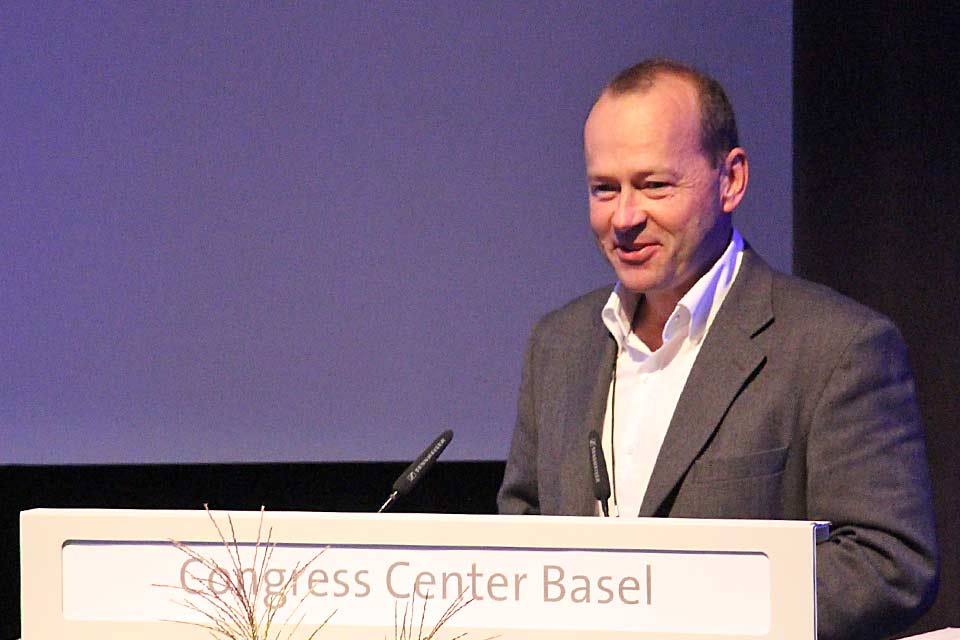
Lucius Tamm gives one of many excellent presentations at the IBMA Biocontrol conference in Basel

I have just returned from the 10th annual biocontrol conference in Basel under the auspices of the International Biocontrol Manufacturers Association. It also marked 20 years of the Association, so there was plenty to celebrate. Real progress has been made, but many challenges lie ahead.

I presented a paper on the progress made by the Association over the last decade. When I was involved in the RELU project on biopesticides, I made a number of criticisms of the lack of sophistication shown by the Association. This offended some people, but my stance was that of a critical friend. Indeed, someone stopped me in the hall and said that I had not been critical enough!

You can find the power points from my presentation here: IBMA Advocacy. This site also contains full information about our RELU project.

There were many excellent and informative papers, but I would like to just select a few points.

It is still taking far long to register new biocontrol products and make them available to farmers. The new legislative framework introduced by the European Union which is designed to facilitate their use as part of an Integrated Pest Management strategy is only slowly and imperfectly coming into effect.

In the past the typical company in the industry has been a small, often family owned company operating on a university science park. Some of these have grown into somewhat bigger but still small companies or have been taken over by medium-sized companies with an environmental portfolio. It can take so long to develop a product and get it registered and cash flow problems occur.

BASF and Bayer have now moved into the industry because they can see its growth potential with acquisitions of companies such as AgraQuest, known for its product Serenade. This has evidently caused some resentment in the industry and although the two companies are clearly on a charm offensive, I am not sure that it worked. It was also unclear to me if they really understood the specific character of the industry or had worked out their strategy in relation to it. I also think it may not generate the quick returns they might expect.

In an incisive presentation, consultant Roma Gwynn pointed out that the industry was still not reaching the vast majority of growers. Biocontrol is, as she pointed out, knowledge intensive. It does require more technical skill on the part of growers and this may not always be easy to find, as our research showed. I also think that the absence of a publicly funded agricultural advisory service is a real loss in countries such as the UK as it could help in the process of knowledge transfer.

Roma also made the point that we were living off research work done in the past. Not enough research was being done in universities and this could adversely affect innovation in the future.

An alternative report of the conference can be found here: Biocontrol

Wednesday, December 07, 2011

Biopesticides on the march

I have just returned from an Informa conference on biopesticides (or biocontrol) in Amsterdam where I talked about the implications of the new EU legislation on plant protection products which is now starting to be implemented.

What was striking about the conference was not only the relatively large attendance (100), but also the number of large chemical companies present, particularly from the United States. Monsanto, Bayer and BASF were out in force while the largest specialist biocontrol company, AgraQuest, was also strongly represented.

The market for biocontrol products is now growing much faster than that for synthetic chemical products, the availability of which is diminishing. Of 400 or so active ingredients now authorised in the EU, getting on for a quarter are biocontrol products.

The biggest market for biocontrol products up to now has been in protected crops (greenhouses and polytunnels). There is certainly scope in field vegetables where residue issues are important for the final consumer, but we are some way off broad spectrum products which can be used extensively on arable crops.

Historically there were some poor products on the market which did not help the reputation of the industry. The so-called 'grey market' products or bio stimulants, which are generally outside the scope of regulation, are also a challenge in marketing terms.

For growers biocontrol products offer a lower kill rate and often lower stability because of their very character. They also require more technical expertise in their use. They can, however, be used in combinaton with chemical products in many cases which is consistent with the EU policy of integrated pest management.

There is no doubt that the US has done a better job than the EU in promotning and regulating these products (this is also true of the life sciences industry more generally). The new EU regulatory framework, including zonal mutual recognition, should make life easier but the devil is in the detail.