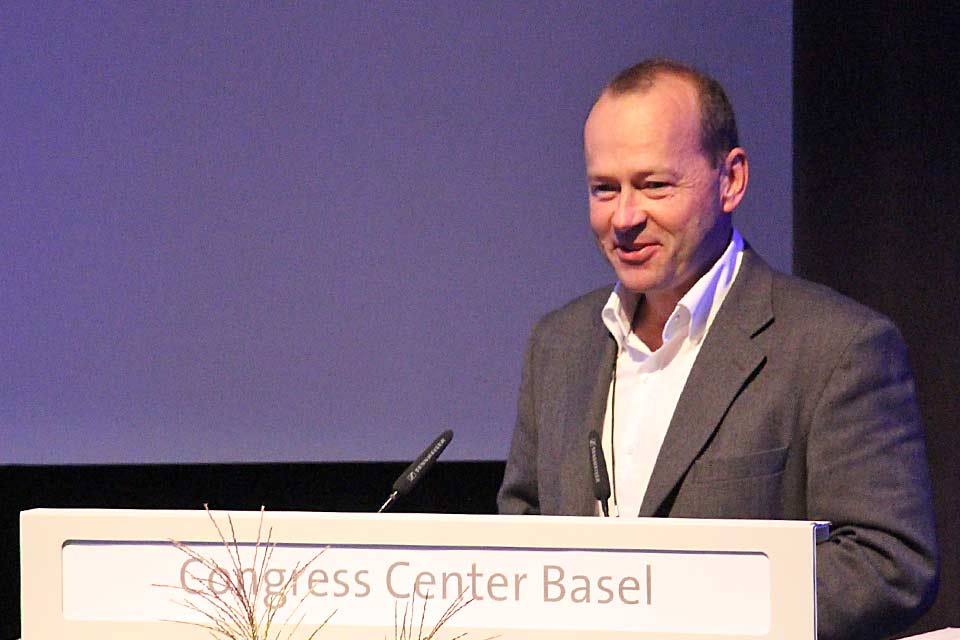
Lucius Tamm gives one of many excellent presentations at the IBMA Biocontrol conference in Basel
I have just returned from the 10th annual biocontrol conference in Basel under the auspices of the International Biocontrol Manufacturers Association. It also marked 20 years of the Association, so there was plenty to celebrate. Real progress has been made, but many challenges lie ahead.
I presented a paper on the progress made by the Association over the last decade. When I was involved in the RELU project on biopesticides, I made a number of criticisms of the lack of sophistication shown by the Association. This offended some people, but my stance was that of a critical friend. Indeed, someone stopped me in the hall and said that I had not been critical enough!
You can find the power points from my presentation here: IBMA Advocacy. This site also contains full information about our RELU project.
There were many excellent and informative papers, but I would like to just select a few points.
It is still taking far long to register new biocontrol products and make them available to farmers. The new legislative framework introduced by the European Union which is designed to facilitate their use as part of an Integrated Pest Management strategy is only slowly and imperfectly coming into effect.
In the past the typical company in the industry has been a small, often family owned company operating on a university science park. Some of these have grown into somewhat bigger but still small companies or have been taken over by medium-sized companies with an environmental portfolio. It can take so long to develop a product and get it registered and cash flow problems occur.
BASF and Bayer have now moved into the industry because they can see its growth potential with acquisitions of companies such as AgraQuest, known for its product Serenade. This has evidently caused some resentment in the industry and although the two companies are clearly on a charm offensive, I am not sure that it worked. It was also unclear to me if they really understood the specific character of the industry or had worked out their strategy in relation to it. I also think it may not generate the quick returns they might expect.
In an incisive presentation, consultant Roma Gwynn pointed out that the industry was still not reaching the vast majority of growers. Biocontrol is, as she pointed out, knowledge intensive. It does require more technical skill on the part of growers and this may not always be easy to find, as our research showed. I also think that the absence of a publicly funded agricultural advisory service is a real loss in countries such as the UK as it could help in the process of knowledge transfer.
Roma also made the point that we were living off research work done in the past. Not enough research was being done in universities and this could adversely affect innovation in the future.
An alternative report of the conference can be found here: Biocontrol